Press releases ICJ
- Press release No. 2026/23
Alleged Breaches of Certain International Obligations in respect of the Occupied Palestinian Territory (Nicaragua v. Germany) – Preliminary objections raised by Germany – Conclusion of the public hearings held from Monday 7 to Thursday 10 September 2026 - Press release No. 2026/22
Vanuatu files an application with the Court concerning a dispute with France - Press release No. 2026/21
Alleged Breaches of Certain International Obligations in respect of the Occupied Palestinian Territory (Nicaragua v. Germany) – Preliminary objections raised by Germany – Public hearings to be held from Monday 7 to Thursday 10 September 2026 - Press release N0. 2026/20
Alleged Smuggling of Migrants (Lithuania v. Belarus) – The Russian Federation files a Declaration of intervention in the proceedings under Article 63 of the Statute of the Court - Press release No. 2026/19
Observations furnished by the European Union under Article 43, paragraph 2, and Article 69, paragraph 2, of the Rules of Court - Press release No. 2026/18
Poland files a declaration of intervention in the proceedings under Article 63 of the Statute of the Court - Press release No. 2026/17
The Democratic Republic of the Congo institutes proceedings against Rwanda - Press release No. 2026/16
Visit of the Emperor of Japan to the International Court of Justice and the Permanent Court of Arbitration - Press release No. 2026/15
The Court gives its Advisory Opinion and responds to the question posed by the Governing Body of the International Labour Organization - Press release No. 2026/14
The Court to deliver its Advisory Opinion on Thursday 21 May at 3 p.m. - Press release No. 2026/13
Conclusion of the public hearings on the merits held from Monday 4 to Monday 11 May 2026 - Press release No. 2026/12
Mr Villalpando elected Registrar of the International Court of Justice - Press release No. 2026/11
Public hearings on the merits to be held from Monday 4 to Monday 11 May 2026 - Press release No. 2026/10
Solemn commemorative sitting held at the Peace Palace to mark the eightieth anniversary of the International Court of Justice - Press release No. 2026/9
The Court will hold a solemn sitting on 17 April 2026 at the Peace Palace in the presence of His Majesty the King of the Netherlands and the Secretary-General of the United Nations - Press release No. 2026/8
Visit to the International Court of Justice by the President of the Republic of Estonia, HE Mr Alar Karis and First Lady Ms Sirje Karis - Press release No. 2026/7
The Court grants Guatemala permission to intervene in the proceedings as a non-party - Press release No. 2026/6
SAI: Declarations of intervention in the proceedings filed on 12 March 2026 by Namibia, the United States of America, Hungary and Fiji under Article 63 of the Statute of the Court - Press release No. 2026/5
Declarations of intervention filed by the Netherlands and by Iceland under Article 63 of the Statute of the Court - Press release No. 2026/4
The Court to deliver its Judgment on Thursday 19 March 2026 at 3 p.m. - Press release No. 2026/3
Paraguay files a declaration of intervention in the proceedings under Article 63 of the Statute of the Court - Press release No. 2026/2
Iceland files a declaration recognizing the compulsory jurisdiction of the Court - Press release No. 2026/1
Conclusion of the public hearings on the merits held from Monday 12 to Thursday 29 January 2026
Press releases PCA
- 9 september 2026
PCA Press Release – PCA Case No. 2026-35: Conciliation between the Kingdom of Cambodia and the Kingdom of Thailand - 8 september 2026
PCA Press Release – Permanent Court of Arbitration enters into Host Country Agreement with the Slovak Republic - 3 September 2026
Expansion of the PCA Buenos Aires Office - 2 September 2026
PCA Press Release – Permanent Court of Arbitration enters into Host Country Agreement with the Kingdom of Thailand - 31 August 2026
PCA Press Release – PCA Case No. 2023-01: The Indus Waters Western Rivers Arbitration (Islamic Republic of Pakistan v. Republic of India) - 24 August 2026
The PCA will act as Registry and Appointing Authority under the new UN Administrative Instruction for Consultants and Individual Contractors - 14 August 2026
PCA Press Release – PCA Case No. 2026-35: Constitution of the Commission in Conciliation Proceedings between the Kingdom of Cambodia and the Kingdom of Thailand - 31 July 2026
PCA Press Release – PCA Case No. 2023-14: Pakistan’s applications for the publication of pleadings and the disclosure of documents to the Court of Arbitration, adoption of Terms of Reference for a modelling exercise, and Fifth Meeting - 20 July 2026
PCA Press Release – Accession of the Federal Republic of Somalia to the 1899 and 1907 Hague Conventions - 14 July 2026
PCA Press Release – PCA Case No. 2018-51: Public Hearing in Elliott Associates, L.P. (U.S.A.) v. Republic of Korea - 13 July 2026
Event marking the accession of Indonesia to the Hague Convention of 1907 - 7 July 2026
PCA Press Release – Permanent Court of Arbitration enters into Host Country Agreement with the Kingdom of Spain - 30 June 2026
Third In-person Meeting of the Expert Group on the Future Development of the Permanent Court of Arbitration | PCA-CPA - 29 June 2026
PCA Press Release – Visit of H.E. the Prime Minister of the Grand Duchy of Luxembourg | PCA-CPA - 22 June 2026
Publication of the Permanent Court of Arbitration’s 2025 Annual Report | PCA-CPA - 18 June 2026
PCA Press Release – Visit of His Majesty Emperor Naruhito of Japan to the PCA and the ICJ | PCA-CPA - 15 June 2026
PCA Press Release – Publication of the Award in the Dispute Concerning Coastal State Rights in the Black Sea, Sea of Azov, and Kerch Strait (Ukraine v. the Russian Federation) | PCA-CPA - 12 June 2026
PCA Press Release – PCA Case No. 2022-13: KN Holding LLC and Severgroup LLC v. The French Republic | PCA-CPA - 8 June 2026
PCA Publishes Contribution to 2026 Report of United Nations Secretary-General on Oceans and the Law of the Sea | PCA-CPA - 5 June 2026
PCA-CPAPCA Press Release – PCA Case No. 2023-01: The Indus Waters Western Rivers Arbitration (Islamic Republic of Pakistan v. Republic of India) | PCA-CPA - 1 June 2026
PCA Press Release – PCA Case No. 2025-45: Arbitration Pursuant to the Asylum Partnership Agreement (The Republic of Rwanda v. The United Kingdom of Great Britain and Northern Ireland) | PCA-CPA - 22 May 2026
PCA Press Release – Entry into force of the Host Country Agreement between the Permanent Court of Arbitration and the Kingdom of Bahrain | PCA-CPA - 11 May 2026
PCA Press Release – PCA Case No. 2023-01: The Indus Waters Western Rivers Arbitration (Islamic Republic of Pakistan v. Republic of India) | PCA-CPA - 6 May 2026
PCA Press Release – PCA Case No. 2025-21: (1) Blue Gold Holdings Limited (United Kingdom) and (2) Future Global Resources Limited (United Kingdom) v. The Republic of Ghana | PCA-CPA - 22 April 2026
PCA Press Release – Issuance of an Award on the Dispute Concerning Coastal State Rights in the Black Sea, Sea of Azov, and Kerch Strait (Ukraine v. the Russian Federation) | PCA-CPA - 20 April 2026
PCA Press Release – PCA Case No. 2023-65: Energy Charter Treaty Arbitration (The Republic of Azerbaijan v. The Republic of Armenia) | PCA-CPA - 19 April 2026
High-Level Conference on the Universalization of the PCA and the HCCH | PCA-CPA - 13 April 2026
PCA Press Release – Signature of a Cooperation Agreement between the PCA and the Dispute Resolution Commission of Guatemala’s Chamber of Industry | PCA-CPA - 9 April 2026
PCA Press Release – Visit of H.E. the President of the Republic of Estonia | PCA-CPA - 27 March 2026
PCA Press Release – PCA Case No. 2025-45: Arbitration Pursuant to the Asylum Partnership Agreement (The Republic of Rwanda v. The United Kingdom of Great Britain and Northern Ireland) | PCA-CPA - 26 March 2026
Inauguration of Hearing Facilities in Ha Noi and Official Launch of Vietnamese Translation of PCA Arbitration Rules | PCA-CPA - 24 March 2026
Nineteenth PCA Vis Pre-Moot 2026 in The Hague | PCA-CPA - 23 March 2026
PCA Press Release – PCA Case No. 2023-65: Energy Charter Treaty Arbitration (The Republic of Azerbaijan v. The Republic of Armenia) | PCA-CPA - 12 March 2026
PCA Press Release – PCA Case No. 2025-45: Arbitration Pursuant to the Asylum Partnership Agreement (The Republic of Rwanda v. The United Kingdom of Great Britain and Northern Ireland) | PCA-CPA - 9 February 2026
PCA Press Release – PCA Case No. 2023-01: The Indus Waters Western Rivers Arbitration (Islamic Republic of Pakistan v. Republic of India) | PCA-CPA - 3 February 2026
PCA Press Release – Accession to PCA Founding Conventions: Botswana | PCA-CPA - 30 January 2026
PCA Press Release – PCA Case No. 2025-45: Arbitration pursuant to the Asylum Partnership Agreement (The Republic of Rwanda v. The United Kingdom of Great Britain and Northern Ireland) | PCA-CPA - 26 January 2026
Visit of the Secretary-General of the PCA to Singapore - 5 January 2026
Dispute Concerning the Detention of Ukrainian Naval Vessels and Servicemen (Ukraine v. the Russian Federation) - 2 January 2026
Developments since the Issuance of the Decision on Competence
Eightieth Anniversary International Court of Justice in the Peace Palace
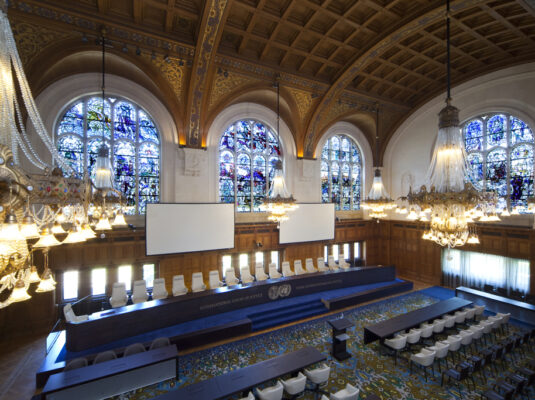
On 17 April 2026, the International Court of Justice (ICJ), the principal judicial organ of the United Nations, will mark its 80th anniversary with a solemn sitting in the Great Hall of Justice at the Peace Palace. His Majesty King Willem‑Alexander of the Netherlands will attend, alongside the UN Secretary‑General and the Presidents of the UN General Assembly and the Security Council. From next week, the Visitors Centre of the Peace Palace, managed by the Carnegie Foundation, will host an exhibition on the International Court of Justice highlighting the Court’s work and achievements.
International Court of Justice
The International Court of Justice (ICJ) was established in 1945 by the Charter of the United Nations and began its work in 1946 as the inaugural sitting of the International Court of Justice took place on 18 April 1946. It is the principal judicial organ of the United Nations and its main task is to settle, in accordance with international law, legal disputes submitted to it by States and to provide advisory opinions on legal questions referred to it by authorized United Nations organs and specialized agencies.
The International Court of Justice is the only of the six principle organs of the United Nations that is not located in New York. Since its beginnings, the ICJ is located in the Peace Palace in The Hague, where it is still located today.
Solemn Sitting
The International Court of Justice will hold a solemn sitting on Friday 17 April 2026 at 3 p.m. in the Great Hall of Justice of the Peace Palace to mark eighty years since its inaugural session. The ceremony will take place in the presence of His Majesty King Willem-Alexander of the Netherlands, HE Mr António Guterres, Secretary-General of the United Nations, HE Ms Annalena Baerbock, President of the United Nations General Assembly, HE Mr Tom Berendsen, Minister for Foreign Affairs of the Netherlands, and HE Mr Jamal Alrowaiei, President of the United Nations Security Council.
Speeches will be delivered by HE Judge Iwasawa Yuji, President of the Court, and by Their Excellencies Mr Guterres, Ms Baerbock, Mr Berendsen and Mr Alrowaiei. The solemn sitting will be streamed live and on demand (VOD) in the two official languages of the Court, on the Court’s website, the section of the Journal of the United Nations dedicated to the ICJ and on UN Web TV (source: www.icj-cij.org).
Exhibition Visitors Centre
From next week, an exhibition about the history, the structure and the courtroom of the International Court of Justice will be on display in the Visitors Centre of the Peace Palace to honor the achievements of the ICJ. A digital timeline guides visitors through the development of the Court, highlighting key moments in its establishment and growth. This historical overview is enriched by archival photographs, videos, and a world map displaying the ICJ’s contentious cases. Together, these elements help visitors visualise how the Court has played a central role in the peaceful resolution of international disputes for decades.
As judicial procedures and detailed legal information can be complex, two display cases are used to present key facts and figures in an accessible way and to explain how the ICJ operates in practice through tangible objects.
The third theme highlights the courtroom of the International Court of Justice: the Great Hall of Justice. This predominantly visual part of the exhibition consists of a reproduction of the fourth stained‑glass window from the Great Hall of Justice called The Evolution of the Peace Ideal, accompanied by explanatory texts. In addition, a documentary on the Great Hall of Justice, produced by the ICJ and the Carnegie Foundation in close cooperation, is screened on a display adjacent to the window. The Visitor Centre is open from Wednesday to Sunday, from 12 noon to 5 pm.
Peace Palace
The Peace Palace in The Hague, Netherlands, is a worldwide symbol of justice and peace. It opened its doors in 1913 and has served the ideal of “Peace through Law” ever since. Today, it houses the Permanent Court of Arbitration, the United Nations International Court of Justice, The Hague Academy of International Law, and the Peace Palace Library. The Peace Palace is owned and managed by the Carnegie Foundation.
Americas’ Youth Advocacy Team received 2025 Youth Carnegie Peace Prize
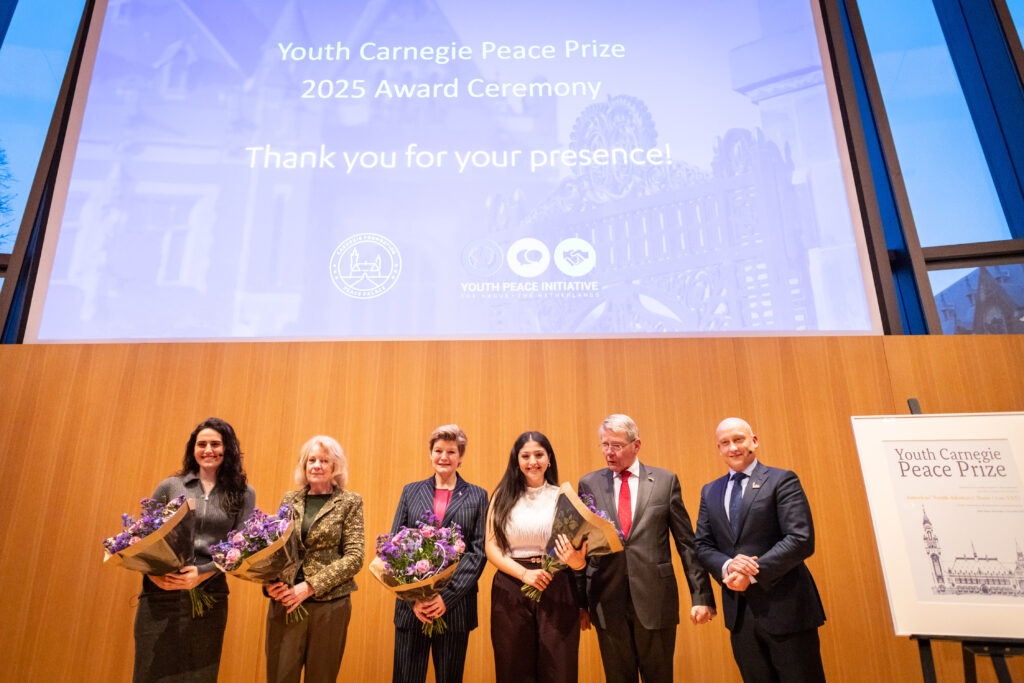
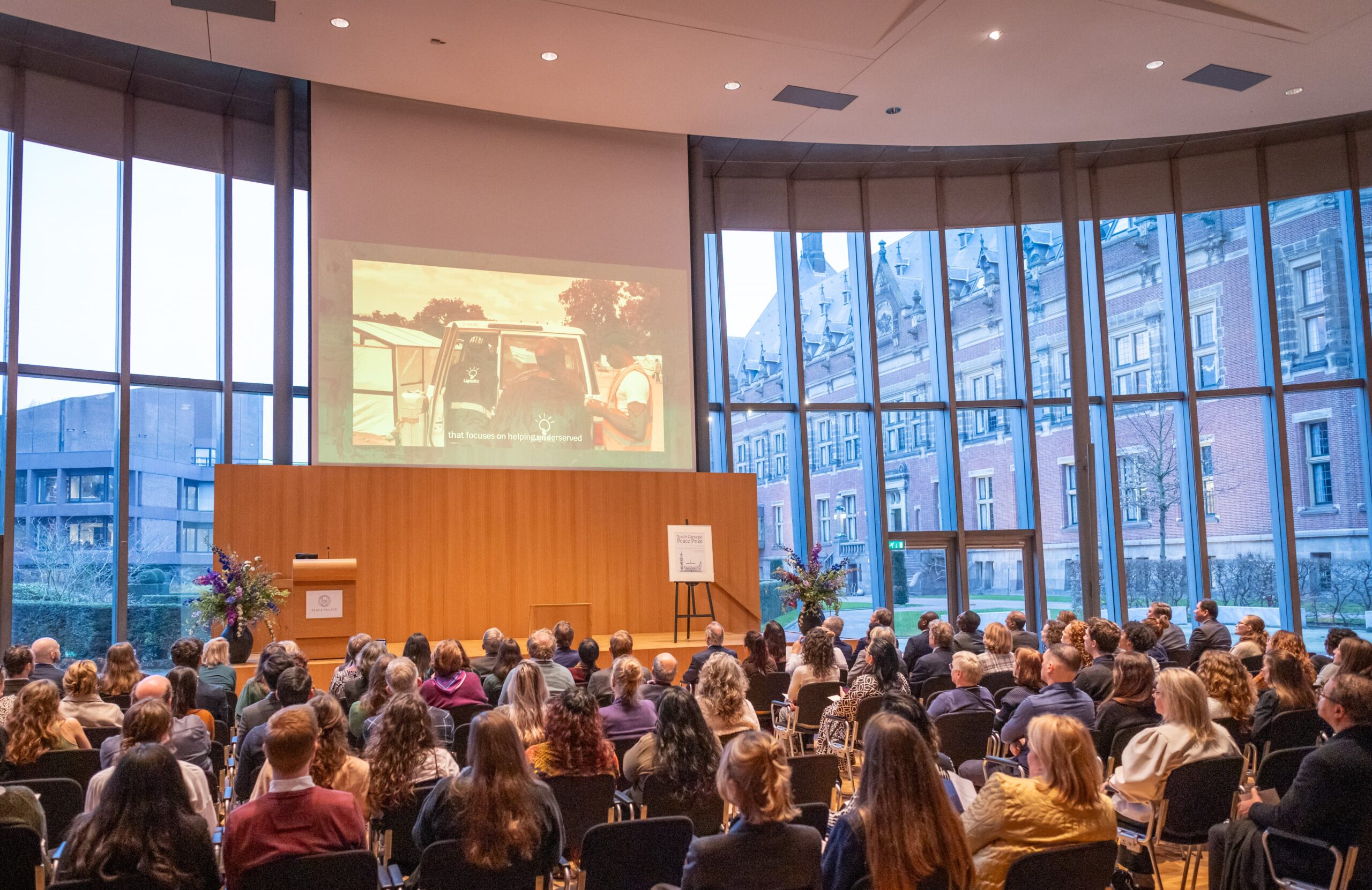
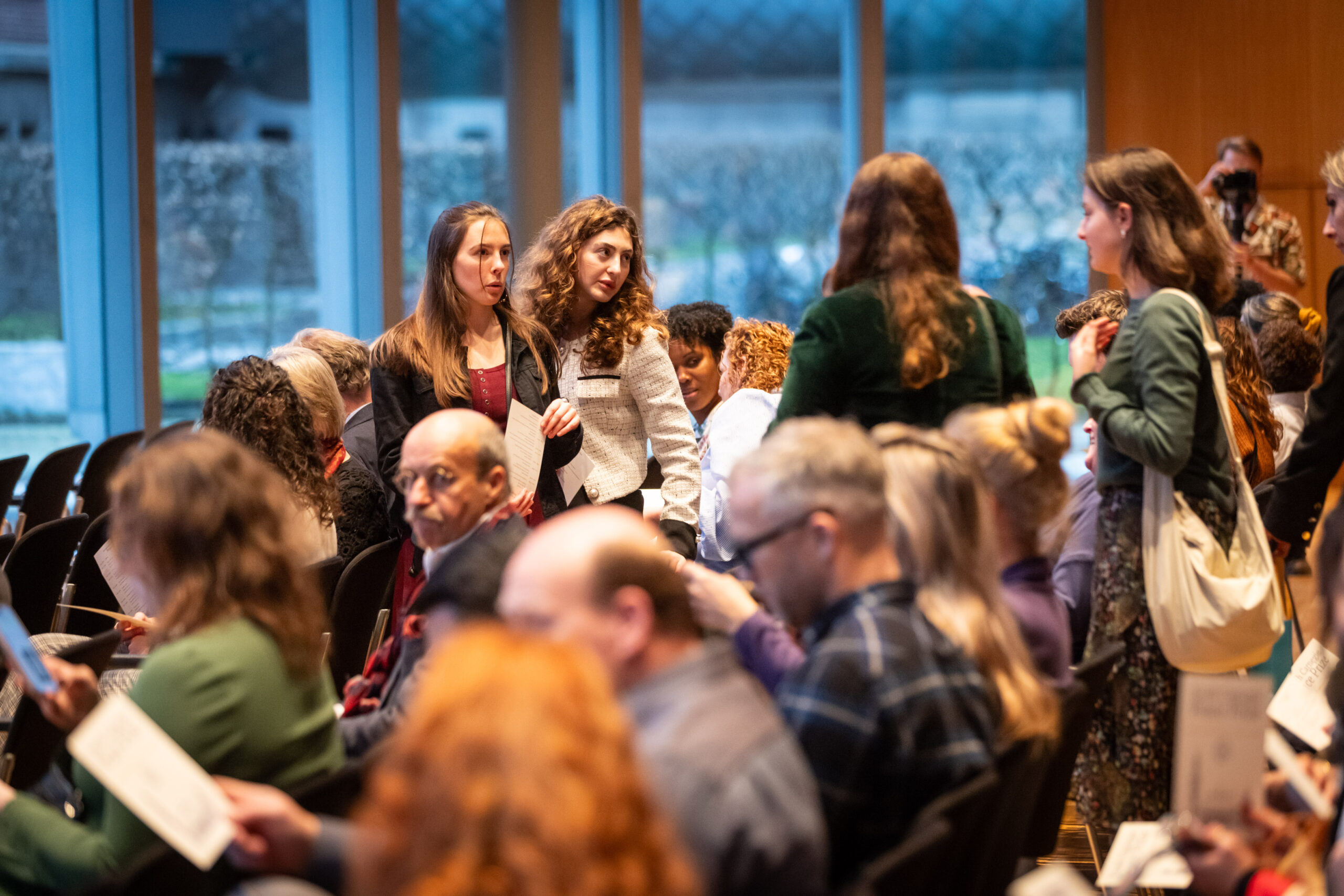
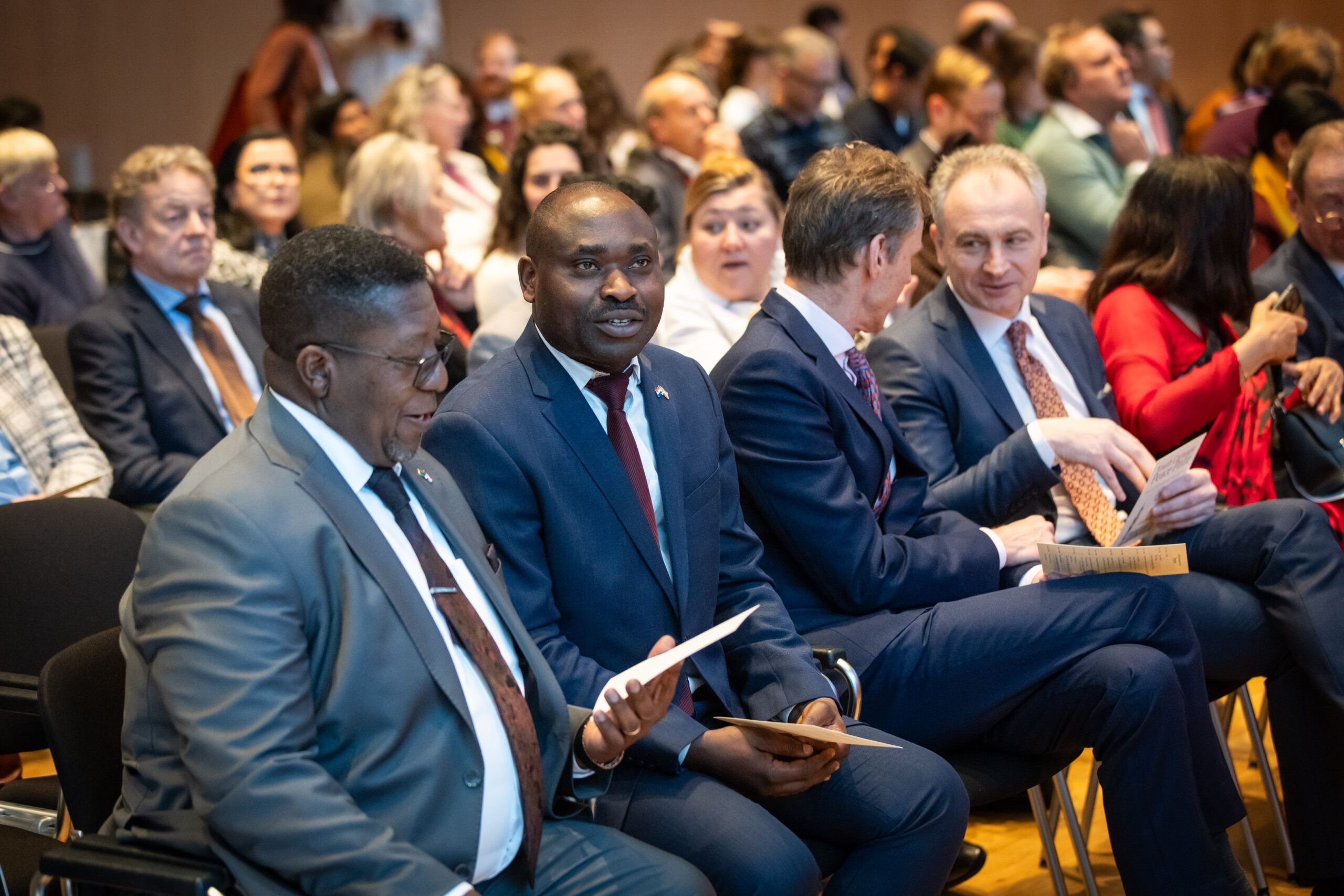
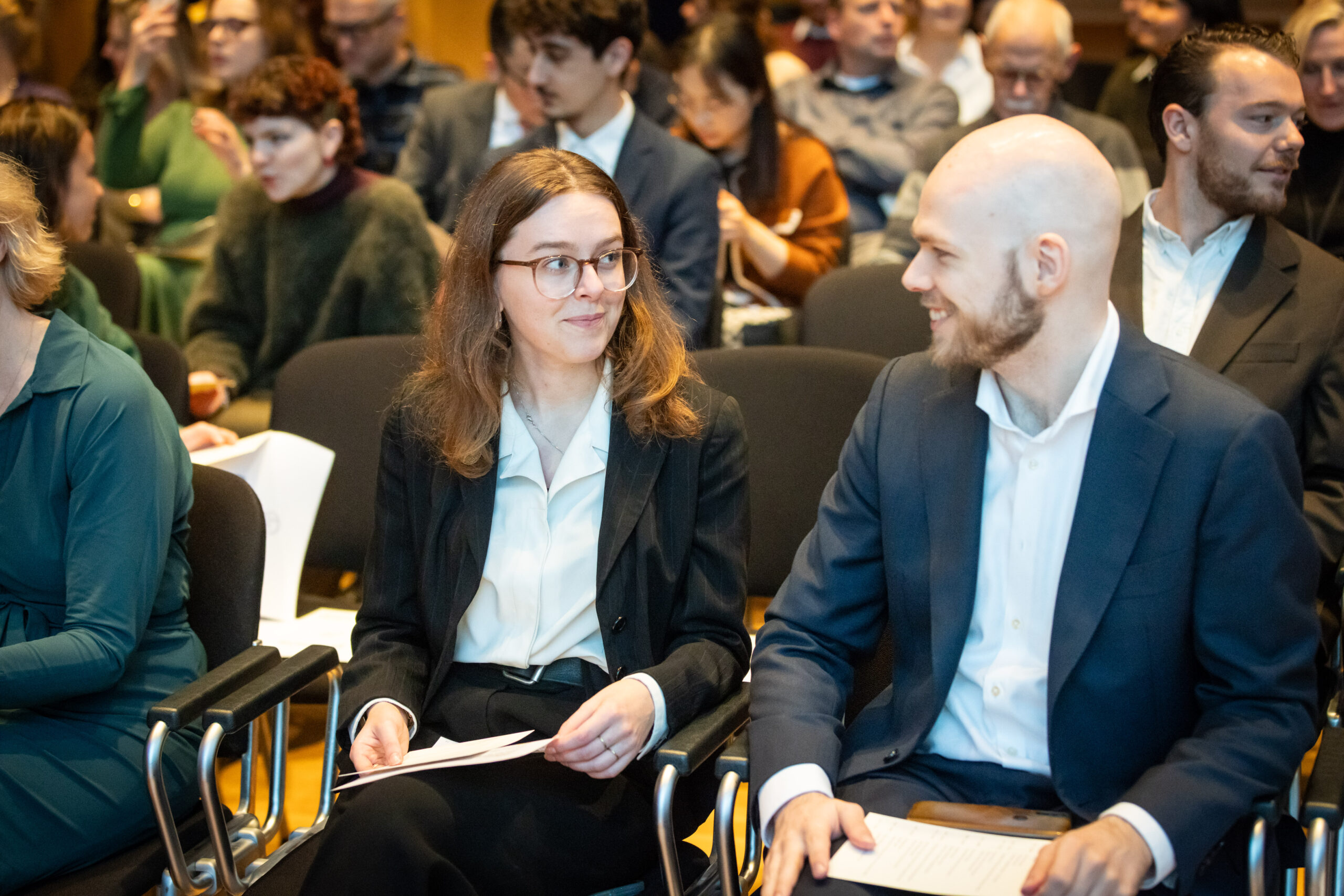
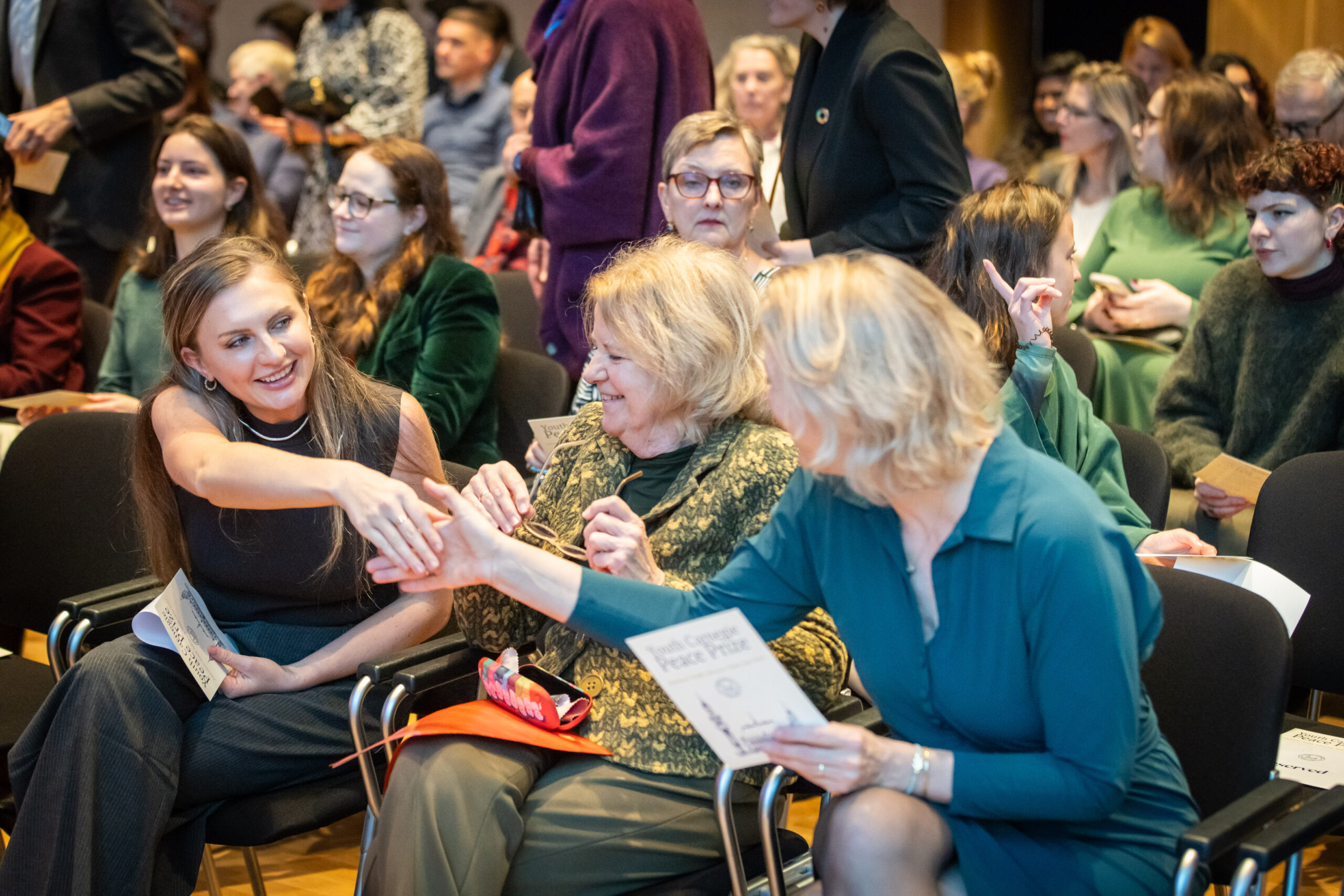
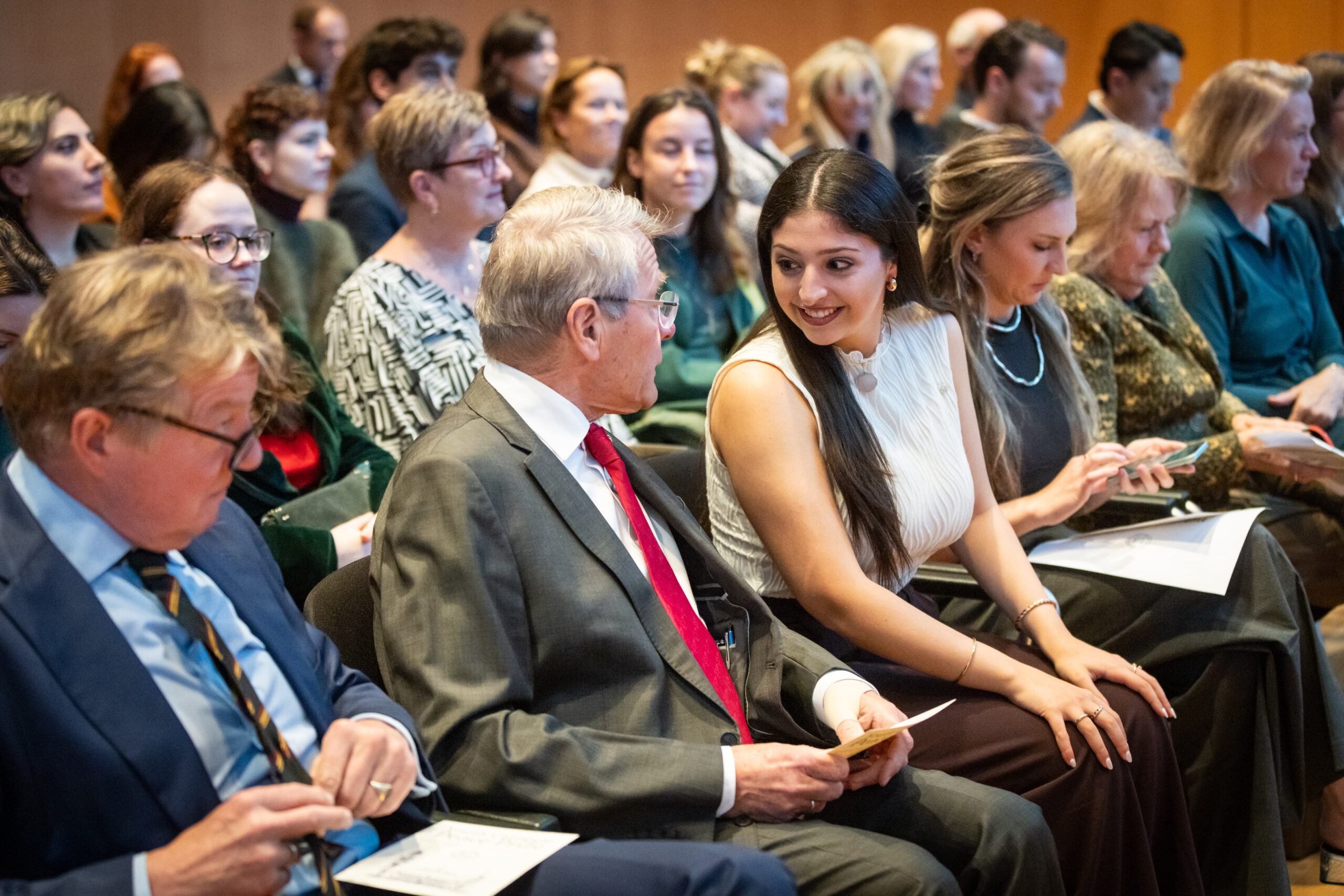
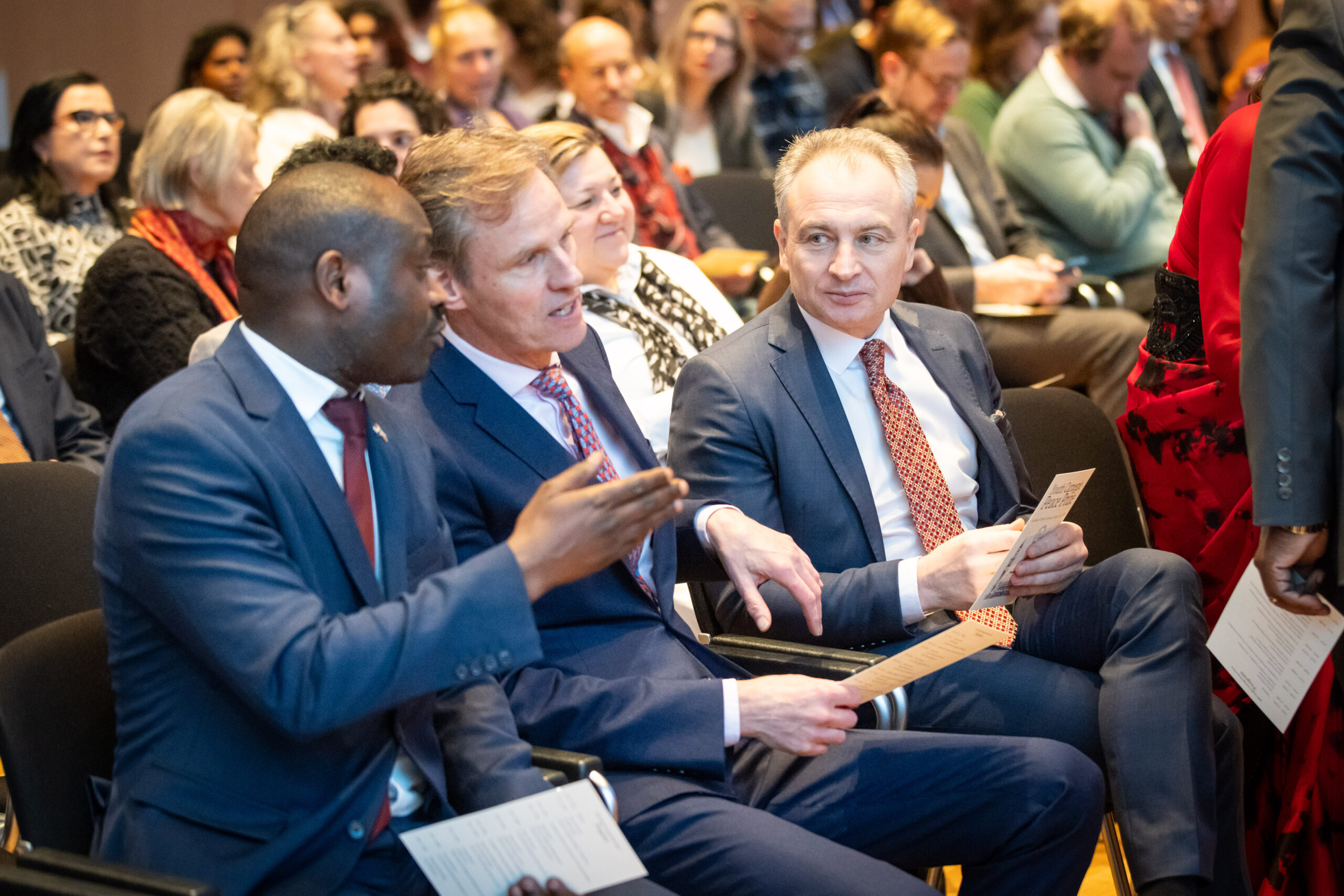
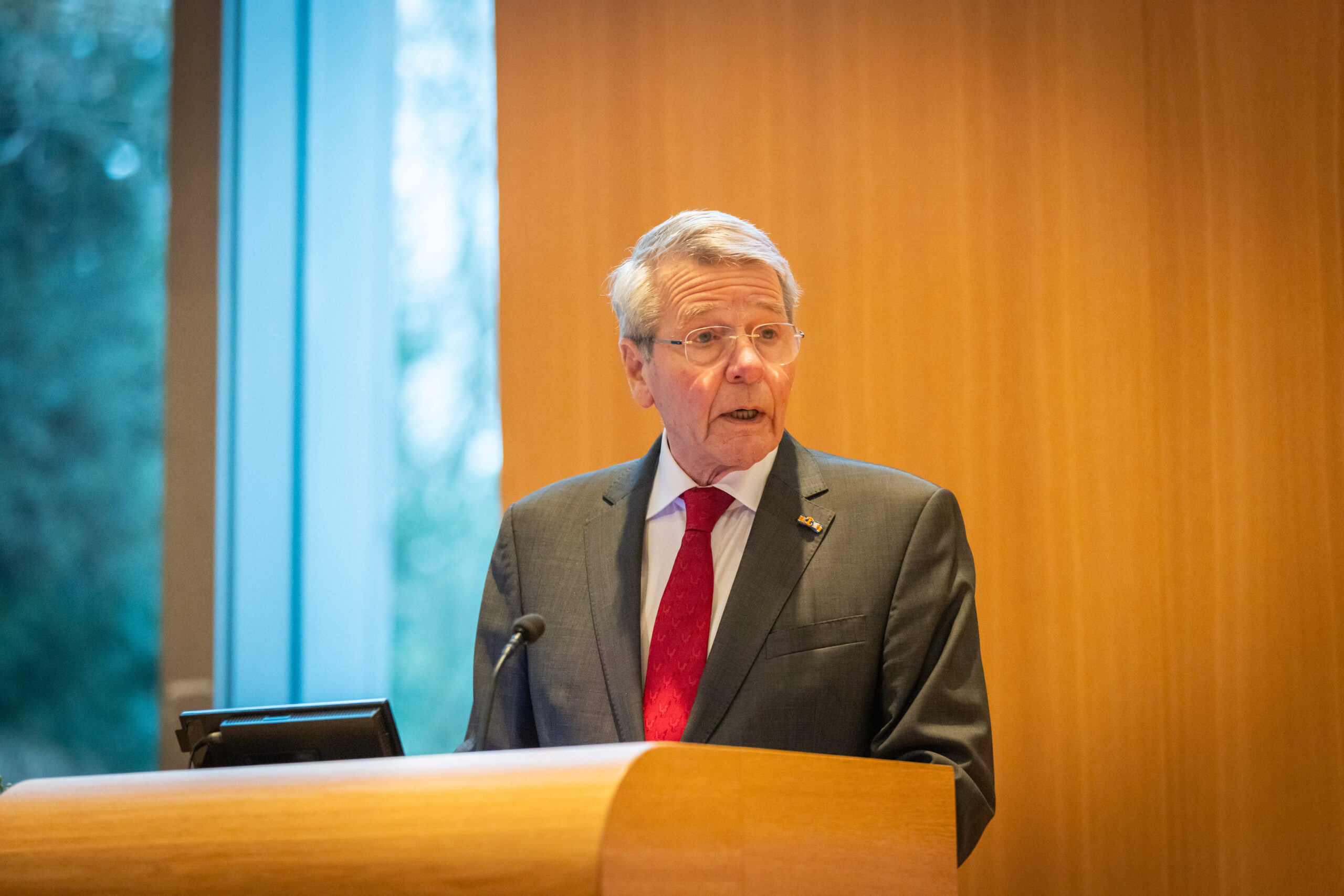
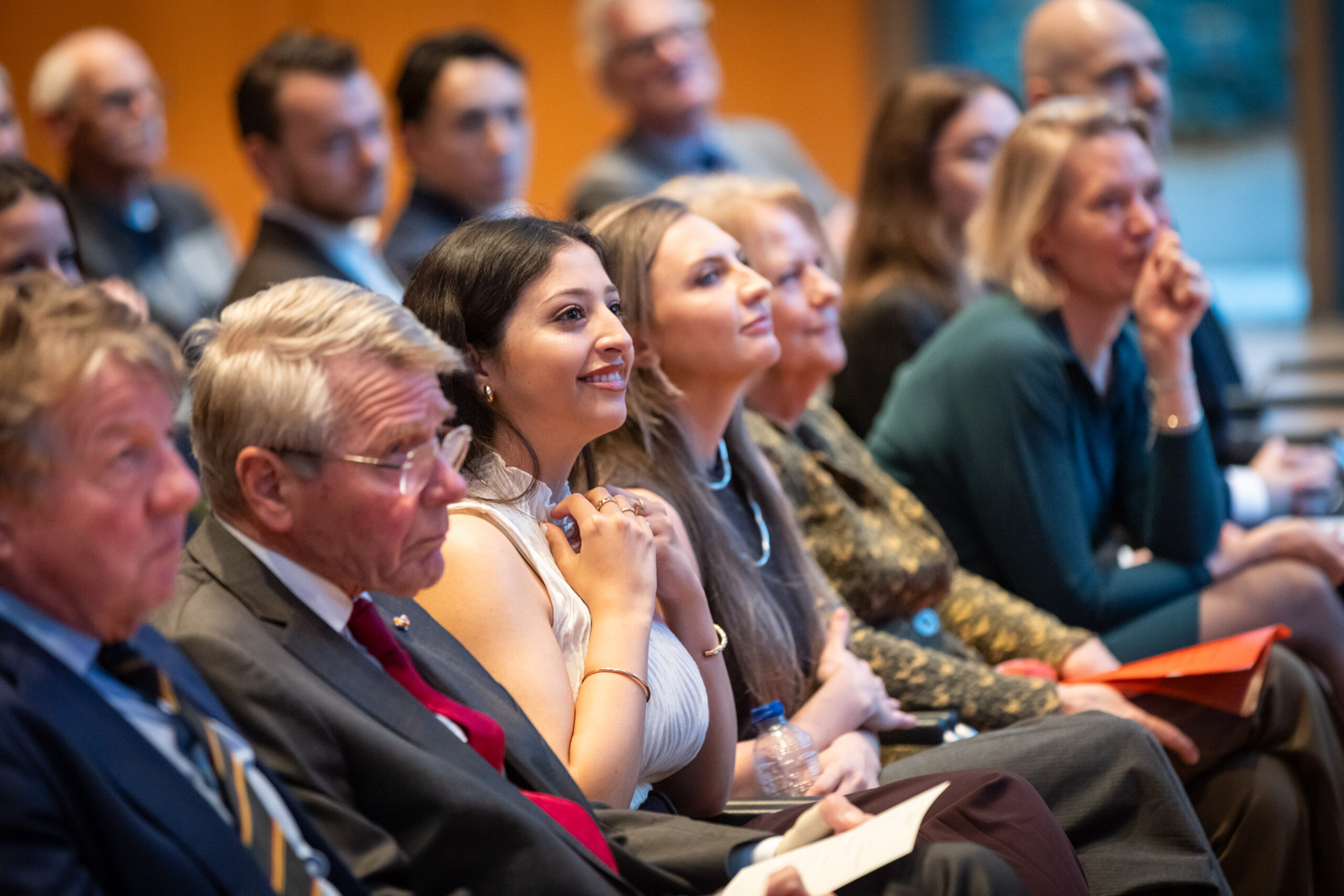
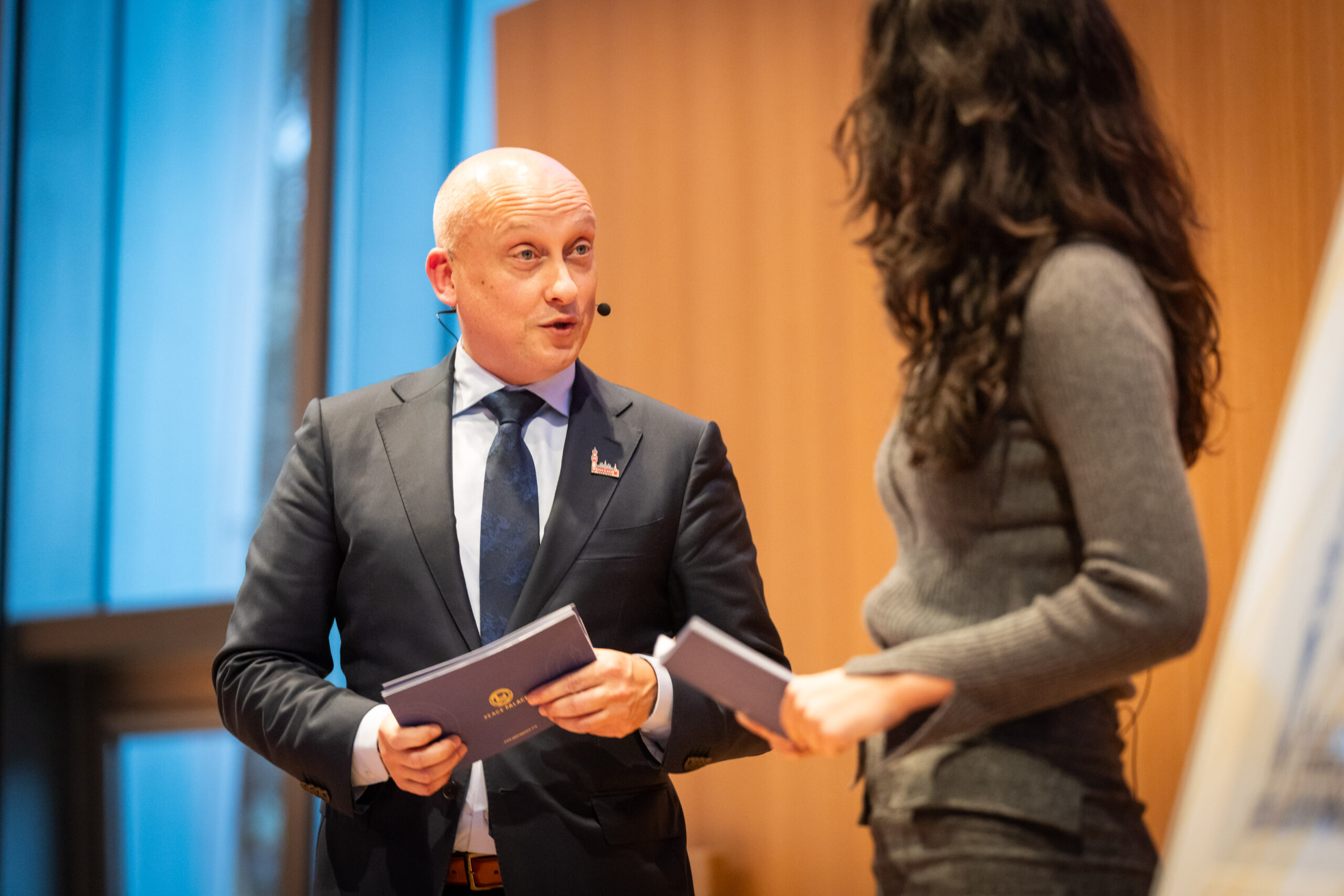
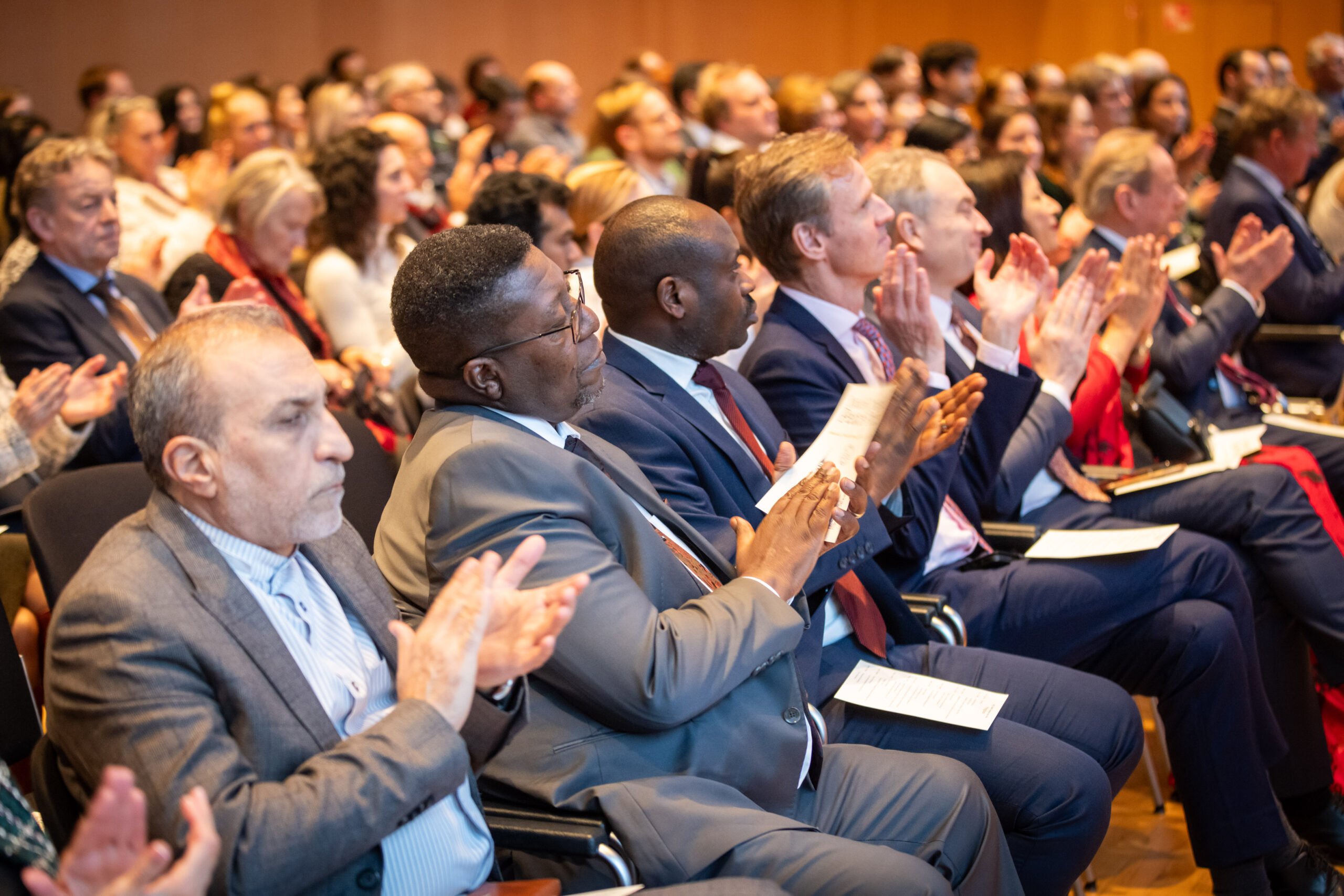
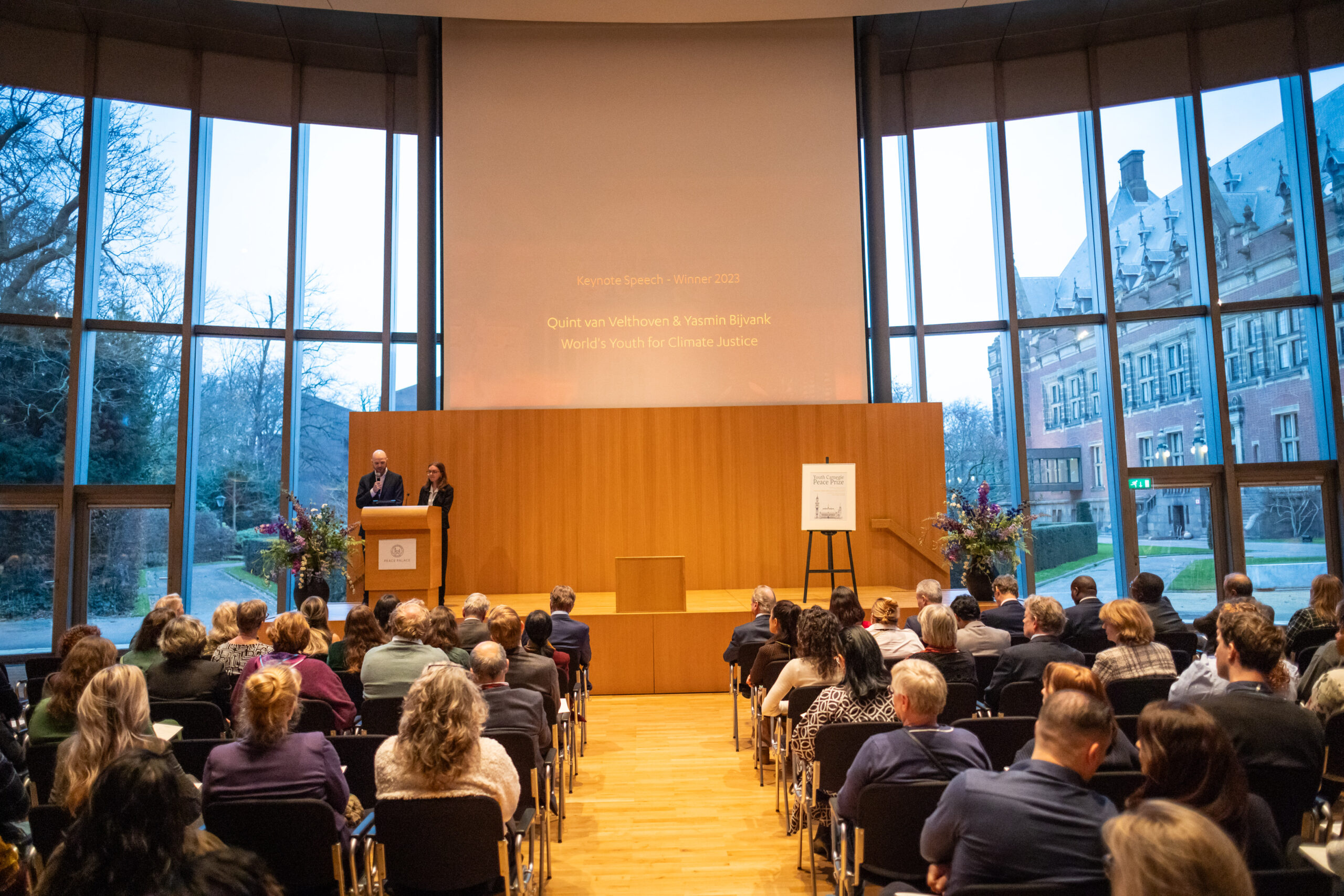
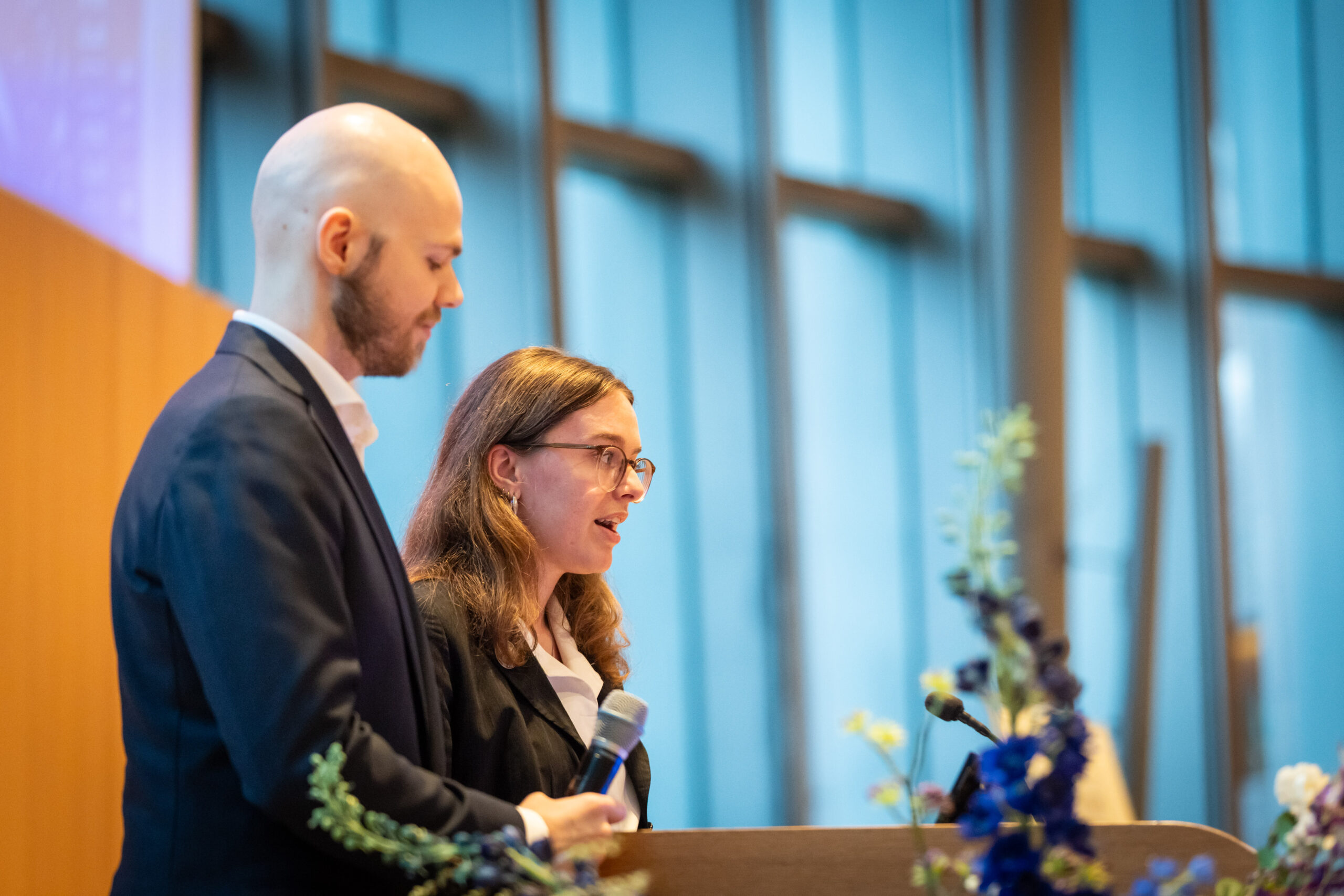
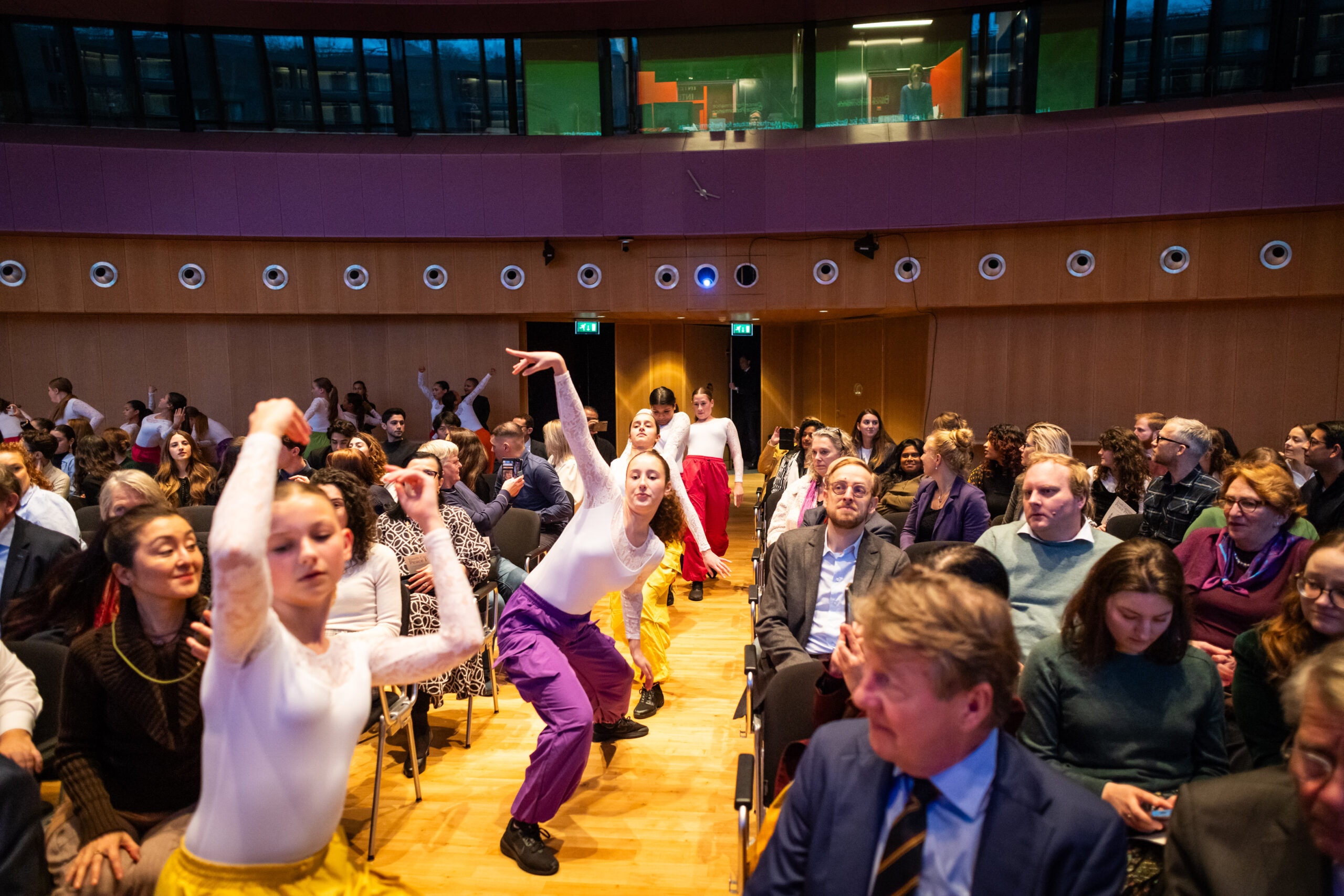
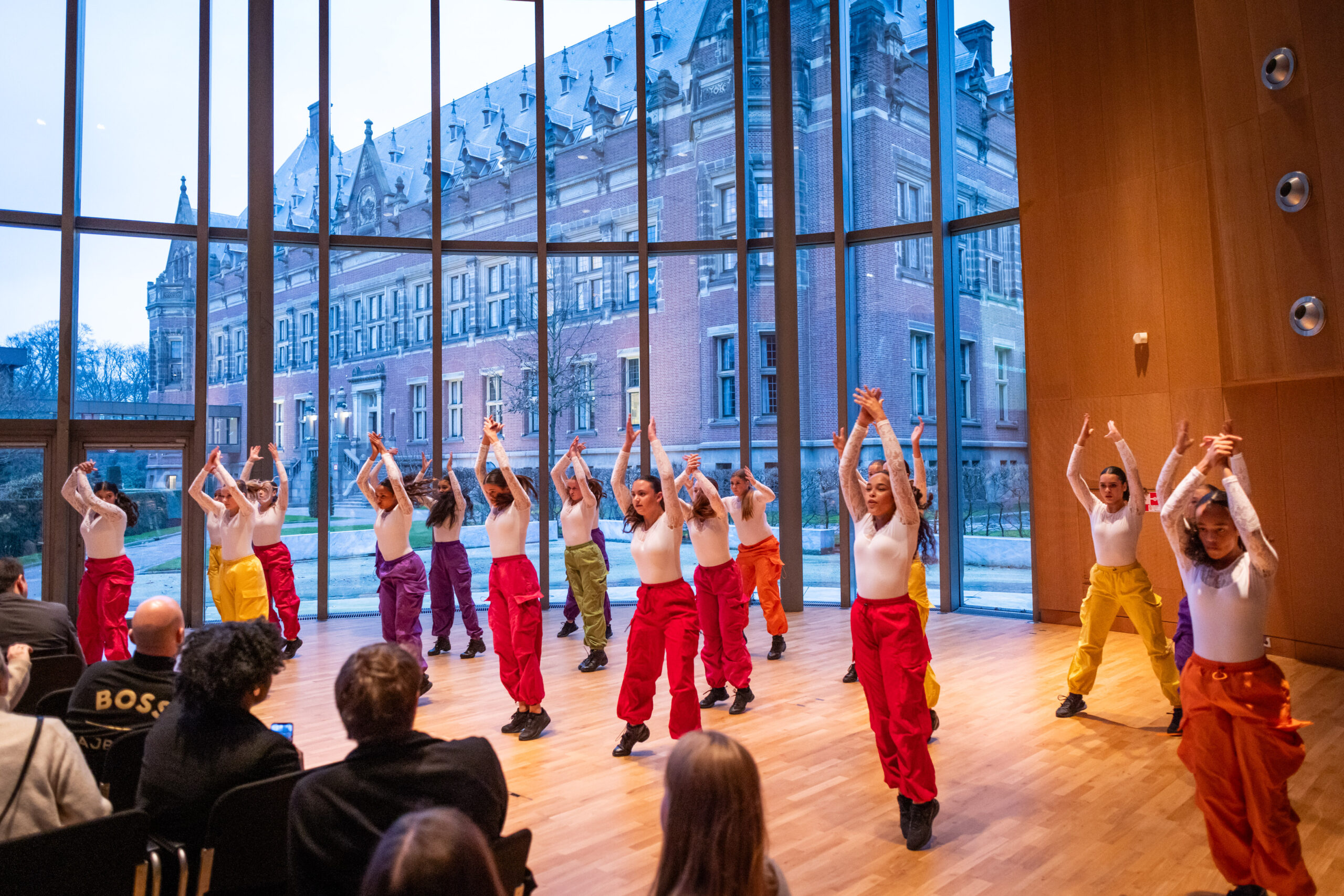
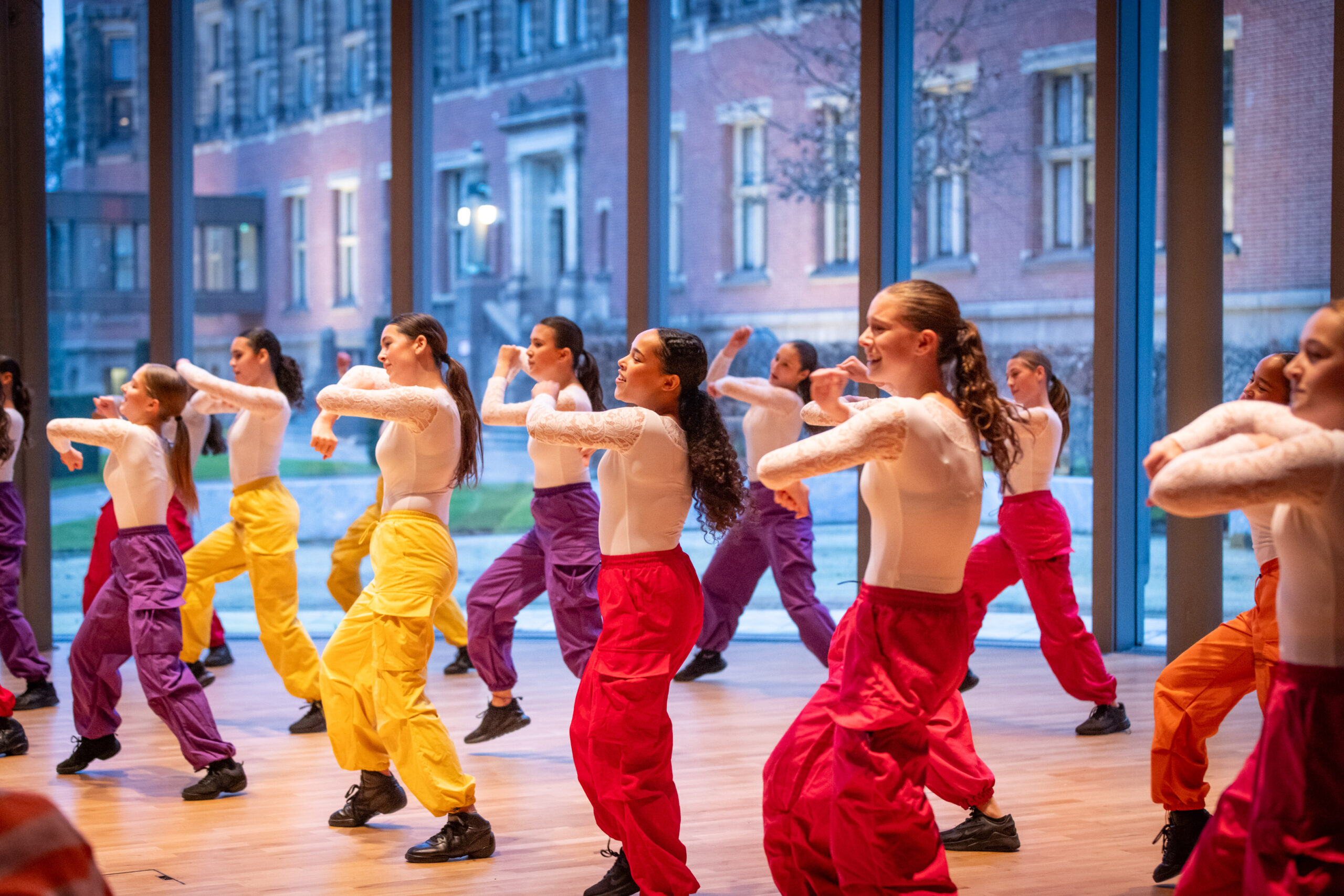
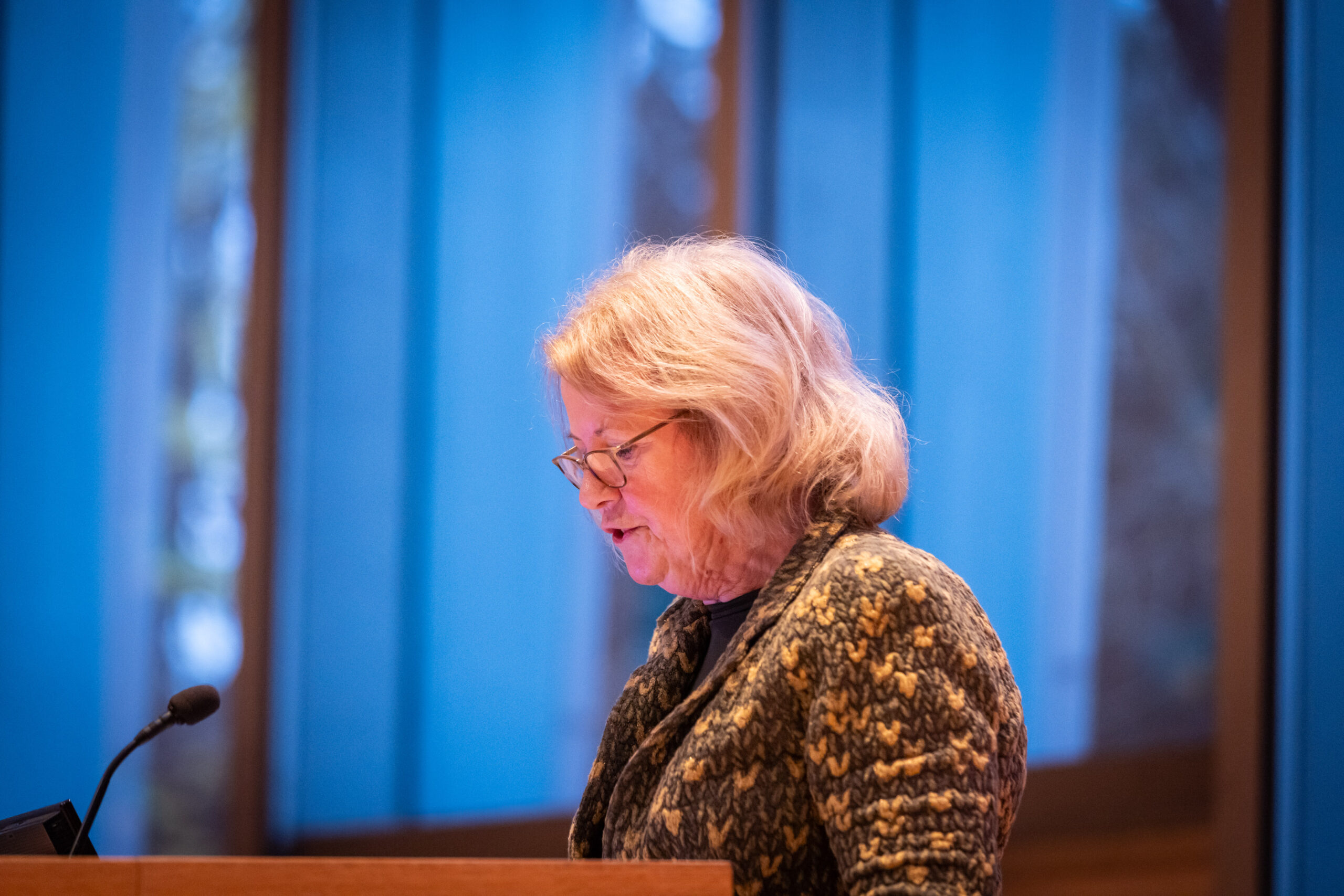
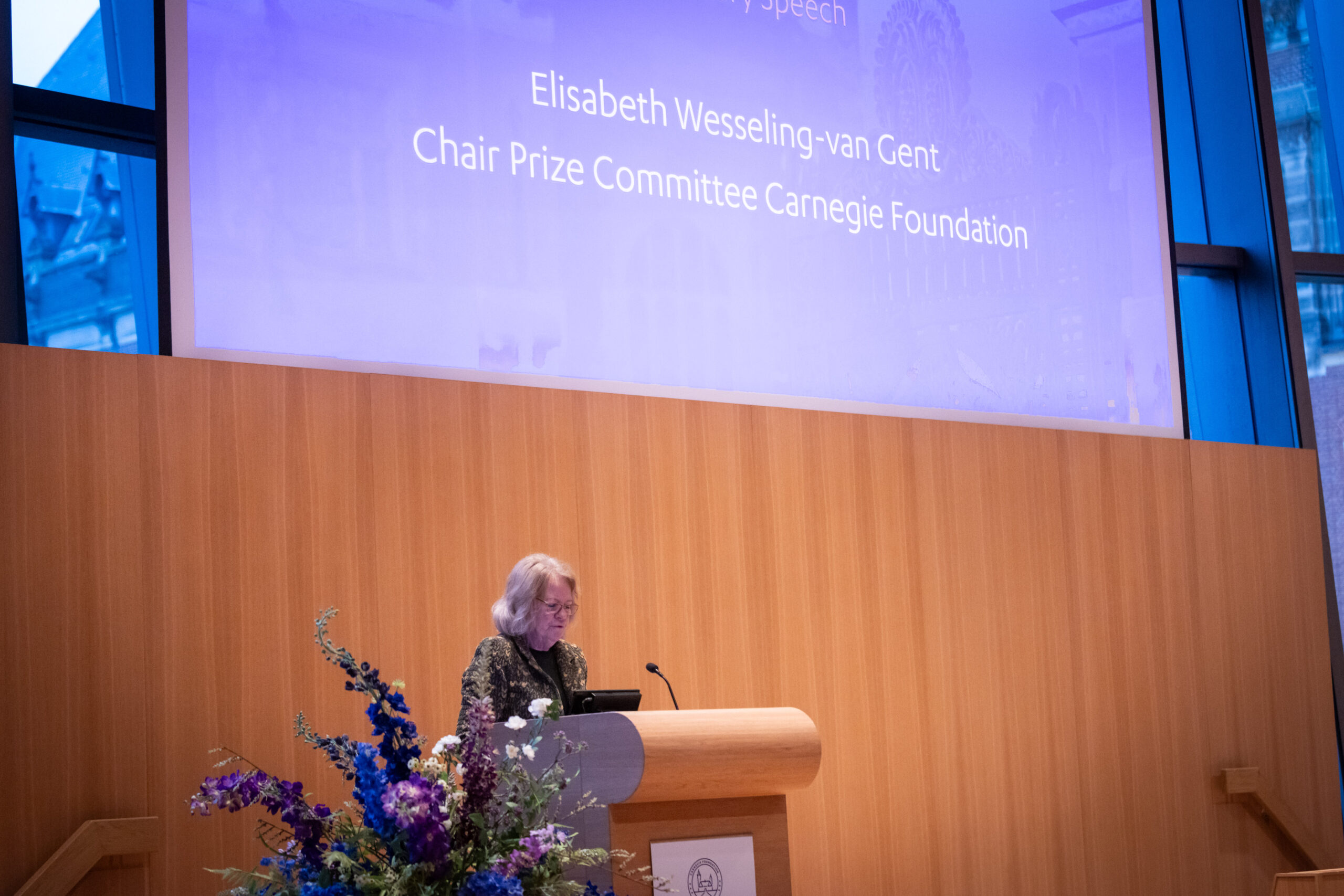
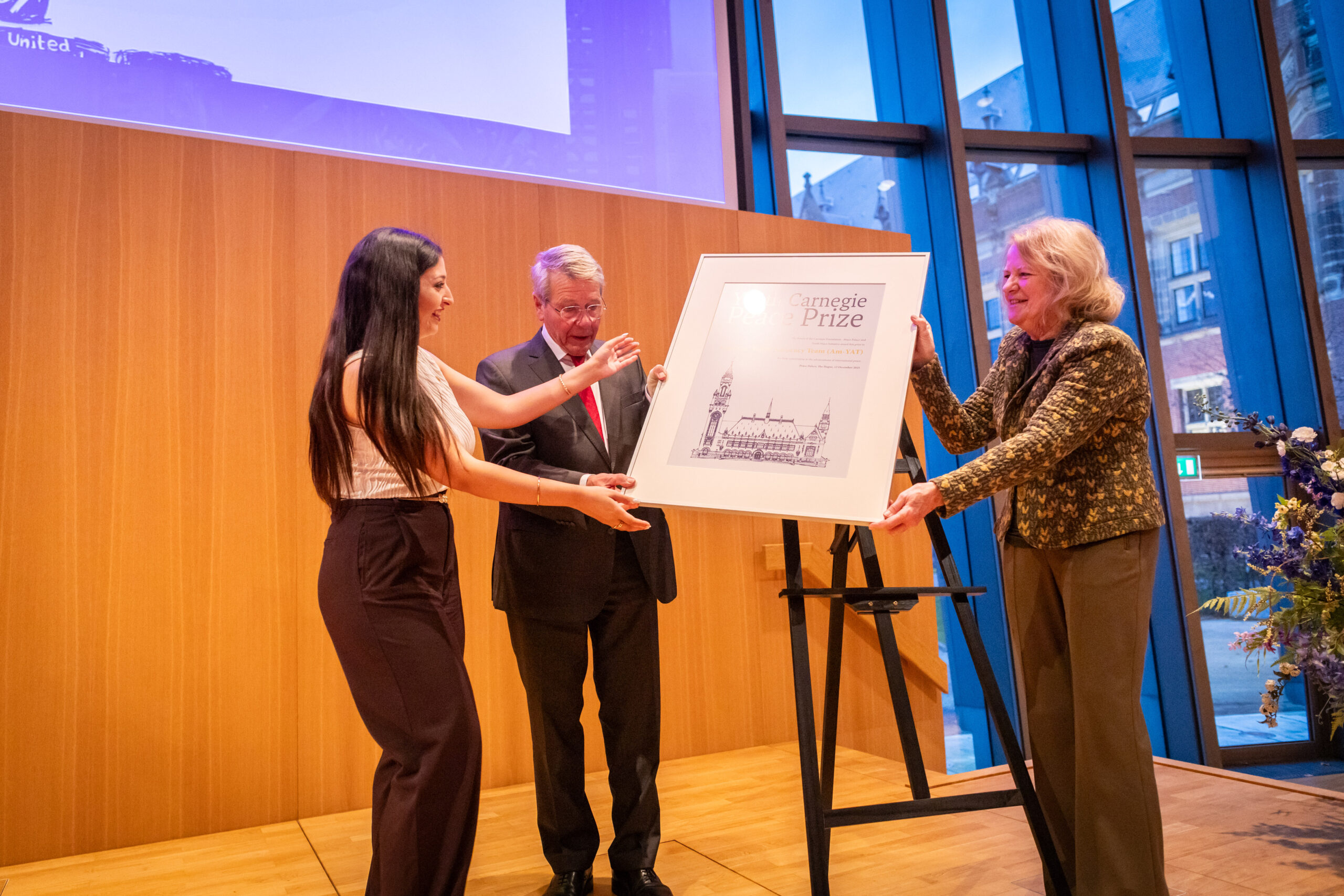
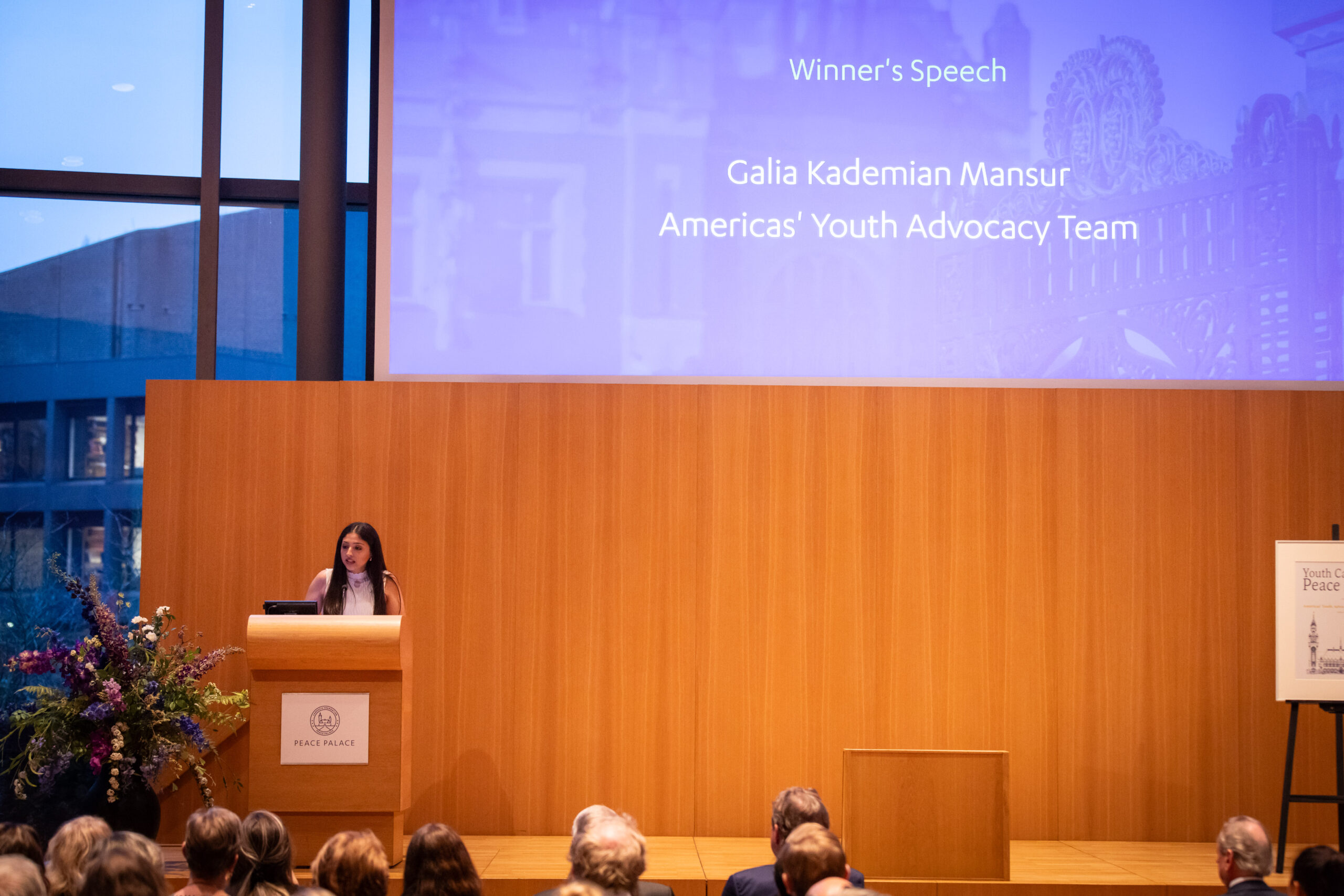
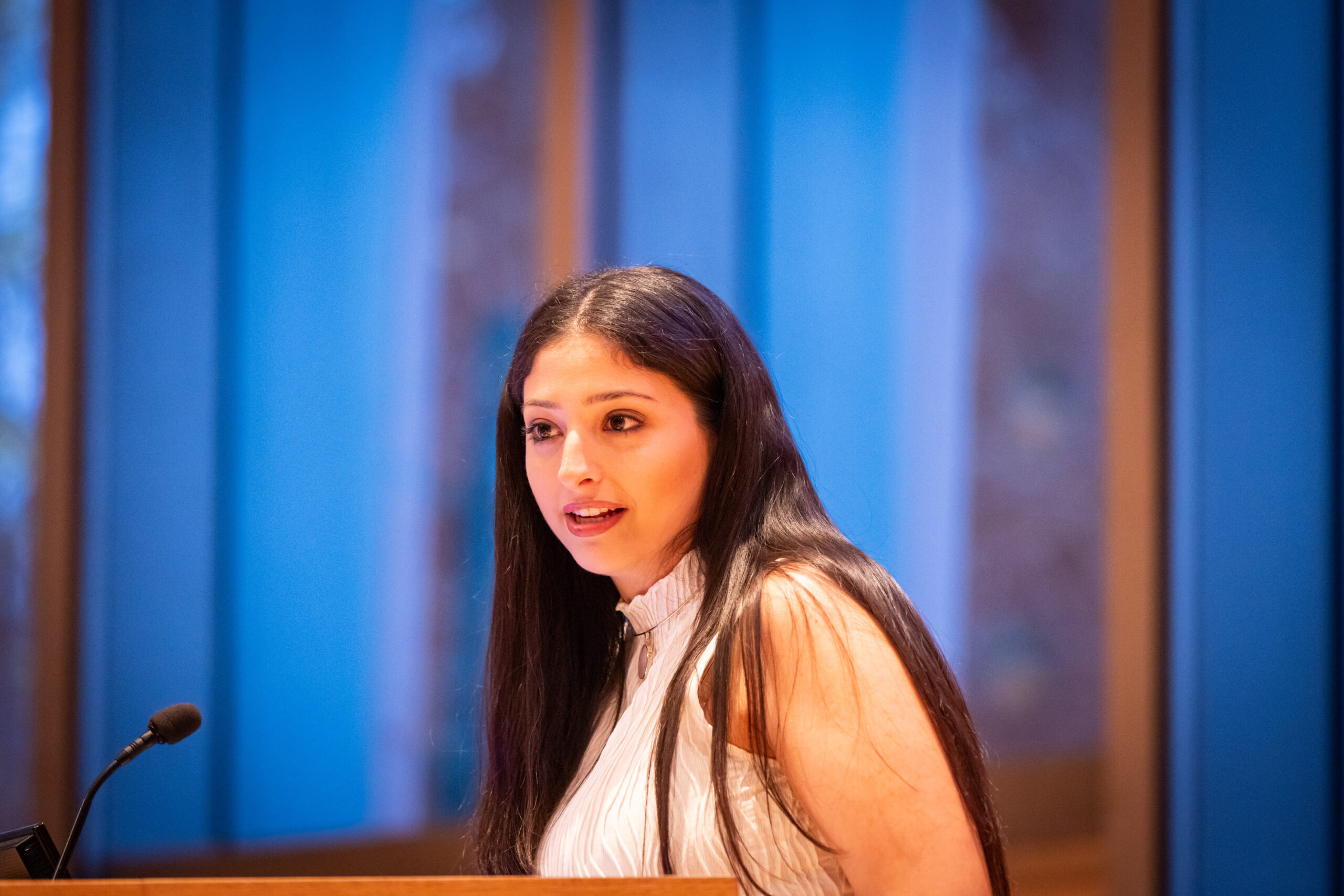
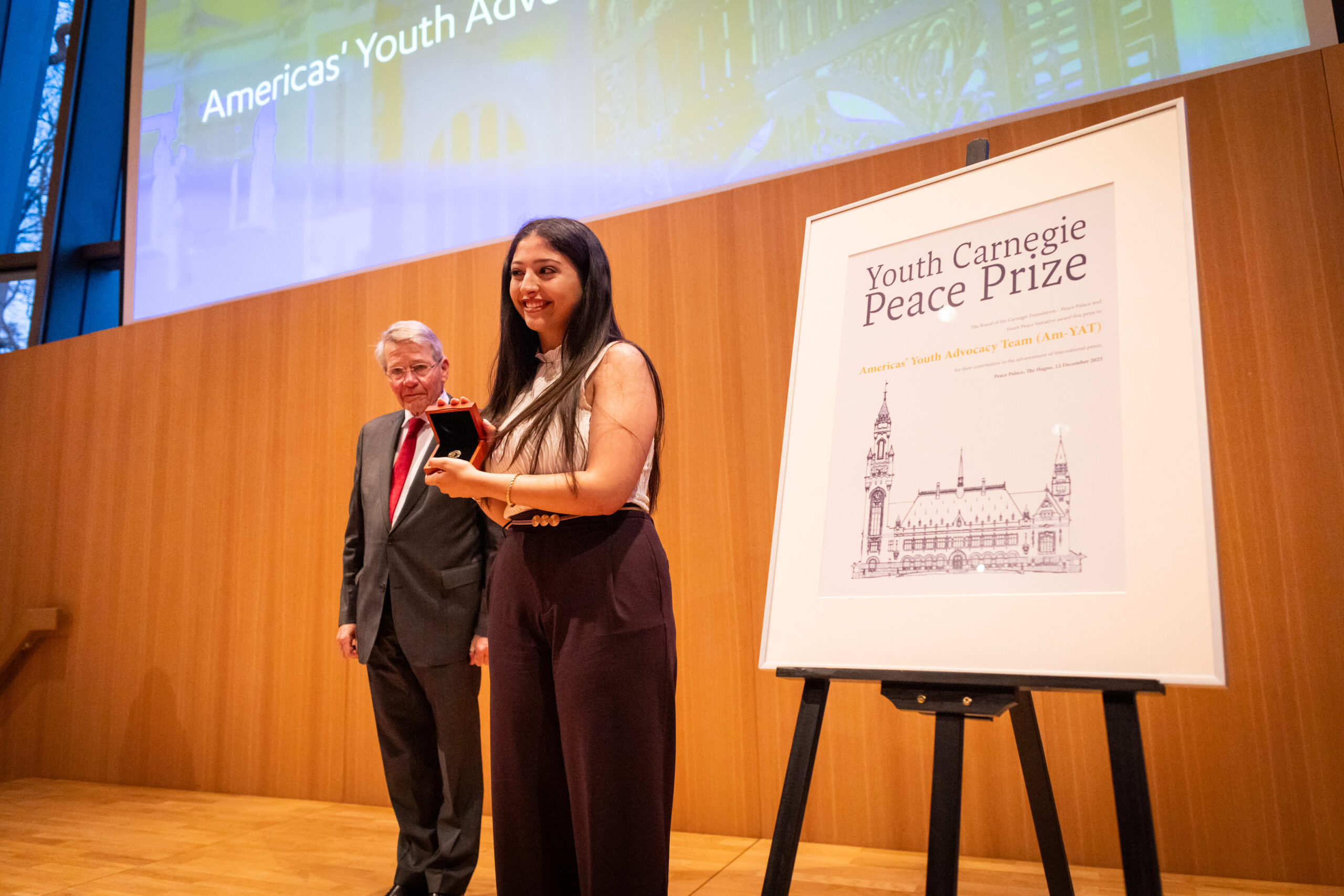
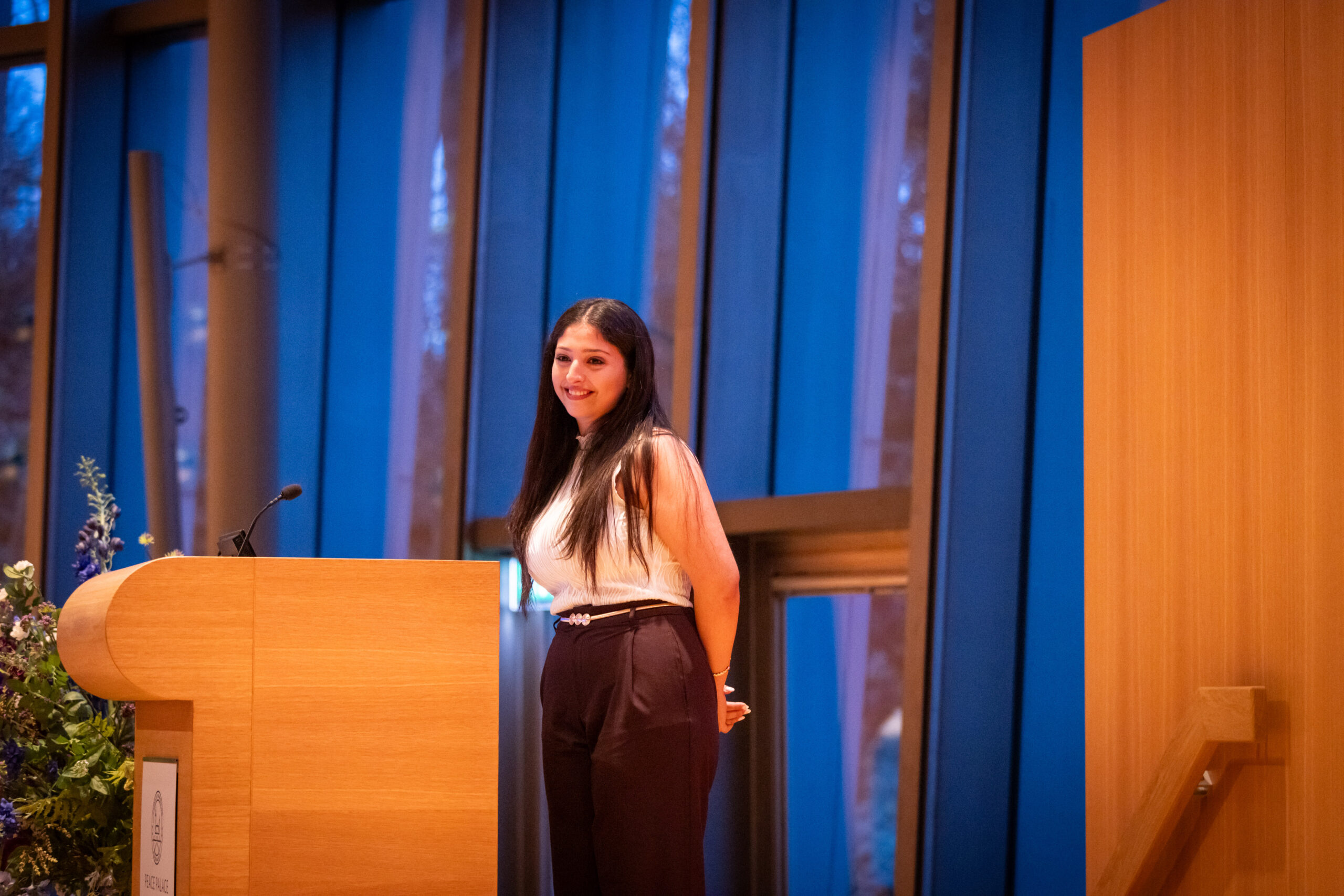
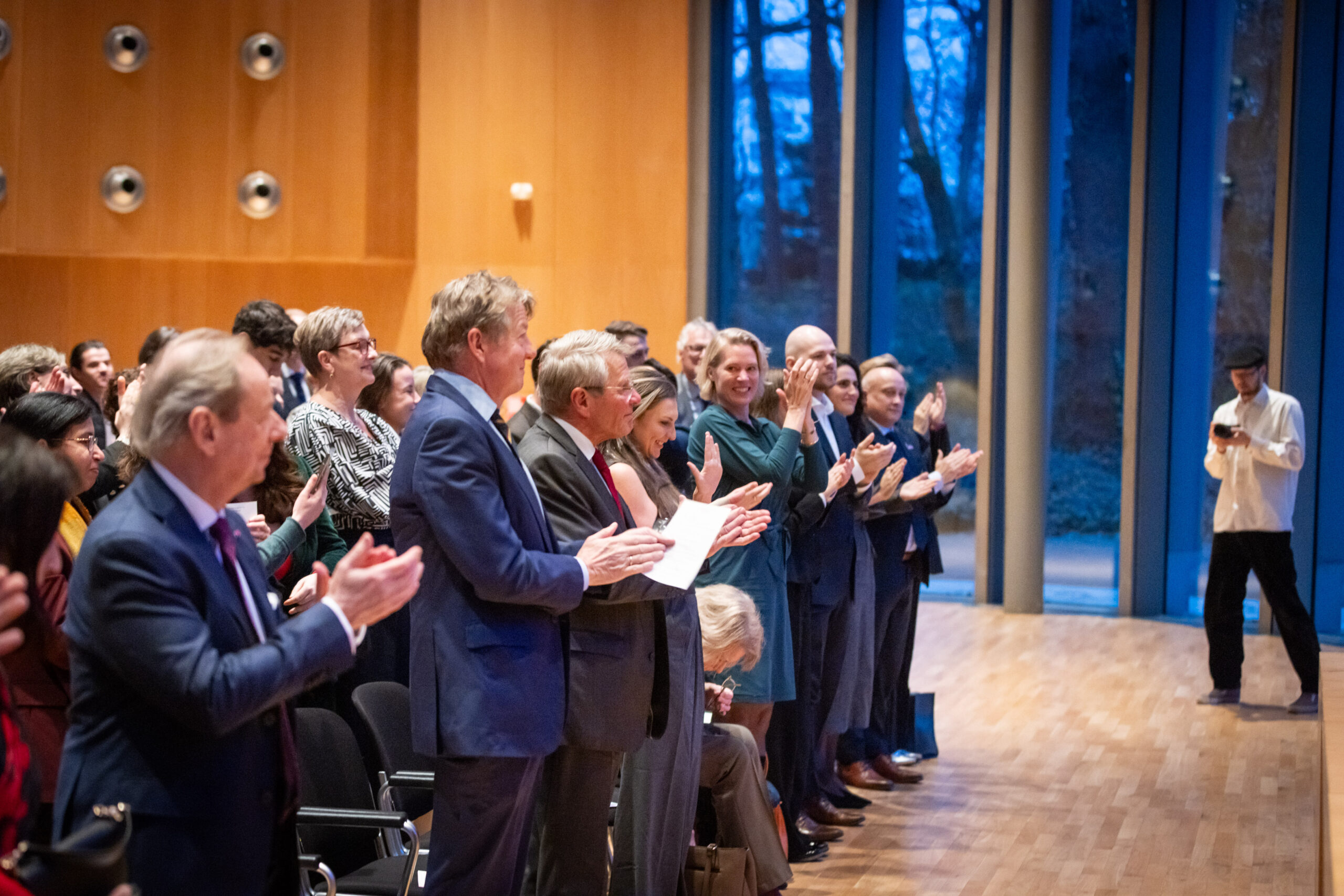
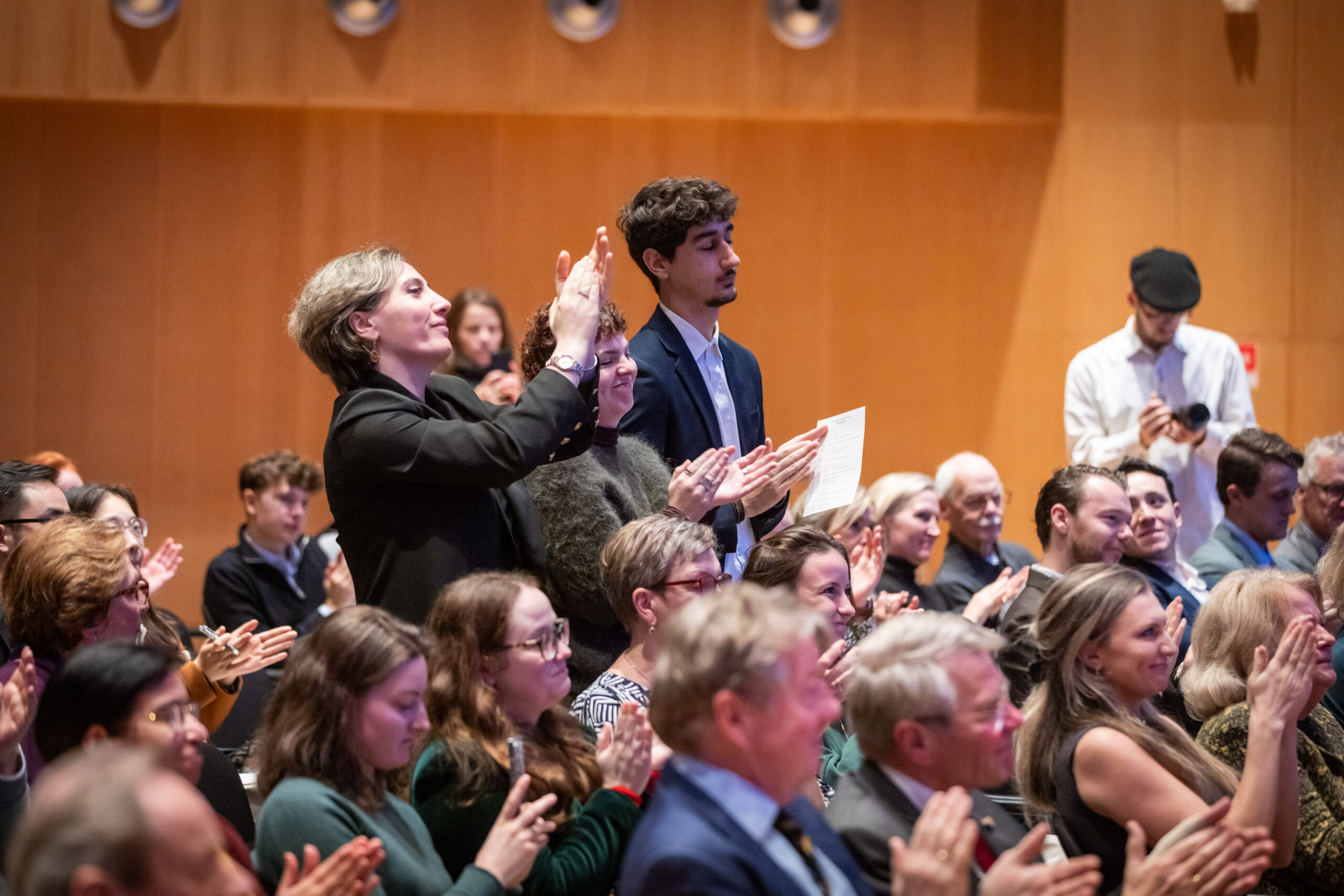
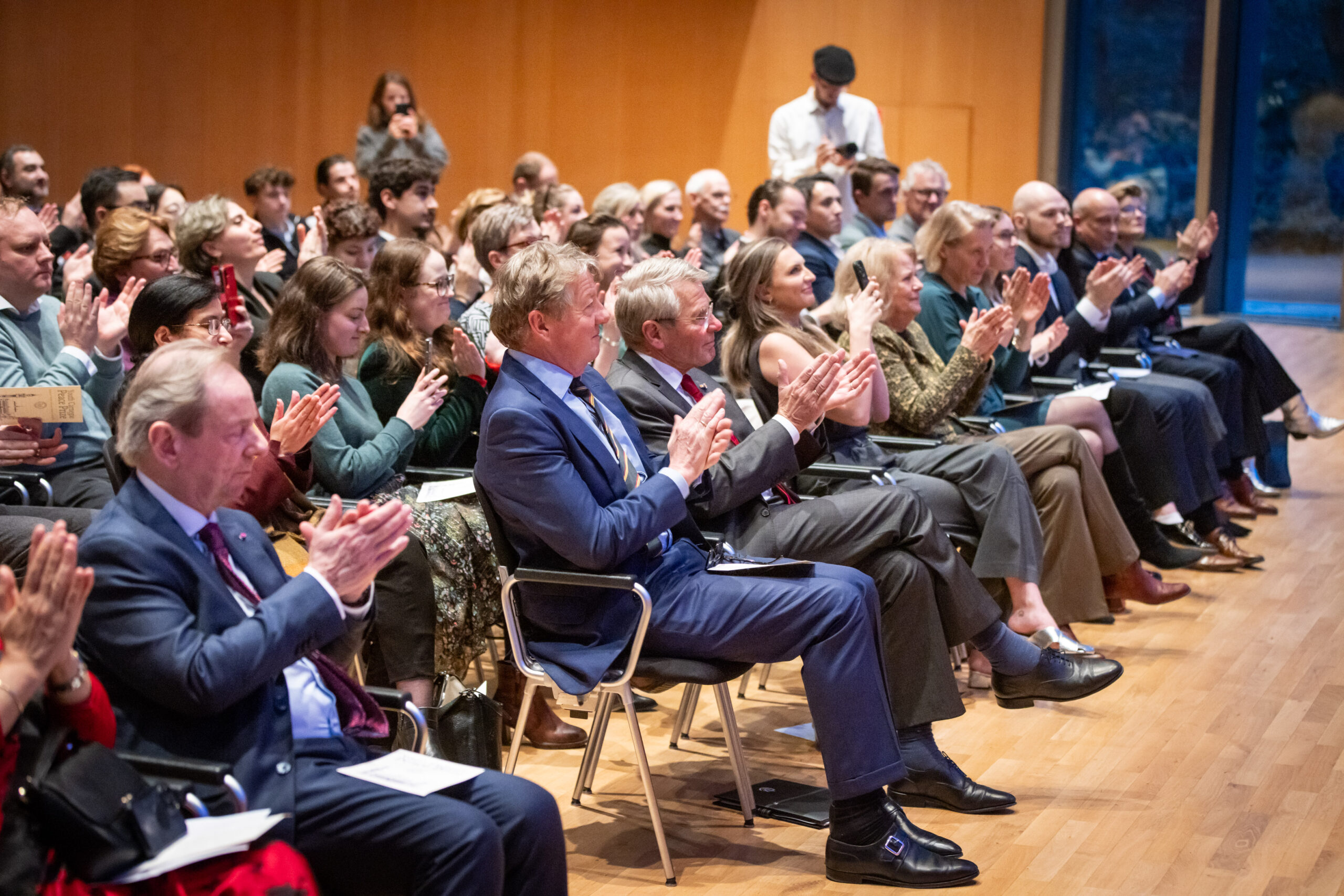
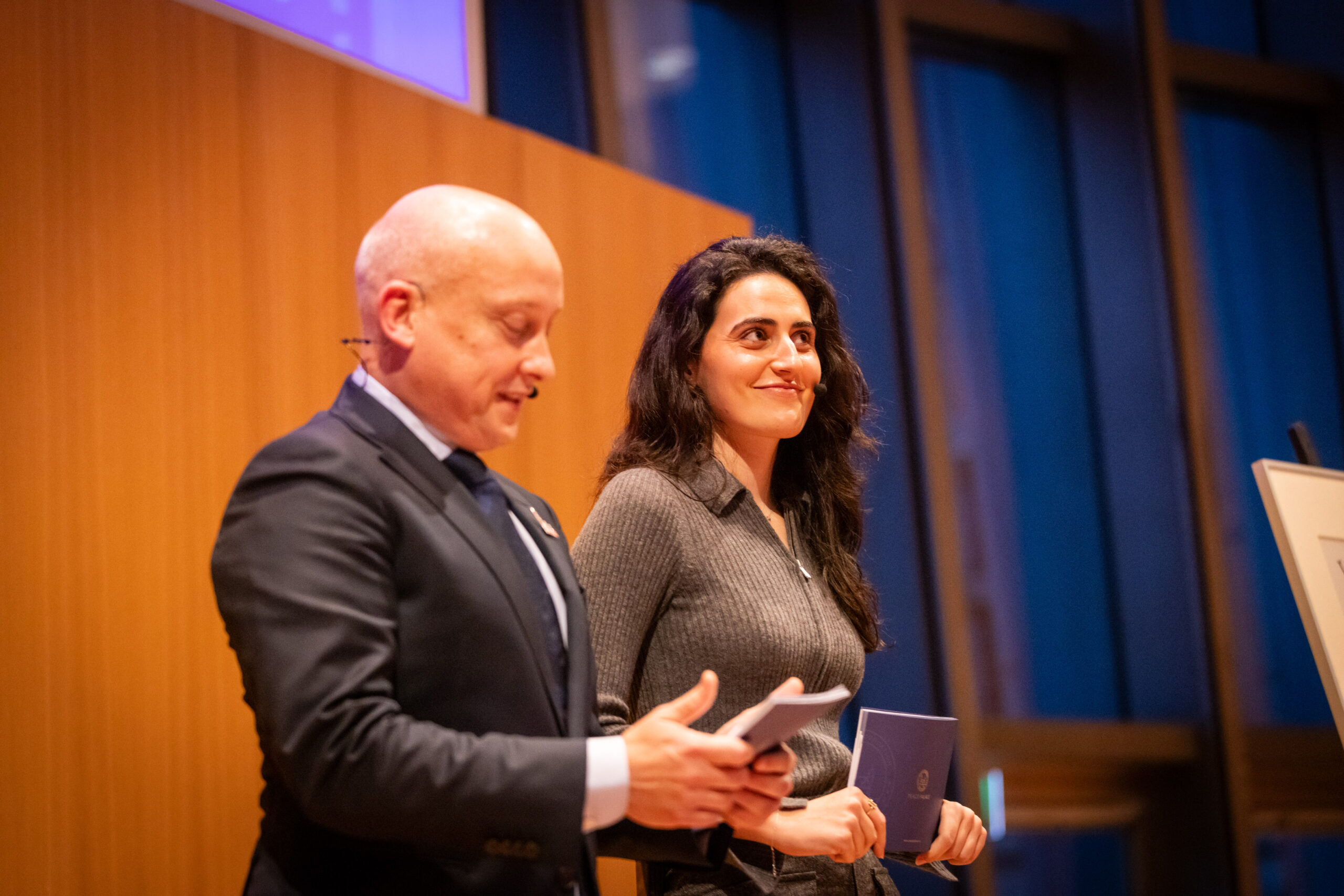
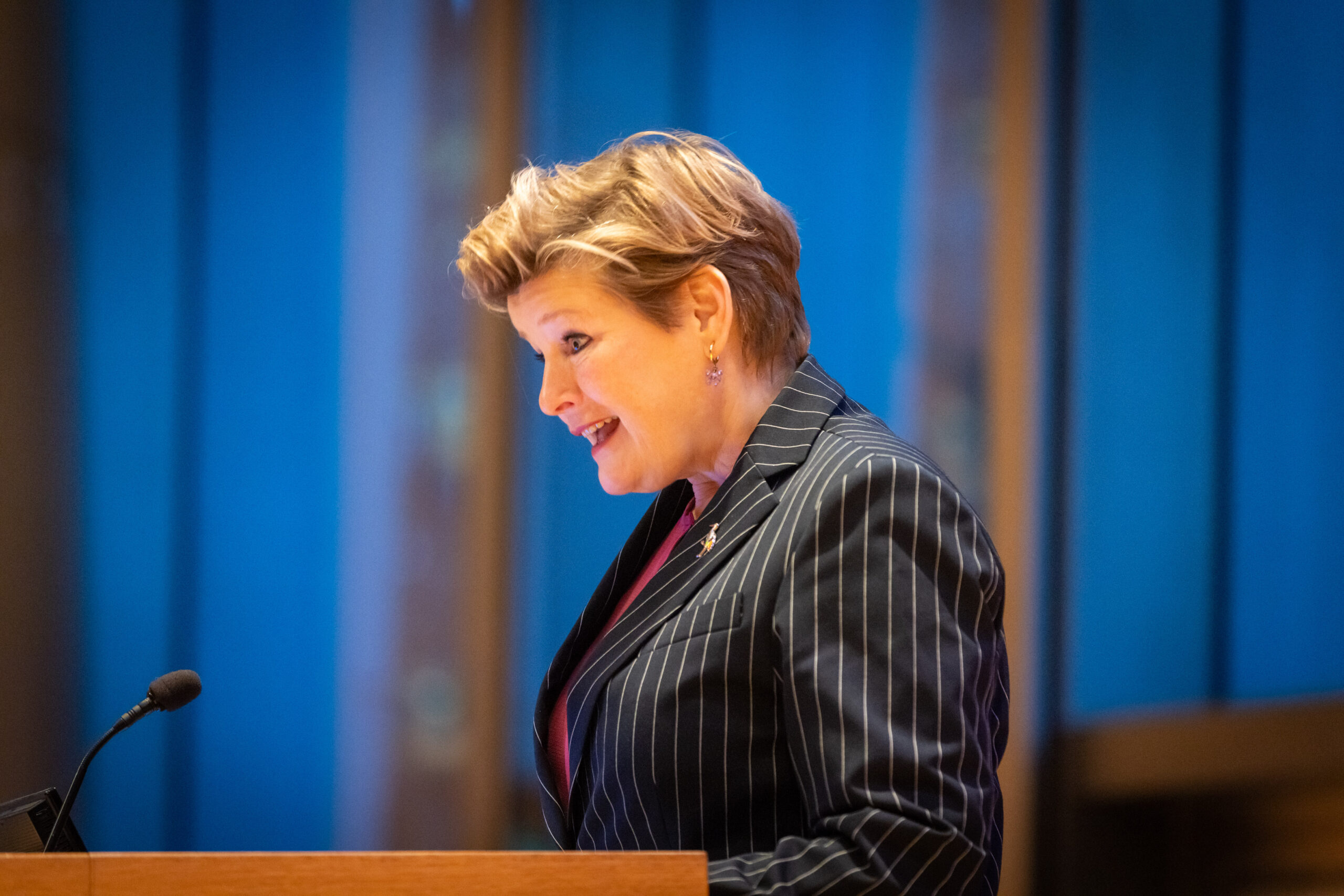
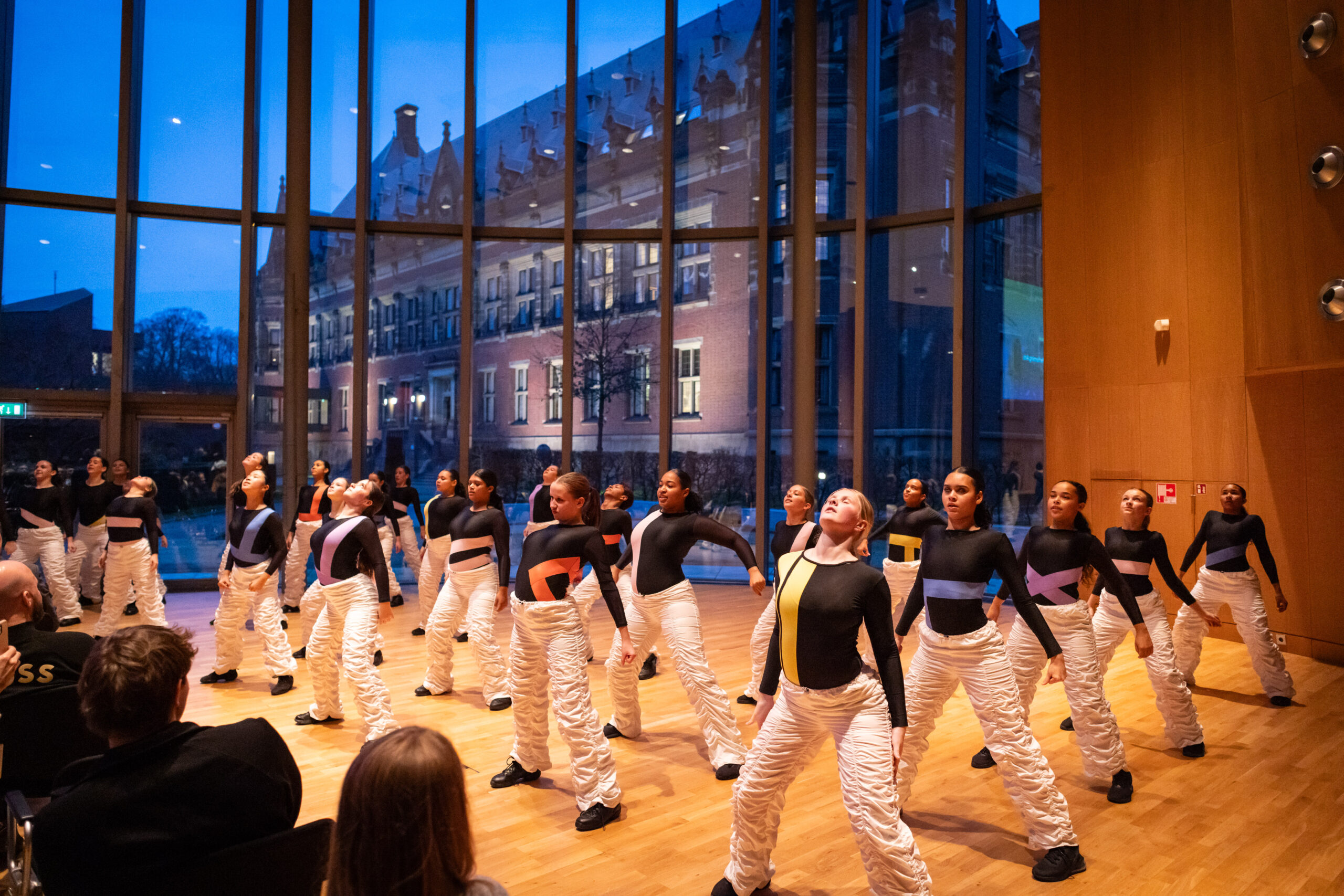
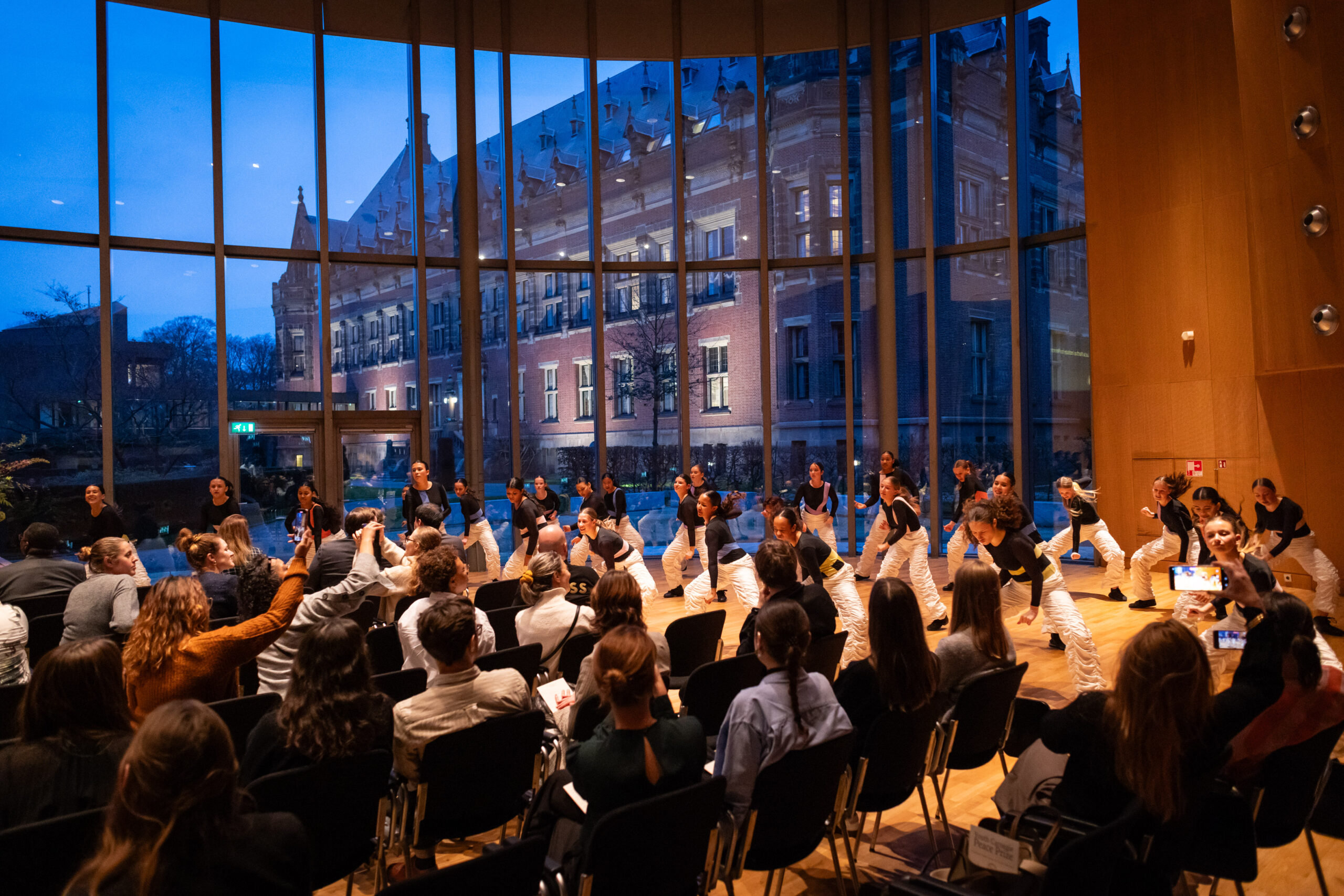
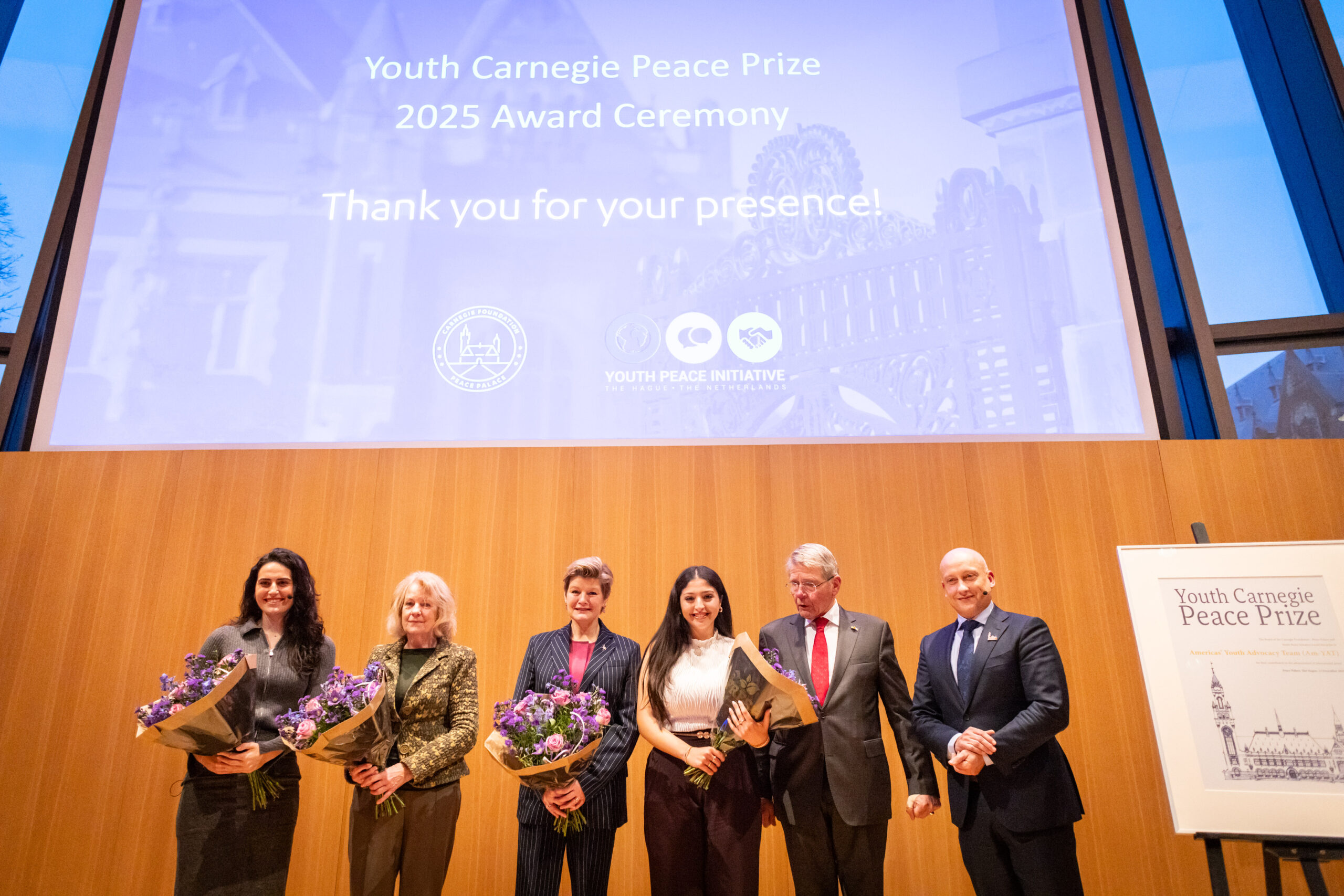
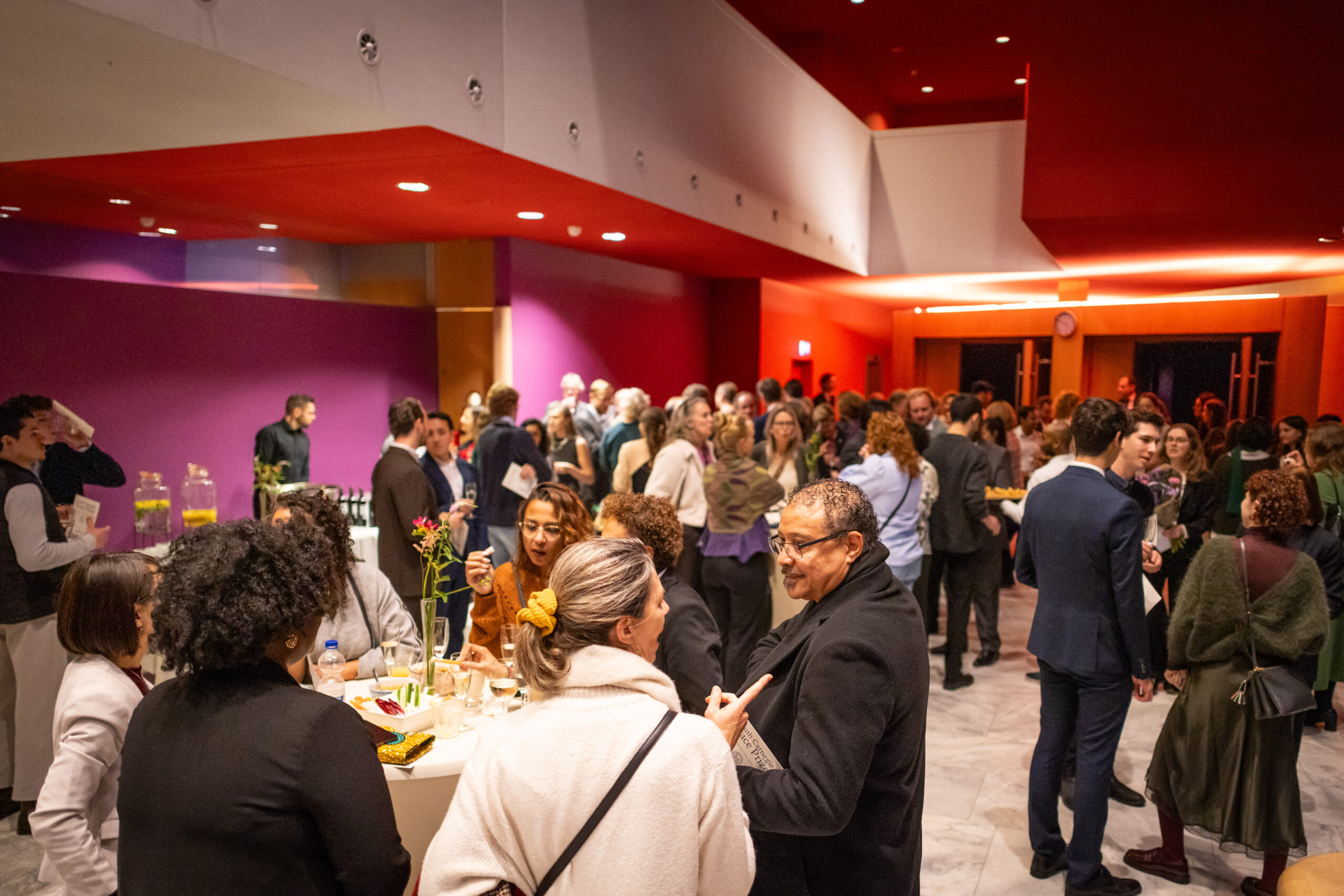
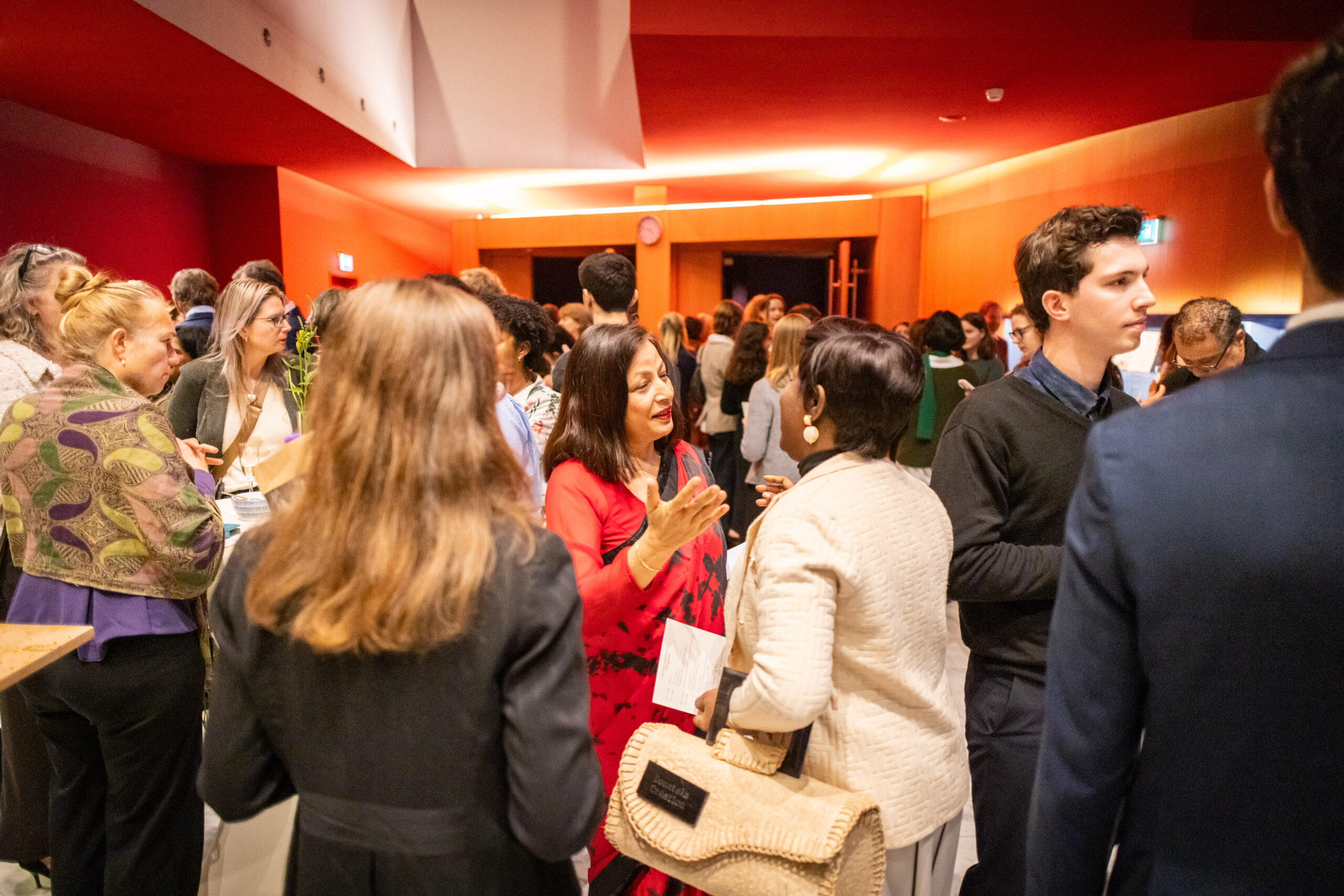
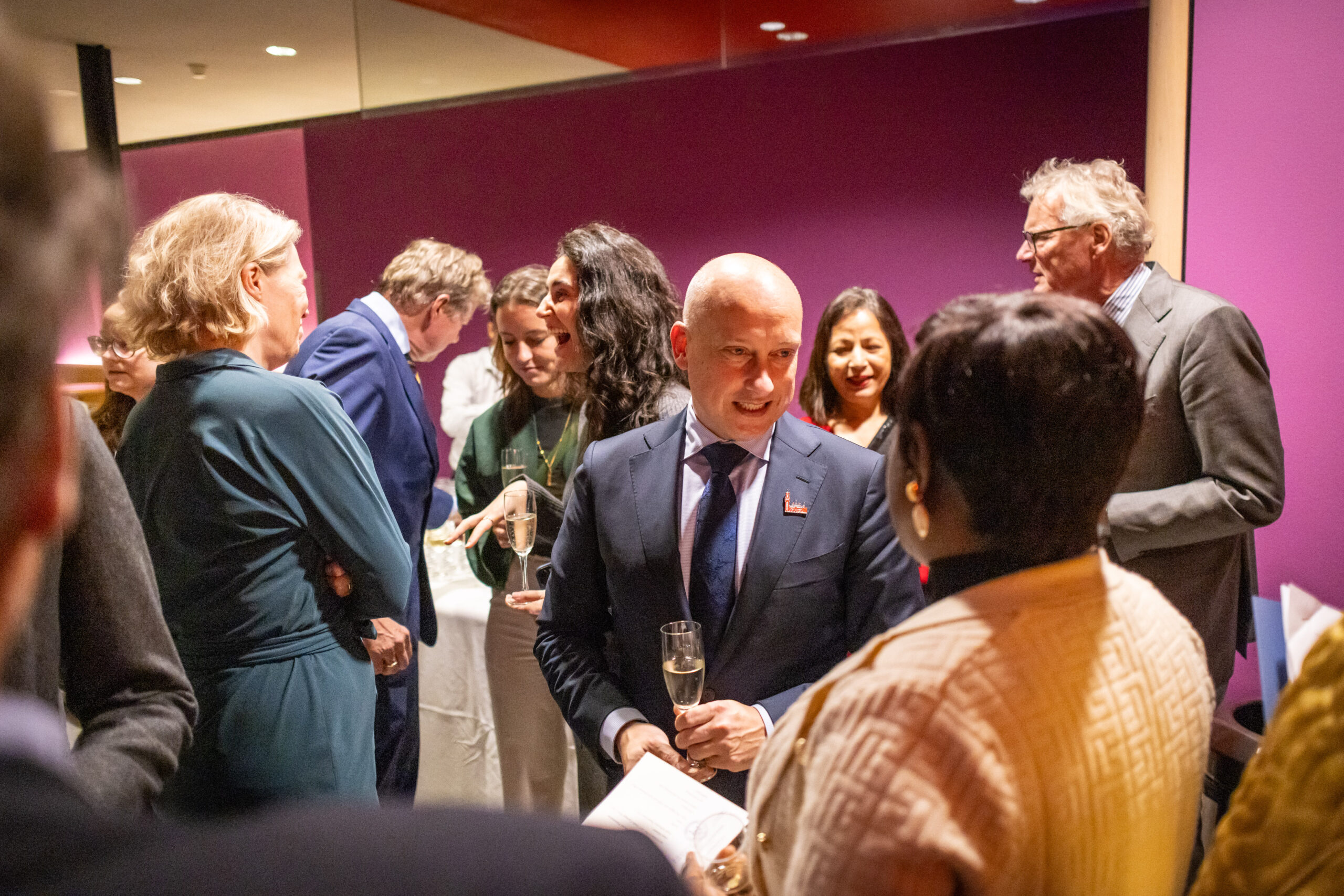
On 12 December 2025, the Americas Youth Advocacy Team (Am-YAT) was honored with the Youth Carnegie Peace Prize at the Peace Palace in The Hague. The organization was recognized for its innovative approach to making peacebuilding accessible, connecting young peacebuilders across the Americas, and actively engaging policymakers to advance youth participation in peace processes.
The Laureate
The Americas Youth Advocacy Team (Am-YAT), established in May 2024 under the umbrella of the United Network of Young Peacebuilders (UNOY), is a dynamic network uniting 25 young peacebuilders from 16 youth-led organizations across the Americas. Its mission has been to strengthen youth-led advocacy and advance the implementation of international and regional Youth, Peace and Security frameworks through research, workshops, campaigns, and grassroots initiatives.
In April 2025, Am-YAT launched its flagship report, Catalyst for Change, an evidence-based publication addressing critical gaps in youth and peace research and offering practical tools for stakeholders to support youth participation in peacebuilding. The report focused on three key themes: youth involvement in conflict resolution, advocacy for human and environmental rights, and unity in diversity. It showcased inspiring grassroots initiatives and provided actionable recommendations for policymakers. By promoting intersectional cooperation, investing in education, and fostering cross-cultural dialogue, Catalyst for Change charted a roadmap for countering polarization and advancing sustainable peace.
The Jury’s Statement
The jury of the Youth Carnegie Peace Prize explained: “Working for peace can sometimes feel abstract, and analyzing numbers and statistics can seem like a dry subject. The young people of Americas Youth Advocacy Team know how to bring ideas and numbers to life in everyday experiences: They fill gaps in existing research on Youth, Peace and Security, make it accessible to a broad audience and actively seek dialogue with policymakers – all while connecting young peacebuilders across North America, the Caribbean, and Latin America. Am-YAT and its report serve as a strategic tool for advocating youth involvement, mobilizing investment in youth-led peace initiatives, and fostering a strong sense of empowerment.”
Youth Carnegie Peace Prize
The Carnegie Foundation, owner and manager of the Peace Palace, together with the Youth Peace Initiative, awards the Youth Carnegie Peace Prize every two years to showcase outstanding best practices by young individuals and youth-led organizations. The prize shines a spotlight on innovative peacebuilding efforts and aims to inspire others to launch their own initiatives. In 2023, the international youth movement World’s Youth for Climate Justice won the Prize for its dedicated efforts in fighting climate change by means of international law and for advocating climate justice.
Award Ceremony
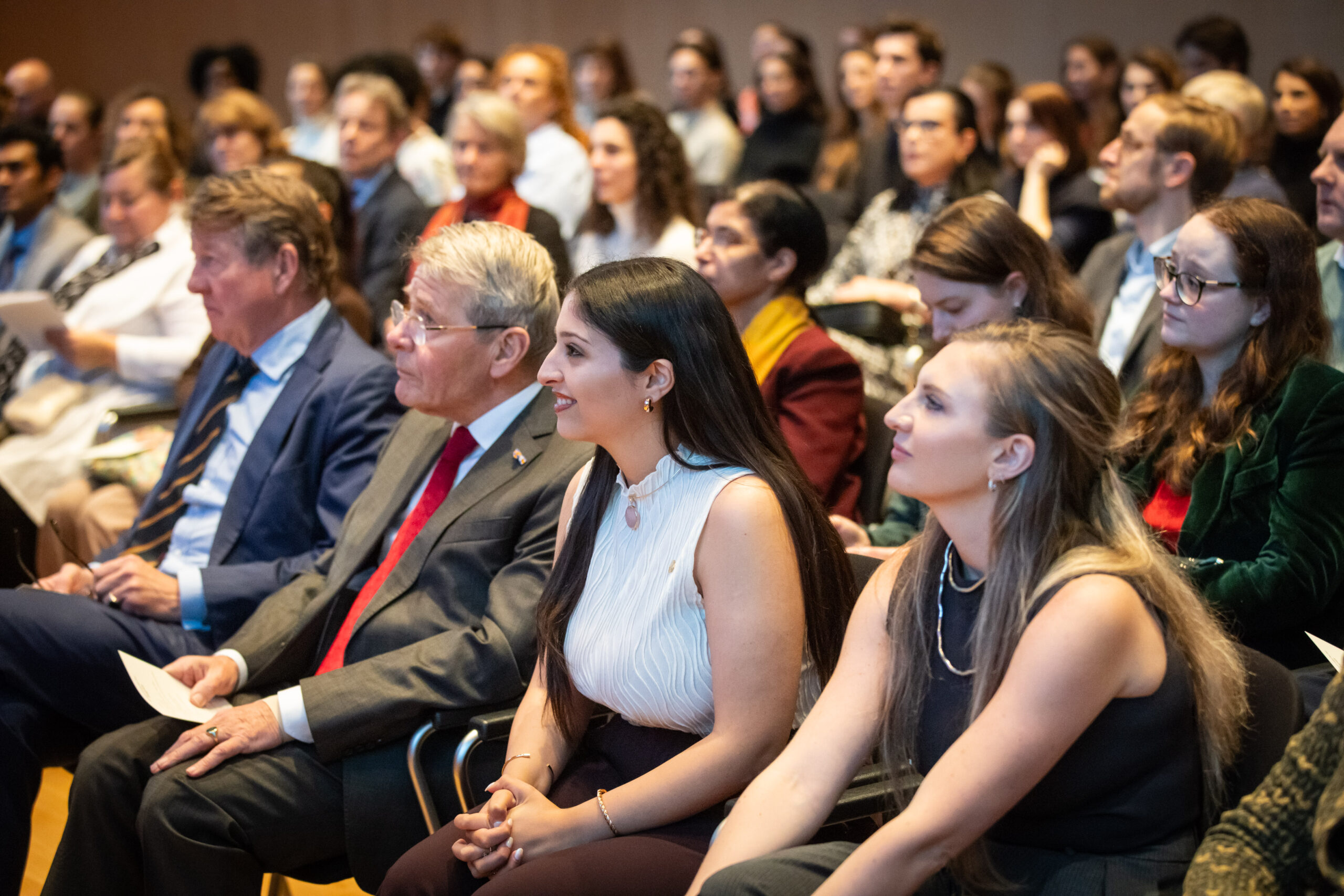
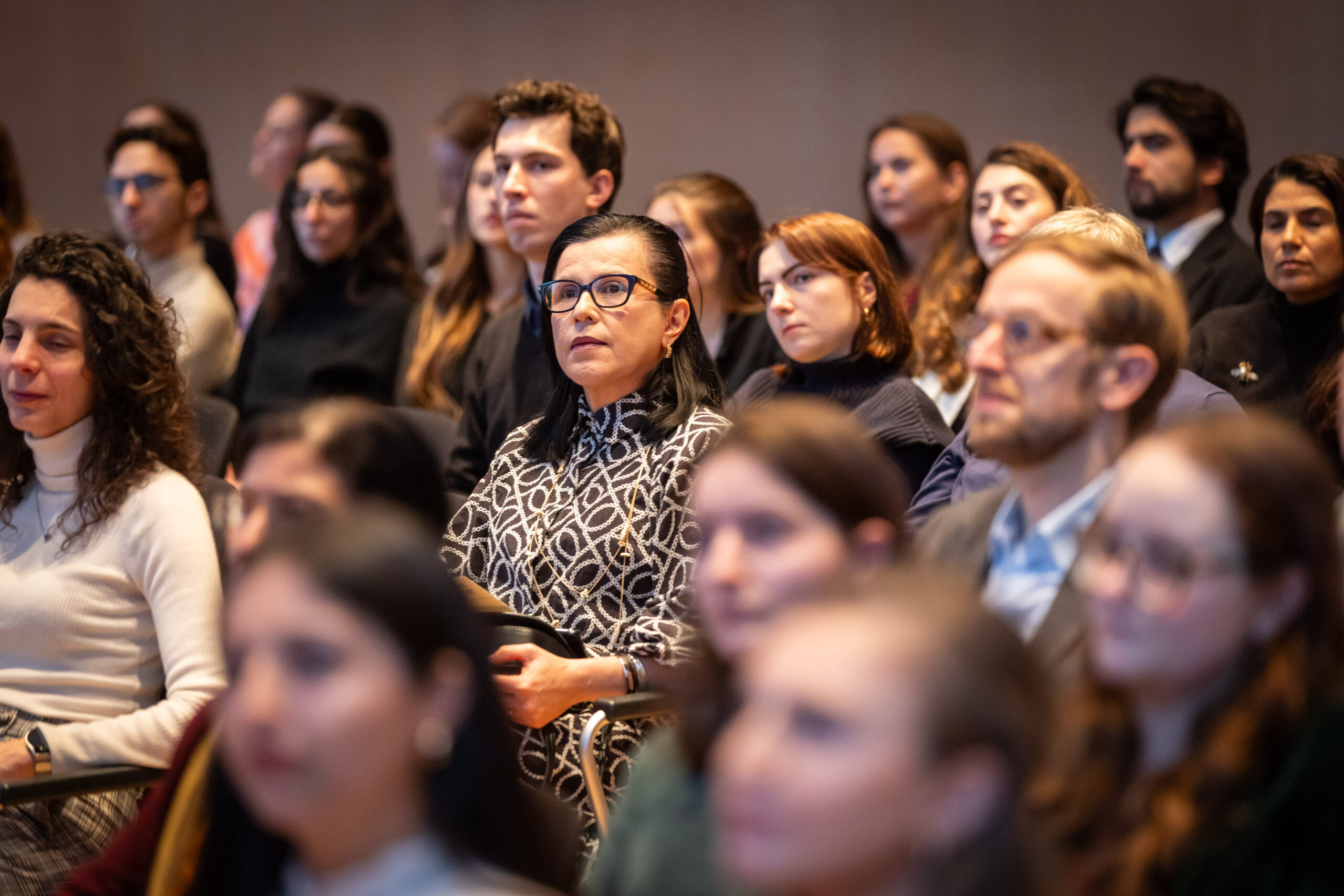
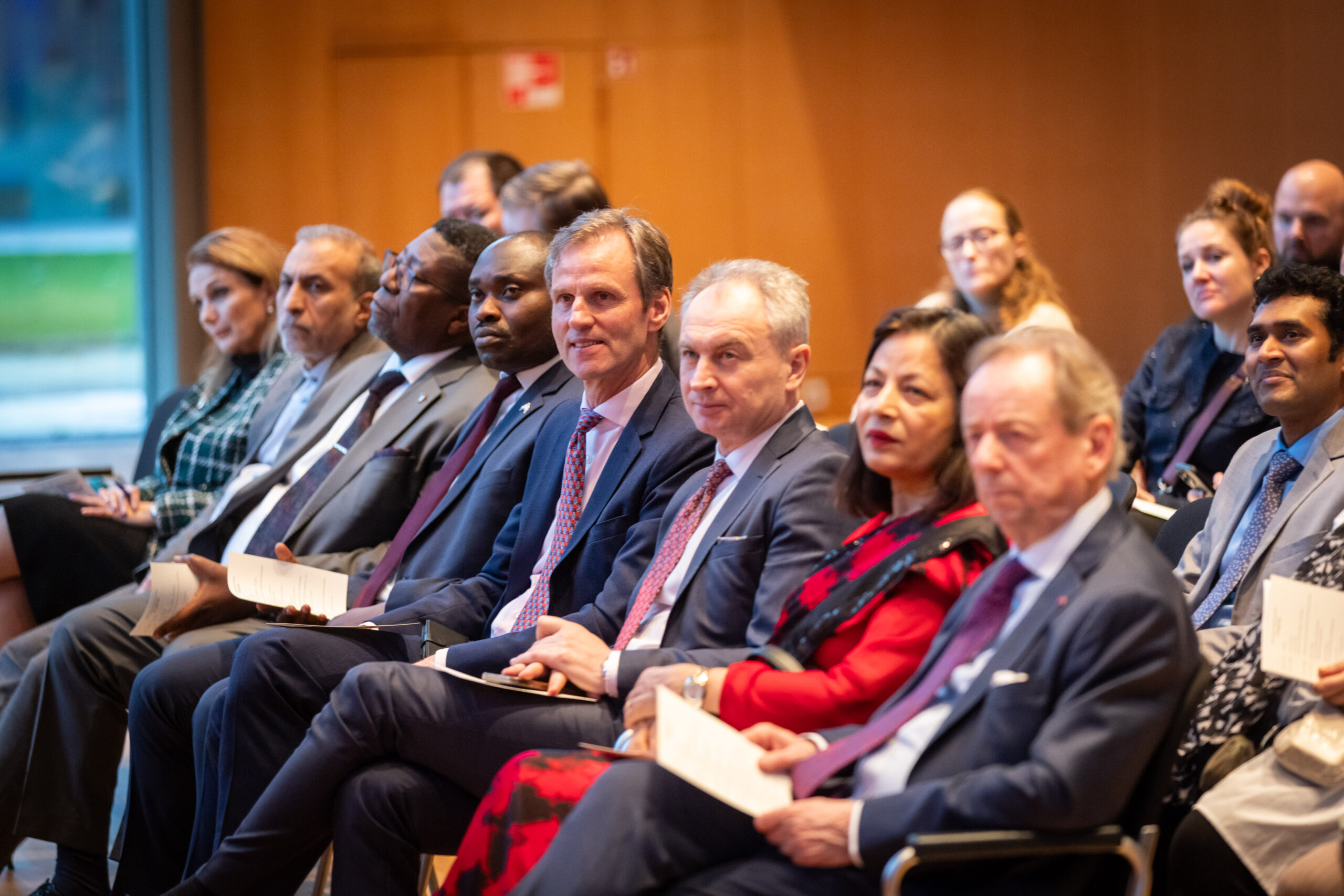
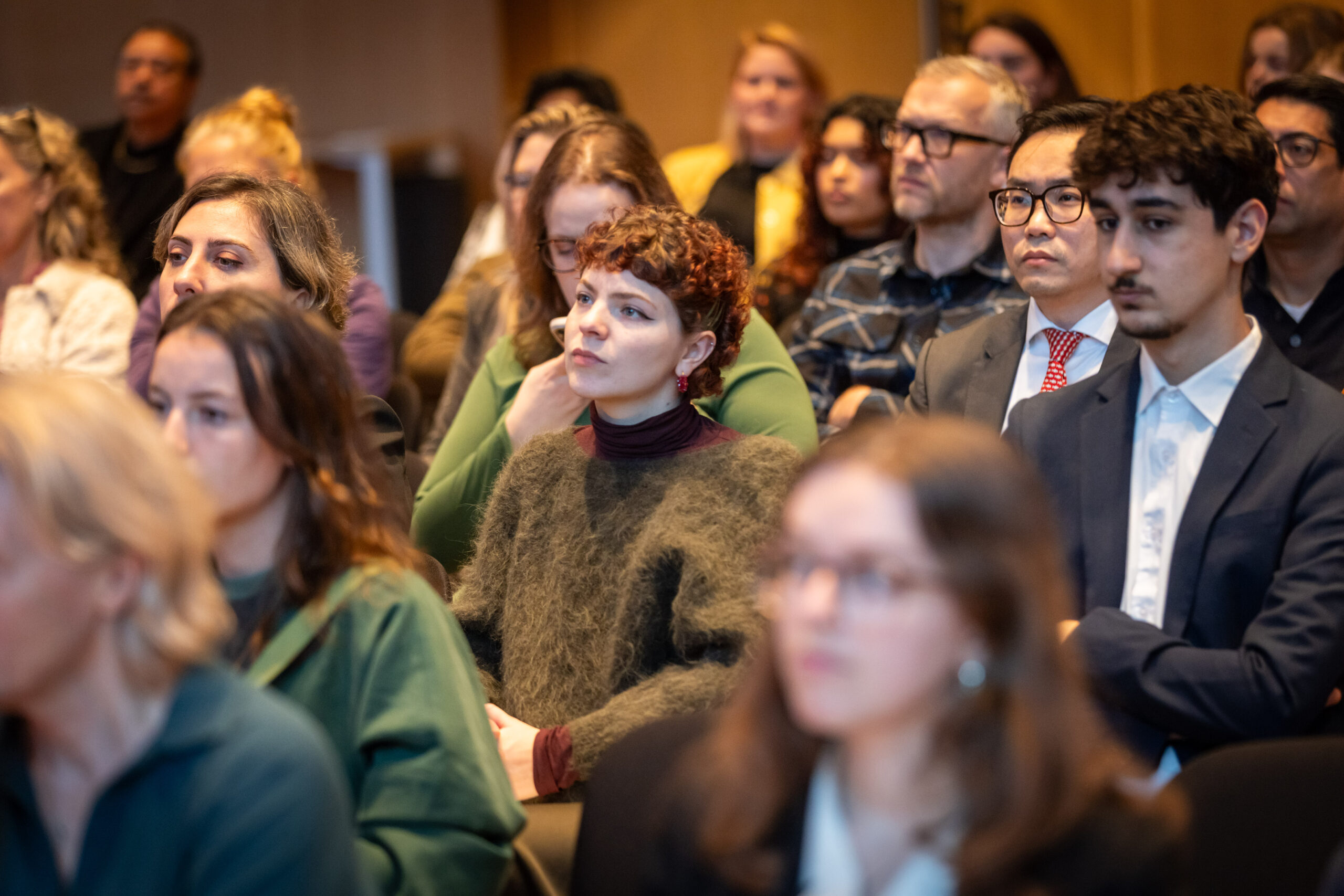
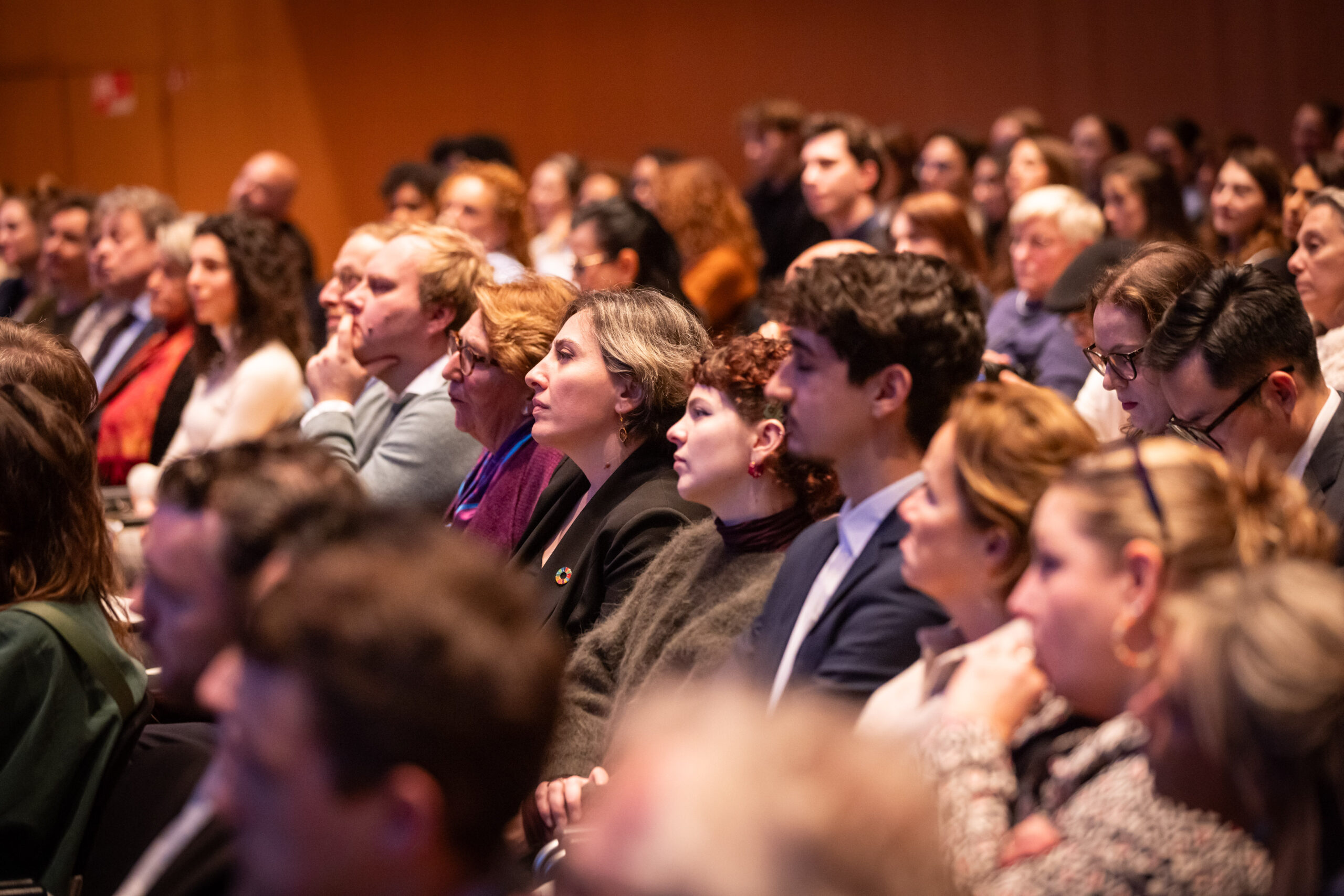
The Youth Carnegie Peace Prize was formally presented to the Americas Youth Advocacy Team on Friday, 12 December 2025. The recording of the Award Ceremony can be watched here:
Photos Award Ceremony

From Peace Palace to Nobel Prize: A Tribute to Bertha von Suttner
On 10 December 2025, it will be exactly 120 years since Bertha von Suttner became the first woman to receive the Nobel Peace Prize. The Austrian writer and pacifist was a leading figure in the international peace movement and played an important role in the creation of the Peace Palace. In the coming days, several activities will take place around the Peace Palace to honor her life’s work and make it accessible to new generations.
Bertha von Suttner
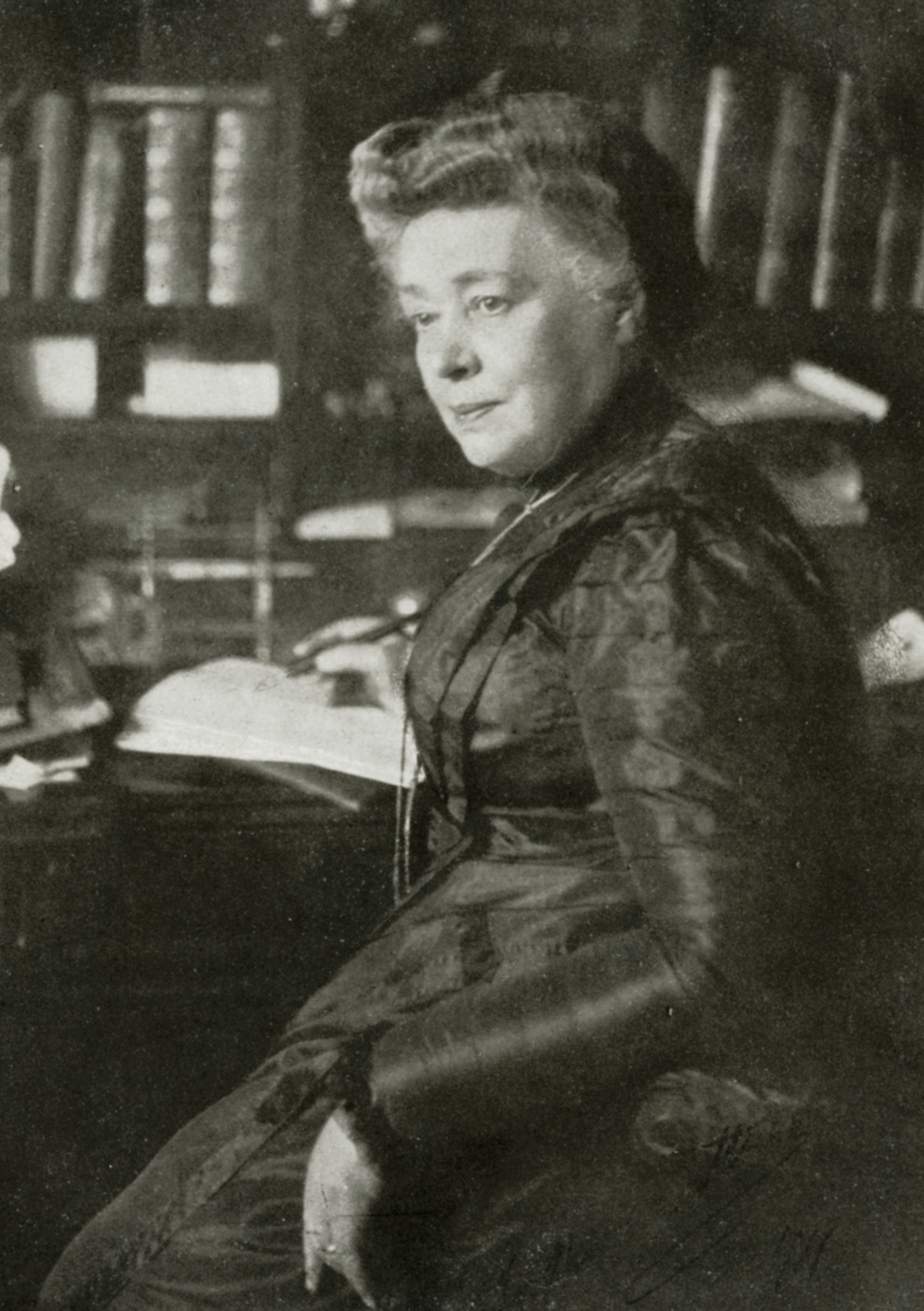
Bertha von Suttner (1843–1914) became world-famous with her book Die Waffen nieder! (Lay Down Your Arms!, 1889), a classic novel against war and militarism. She was an Austrian author and pacifist who played a key role in the international peace movement. As Vice-President of the International Peace Bureau, she tirelessly advocated arbitration as an alternative to war. Her correspondence with Alfred Nobel inspired him to establish the Nobel Peace Prize, which she herself received in 1905 as the first woman.
Von Suttner and the Peace Palace
During the First Hague Peace Conference, which took place in The Hague for three months in 1899, Bertha von Suttner played an important role behind the scenes. Although she was not a diplomat and therefore not an official delegate to the conference, she regularly organized tea salons, including at the Kurhaus, to persuade diplomats of her ideas.
Her activism was successful: the countries participating in the Peace Conference established, among others, the Permanent Court of Arbitration to settle conflicts peacefully. In its wake, the Peace Palace was built to house this court. At the opening on 28 August 1913, Bertha von Suttner was present as an honored guest, just one year before her death.
Von Suttner wrote in 1913 about the Peace Palace: “For about two decades, pacifists have been working continuously and steadfastly on […] conferences, treaties, tribunals, and the like. These endeavors also need their tangible forms, their widely visible symbols, their homes. War, which has dominated the earth for thousands of years, lacks no monuments and palaces. Peace […], however, possesses only one magnificent building: the palace erected by Andrew Carnegie in the birthplace of the Permanent Court of Arbitration.”
Today, the Peace Palace houses not only the Permanent Court of Arbitration but also the United Nations International Court of Justice, the Hague Academy of International Law, and one of the world’s most renowned libraries on international law. Bertha von Suttner’s books, notes, and correspondence are part of this library’s collection.
Exhibition at the Visitors Centre
The Visitors Centre of the Peace Palace presents a compact exhibition dedicated to Bertha von Suttner’s life and work. Alongside images, videos, her original notes, and books, visitors can experience “Bertha’s Desk”: a reconstruction of the desk shown in a historic photo where she wrote her influential works. Visitors are invited to sit at the desk and write down their own thoughts on peace, with the Peace Palace as an inspiring backdrop. This can also be done on a special postcard featuring Bertha’s portrait, which can be sent directly via the Visitors Centre. The shop also offers a new English version of her famous book Lay Down Your Arms!.
Bertha von Suttner Bust on Carnegieplein
The Hague artist Ingrid Rollema created a bronze bust of the young Bertha von Suttner, mounted on the barrel of an old cannon—a howitzer nicknamed “Big Bertha.”
This bust was donated to the Municipality of The Hague in 2013 on the occasion of the Peace Palace’s centenary. The artwork will now be placed in a public location on Carnegieplein in front of the Peace Palace, making it visible to everyone. Deputy Mayor and Alderman Mariëlle Vavier of the Municipality of The Hague will officially unveil the Bertha bust on December 10 at 3:30 p.m.
Conference: Women & Peace
On December 9 and 10, the Alliance Française and the French Embassy in The Hague, in cooperation with the Municipality of The Hague, will organize the conference Women and Peace. The second part of the conference on December 10 will take place in the Auditorium of the Peace Palace. The program includes inspiring speeches, roundtable discussions, and, as the highlight, the presentation of the first Bertha von Suttner Peace Prize 2025.
Podcast
The latest episode of the Dutch podcast series Verhalen van Hollands Buiten (Stories from Holland’s Estates) focuses on the history of the Peace Palace, with special attention to Bertha von Suttner. Her personal diary notes offer a rare glimpse into the international peace movement and the origins of the Peace Palace. This episode by Stichting Monument en Verhaal shows how her ideals and efforts contributed to the creation of this world-famous “Temple of Peace.” The podcast is available on all major streaming platforms.
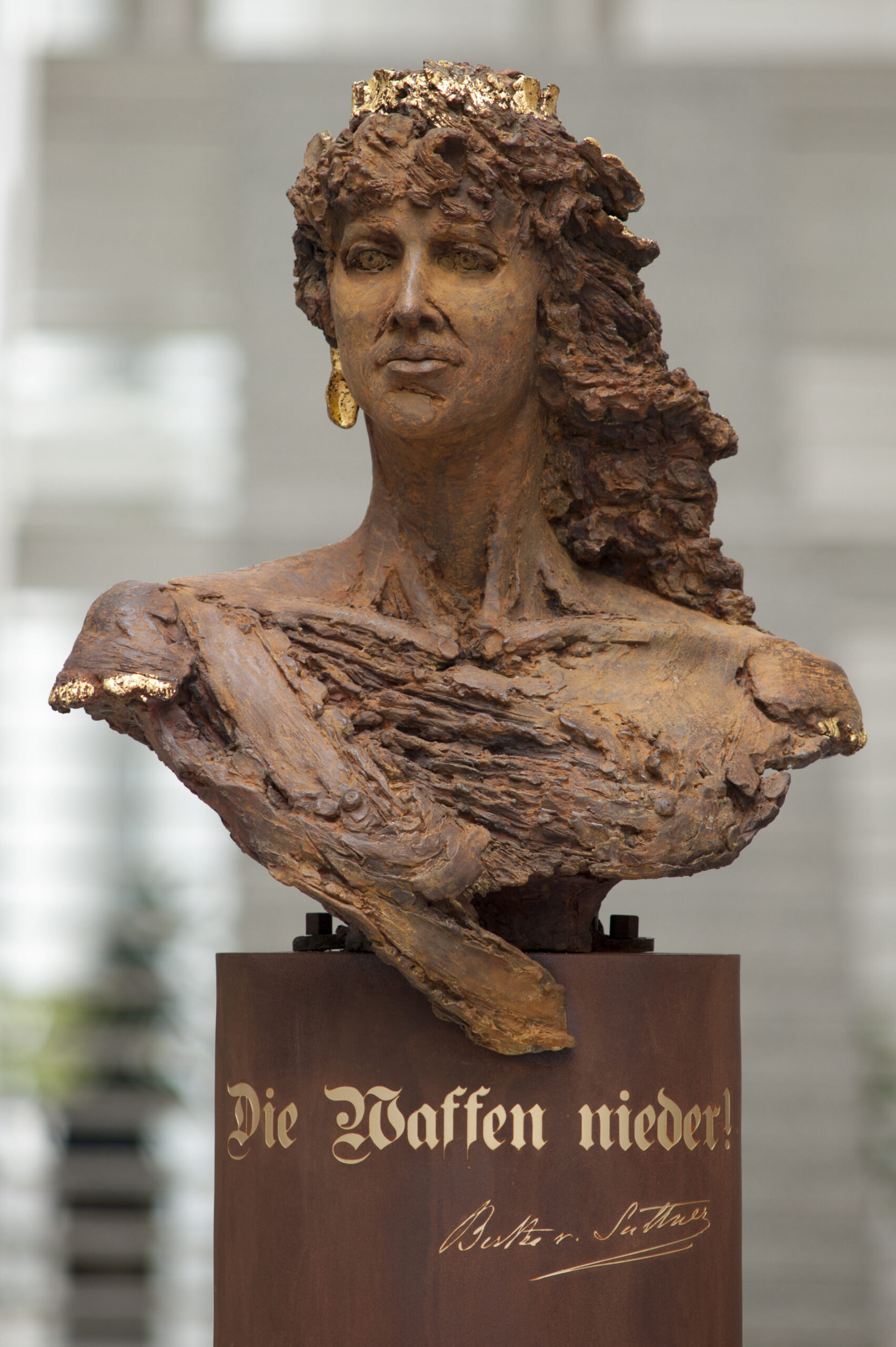
Bust Bertha von Suttner, Ingrid Rollema
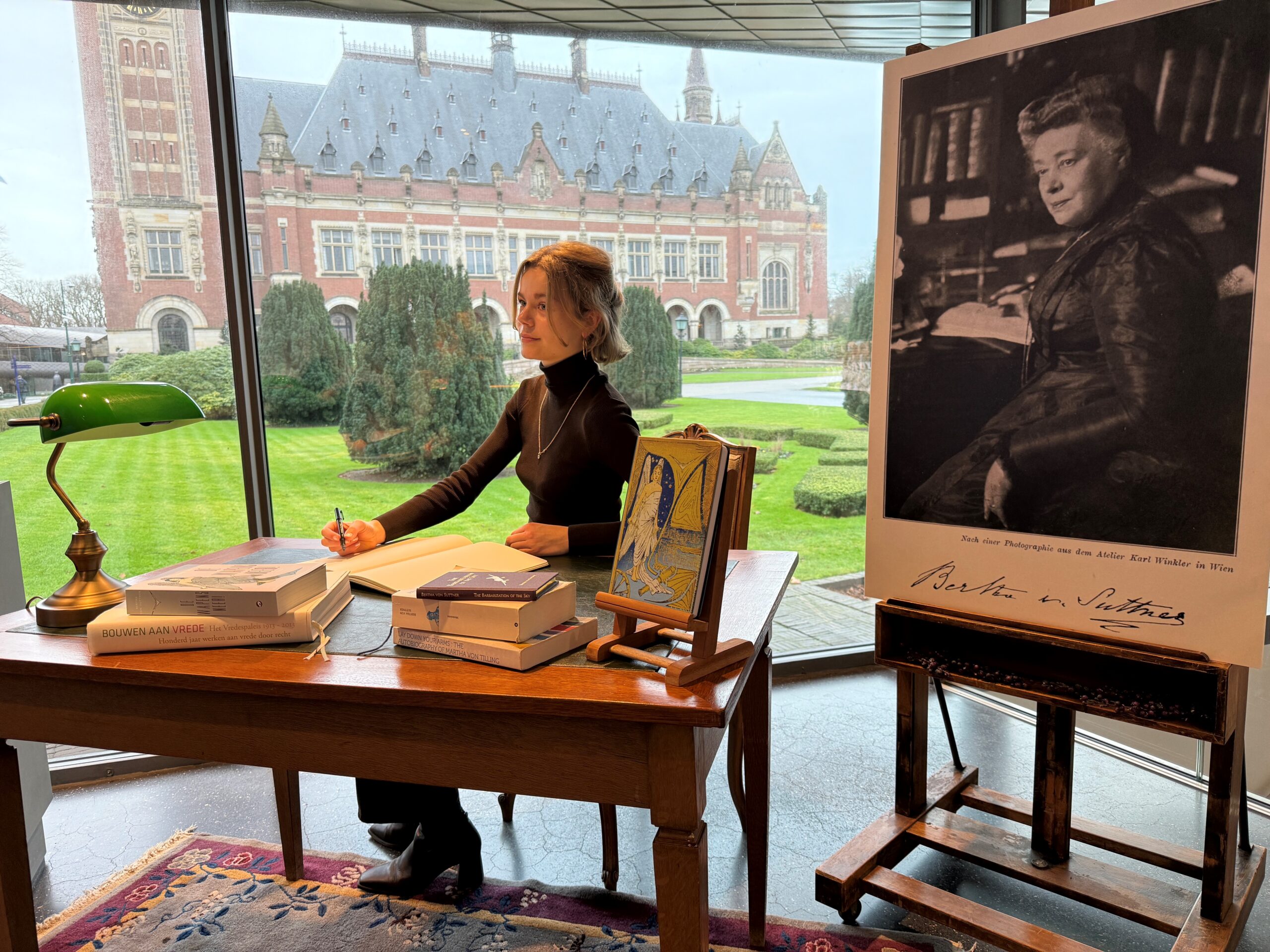
Bertha’s desk in the Vistiors Centre of the Peace Palace
Peace Palace Receives Award-Winning Stamp Collection ‘The League of Nations: No Guarantee for Peace’
There are countless ways to document, reconstruct, and narrate history. Anton van Deutekom discovered a unique method: he brought history to life through postage stamps. His award-winning collection, The League of Nations: No Guarantee for Peace, has now been formally entrusted to the Peace Palace Library.
Collection
The stamp collection The League of Nations: No Guarantee for Peace comprises 132 sheets containing approximately 500 stamps. The earliest stamps date back to 1899—the year of the First Hague Peace Conference, regarded as a cornerstone event that eventually led to the founding of the Peace Palace. Another particularly notable stamp in the collection was issued in 1920 to mark the establishment of the League of Nations.
Dutch philatelist Anton J.J.M. van Deutekom (1951–2024) enriched his stamp collection with contextual narratives and historical insights. The result is a comprehensive collection of the League of Nations, the precursor to the United Nations. With its exceptional documentation and rare philatelic items, the collection earned Van Deutekom three gold medals across three continents. The estimated value of The League of Nations: No Guarantee for Peace collection is €400,000.
Transfer
Although the collection was formally donated to the Peace Palace Library in 2008, the stamps remained on loan to Anton van Deutekom. Following his passing in early 2024, his executor initiated the final steps to complete the donation. In April 2025, the collection was received by Karin Lodder, manager of the Peace Palace Library. She explains: “In addition to our holdings of over one million books on international law, the Peace Palace Library also curates unique and special collections. These include a visual archive of rare posters, photographs, cartoons, portraits, and maps related to war and peace, as well as original works by Hugo Grotius from the 17th century. We are honoured to now add this stamp collection on the League of Nations to our extensive archive.”
Exhibitions
Van Deutekom presented his exceptional collection at several international exhibitions, including in Maastricht (1995), Vienna (2000), Bangkok (2003), Brno (2005), and Washington (2006). Currently, the valuable stamp collection is safely stored in a safe. However, the Carnegie Foundation is exploring ways to make the collection more widely accessible – either through digitization or partial exhibitions.
Carnegie Foundation – Peace Palace
The Peace Palace is home to the United Nations International Court of Justice and the Permanent Court of Arbitration, as well as the Hague Academy of International Law. The Carnegie Foundation owns the Peace Palace – the global icon of Peace through Law, supports the above institutions, and manages the Peace Palace Library.
Peace Palace artwork can be seen in colour for the first time in 112 years
The monochrome painting ‘La Glorification de la Paix’ by Luc Olivier Merson hangs in the Small Courtroom of the Peace Palace. The artwork remained colourless as the artist passed away before he was able to complete it. Thanks to Benoît Cordonnier, great-grandson of the architect of the Peace Palace Louis Marie Cordonnier, one can now see how the artwork would have looked in colour.
Acquisition of the gouache painting
During the construction of the Peace Palace in the period 1907-1913 more than 50 countries contributed building materials or artworks to indicate their support. The French government donated three paintings at that time of which ‘La Glorification de la Paix’ is one and it has been hanging in the Small Courtroom of the Peace Palace since 1913. It is a full-scale (3.5×4.25 meter) study in monochrome brown tones which was to have been replaced by a Gobelin tapestry to be woven in colour with the same design. Unfortunately, Luc Olivier Merson, the artist, passed away in 1920 before the tapestry was completed and thus the study from 1913 has always remained in its place in the courtroom.
Recently, Benoît Cordonnier, the great-grandson of the architect of the Peace Palace, Louis Marie Cordonnier, contacted the Carnegie Foundation as owner and manager of the Peace Palace. It emerged that the Cordonnier family archive contained a colour gouache painting of ‘La Glorification de la Paix’. This gouache painting is a preliminary study of the artwork and, as evidenced by an inscription on the rear, Luc Oliver Merson had gifted it to architect Cordonnier in 1917.
The Carnegie Foundation has been able to acquire this gouache painting thanks to funds received from a legacy. For the first time since the painting was hung 112 years ago, parties involved in court proceedings as well as other visitors can now see how the artist had intended the completed artwork would look. Jacobine Wieringa, curator at the Carnegie Foundation, is enthusiastic about the acquisition: “With this gouache, we understand how Merson envisaged the final artwork; we can suddenly see it through his eyes. After more than a century, ‘La Glorification de la Paix’ has gained a new dimension.”
Meaning of the painting
The canvas depicts the goddess of peace sitting on her throne. She is preventing Mars, the god of war, from rising by placing her feet on him. The peace goddess is surrounded by virtues that contribute to peace and benefit from a peaceful existence. In her left hand, the goddess holds a dove and in her right hand an olive branch: both ancient symbols of peace. Behind her victories announce the triumph of peace. On the left side of the canvas, the virtues of justice, wisdom, the arts and reason are depicted. The right side of the canvas shows characters representing work, steadfastness, unity and science.
Placement of ‘La Glorification de la Paix’
The gouache painting is in excellent condition thanks to careful preservation in the Cordonnier family archive. To make the artwork future-proof, the Carnegie Foundation will be taking further conservation measures such as the use of museum glass and checking the original passe-partout. Iljan van Hardevelt, director of the Carnegie Foundation, states: “We will exhibit the coloured gouache painting close to the large monochrome canvas. By placing the artworks next to each other in the Small Courtroom, one can now, literally, see the colours of the vision of Peace Through Law.”
Carnegie Foundation – Peace Palace
The Carnegie Foundation is the owner and manager of the Peace Palace in The Hague. The Peace Palace houses the Permanent Court of Arbitration, the International Court of Justice of the United Nations, The Hague Academy of International Law and the Peace Palace Library.
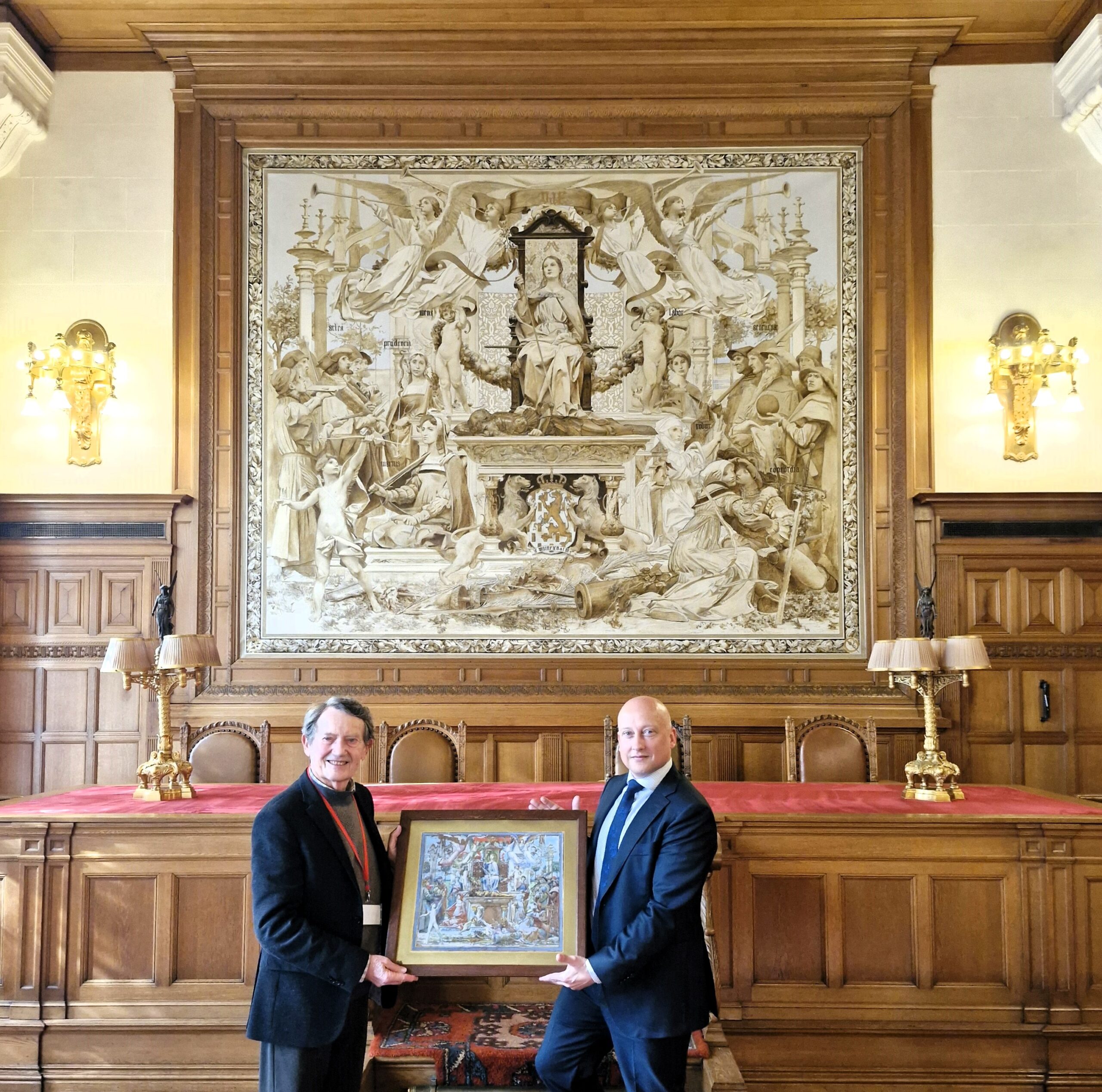
Benoît Cordonnier and Iljan van Hardevelt in the Small Courtroom of the Peace Palace
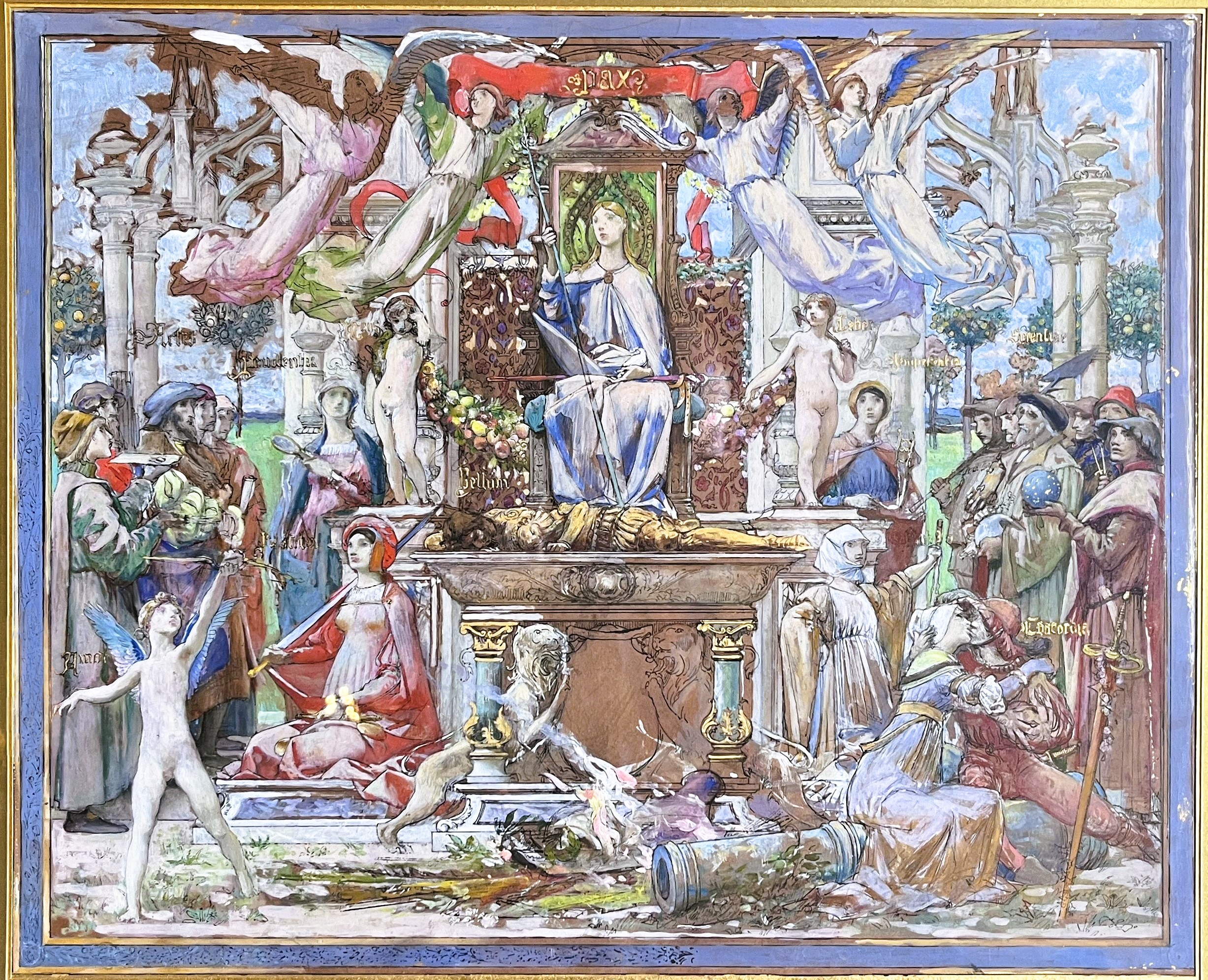
Luc Olivier Merson, Gouache “La Glorification de la Paix”, 1917
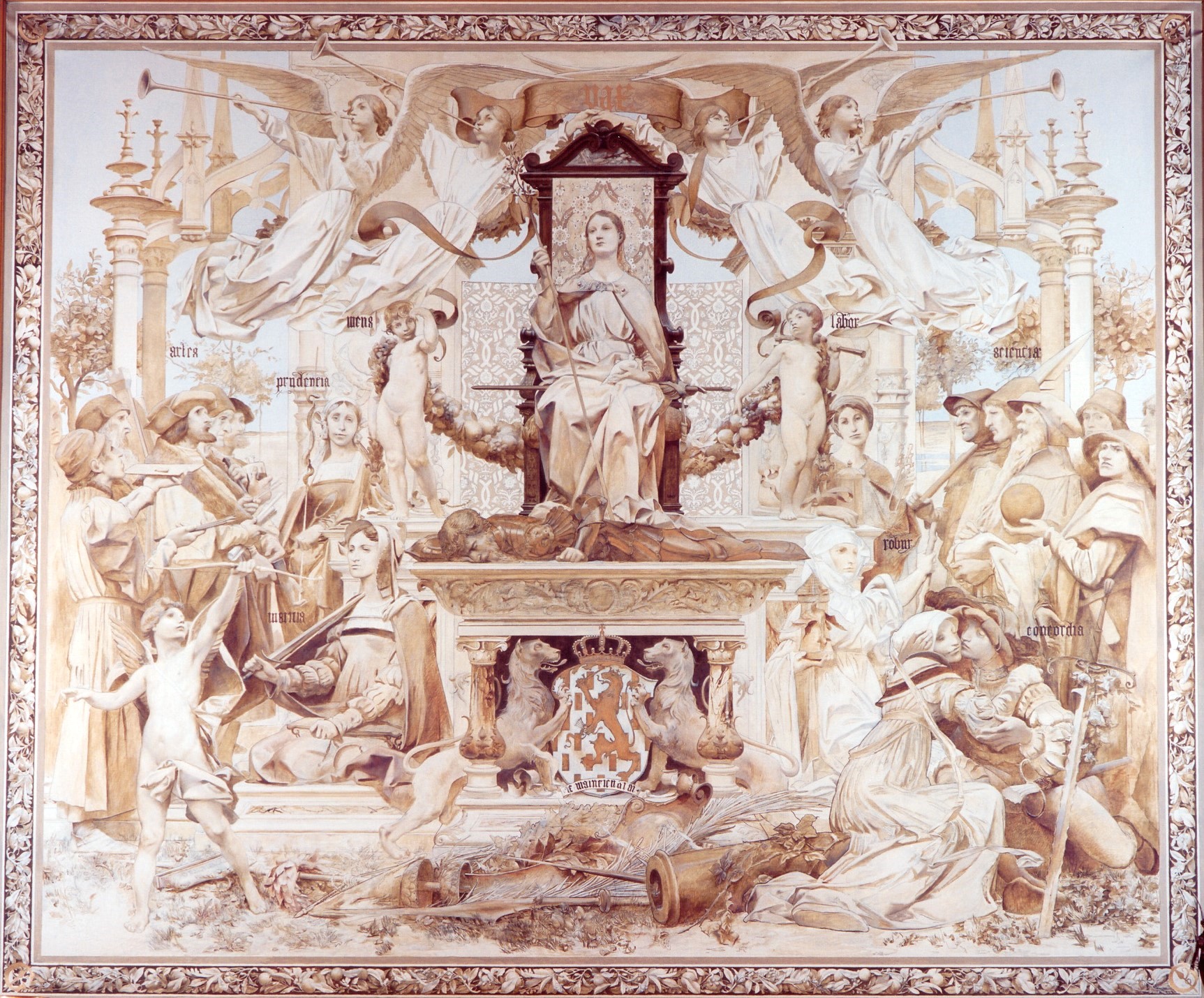
Luc Olivier Merson, monochrome painting “La Glorification de la Paix”, 1920
114-year-old Hereke carpet back in the Peace Palace after restoration in Türkiye
Over 40 countries contributed to the construction of the Peace Palace by gifting works of art or building materials. The largest handwoven carpet outside Türkiye was gifted by the Ottoman Empire in 1911 and has now been extensively restored in its place of origin, combining science and traditional craftsmanship. After an absence of almost two years, the 160 square meter carpet has now returned to the Peace Palace.
Hereke Carpet
The Carpet of the Peace Palace has a distinctive geometrical Hereke pattern and consists of 13,704,480 Turkish “Gördes” knots. It has a size of approximately 160 m² and weighs around 700 kilograms. The carpet decorates the floor of the Japanese Room, one of the stateliest rooms of the Palace. Many conferences and hearings, especially of the Permanent Court of Arbitration, are hosted in this room. Although Hereke carpets are known to be long-lasting and durable, the Hereke carpet in the Peace Palace was in need of restoration due to the intensive use of this conference room. The Turkish Ministry of Culture and Tourism generously offered to restore the carpet by specialists in Türkiye.
Logistics and Restoration
After a protocol was signed between the Carnegie Foundation, as owner and manager of the Peace Palace, and the Turkish government in January 2023, the complex logistics were planned, and the carpet began its journey in March 2023. It was first taken to the Icat company in Cruquius in the north of the Netherlands for thorough cleaning. The Hereke Carpet was then transported by truck to Sultanhanı in the Turkish province Aksaray. Shortly after its arrival, a Dutch delegation traveled to Aksaray in November 2023 to learn about the upcoming restoration process.
A conservation and restoration plan was drawn up in eight phases, combining different areas such as traditional craftsmanship, chemical analysis, and restoration techniques. In a digital environment, the carpet was divided into 280 equal pieces of half a square meter, and damage was documented using the latest technology. During these examinations, 15 different types of damage were identified, and it became clear that the most severe deterioration was caused by wear and tear due to furniture use and human traffic.
To determine which yarns were used to weave the carpet more than 100 years ago and which colors were used, the team of experts received support from the analysis laboratories of the Turkish Ministry of Energy (TENMAK – Turkish Energy Nuclear and Mineral Research Council) in Ankara. In accordance with the analysis results of micro samples taken from different parts of the carpet surface, repair yarns matching the original yarn types of the carpet were provided. The colors of the carpet were determined by on-site colorimetric measurements, and the yarns were then dyed using natural plant- and root-derived pigments with traditional methods.
A highly skilled team of experienced craftsmen, who have also restored carpets for Buckingham Palace in London, then began the restoration works.
Return Ceremony
Having spent about a year repairing the carpet, which is an important part of the cultural heritage of the Peace Palace, it returned to its place in the Japanese Hall of the palace in January 2025. It was unveiled during a festive ceremony on Thursday, 9 January 2025. During the ceremony, Piet Hein Donner, President of the Carnegie Foundation, H.E. Selçuk Ünal, Ambassador of the Republic of Türkiye in the Netherlands, Dr. Hab. Marcin Czepelak, Secretary-General of the Permanent Court of Arbitration, and H.E. Mehmet Nuri Ersoy, Minister of Culture and Tourism of the Republic of Türkiye, delivered short speeches.
Peace Palace
The Peace Palace in The Hague, Netherlands, is the worldwide symbol of justice and peace. It opened its doors in 1913 and has served the ideal of “Peace through Law” ever since. Today, it houses the Permanent Court of Arbitration, the United Nations International Court of Justice, The Hague Academy of International Law, and the Peace Palace Library. The Peace Palace is owned and managed by the Carnegie Foundation.
In 1907, when the first stone of the Peace Palace was laid, countries were asked to contribute to the construction of the Palace. Over 40 countries responded to this call, donating works of art such as paintings and vases, or building materials such as wood and marble. In this way, the Peace Palace is not only a place for the world, but also of the world.
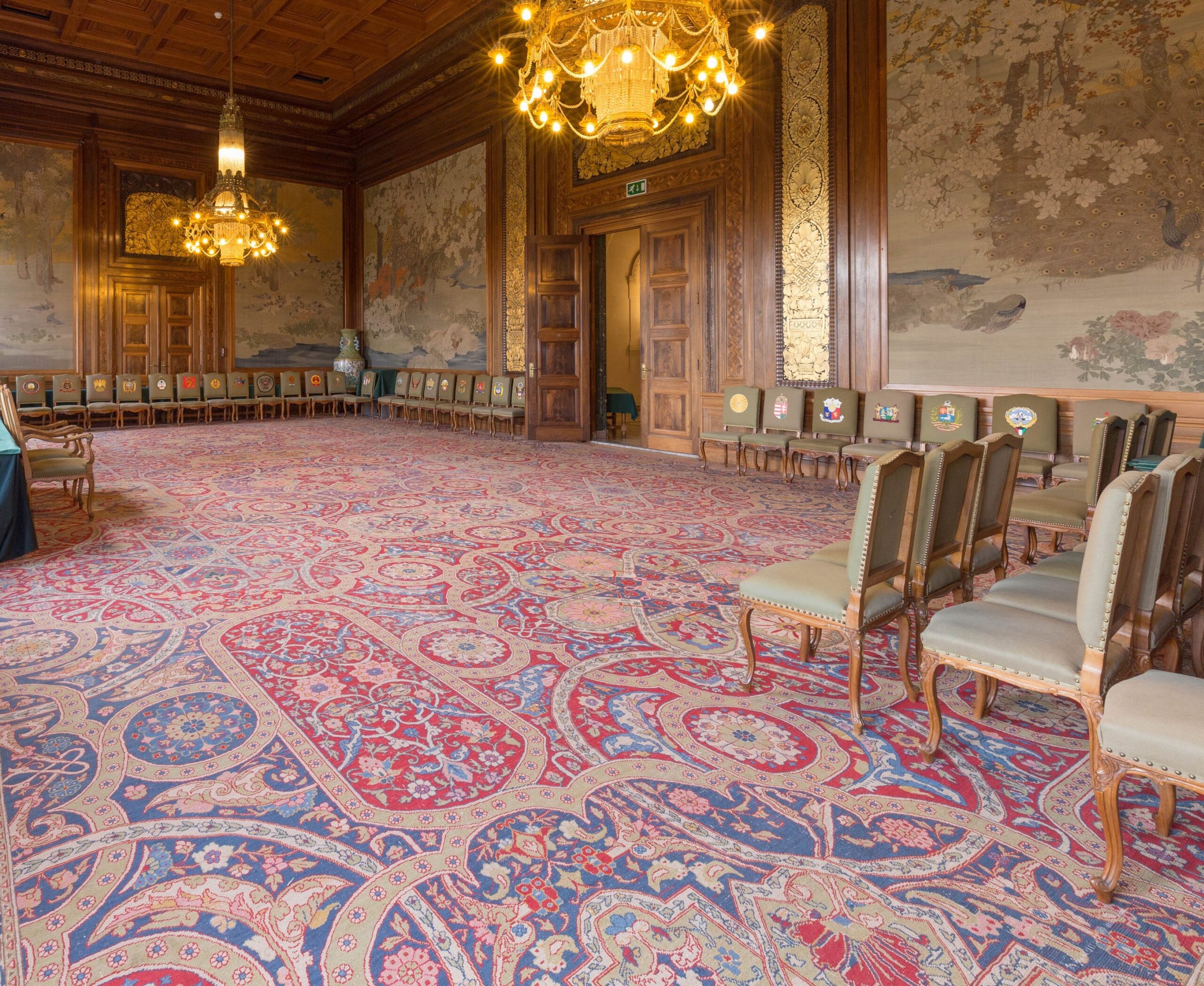
Speeches delivered during the Ceremony
- Piet Hein Donner, President of the Carnegie Foundation;
- H.E. Selçuk Ünal, Ambassador of the Republic of Türkiye in the Netherlands;
- Dr. Hab. Marcin Czepelak, Secretary-General of the Permanent Court of Arbitration;
- H.E. Mehmet Nuri Ersoy, Minister of Culture and Tourism of the Republic of Türkiye.
Carnegie Wateler Peace Prize Awarded to the Netherlands Armed Forces
Today, the Netherlands Armed Forces received the Carnegie Wateler Peace Prize, the second oldest peace prize in the world. This honor was awarded to the Netherlands Royal Navy, Royal Army, Royal Air Force, and the Marechaussee for their involvement in more than 80 peace missions worldwide.
More than 200 guests, including 35 ambassadors, Dutch Ministers Ruben Brekelmans and David van Weel, and many military personnel, gathered in the Auditorium of the Peace Palace for the festive Award Ceremony. Piet Hein Donner, Minister of State and President of the Carnegie Foundation, and Dr. Elisabeth Wesseling-van Gent, Chair of the Jury, presented the Award to General Onno Eichelsheim, Chief of Defense.
Laureate
“I know that for some, it may be strange to see someone in a military uniform talking about peace,” said General Eichelsheim, who accepted the Peace Prize on behalf of the entire Netherlands Armed Forces. In his speech, the general elaborated on various peace missions, as well as current and future deployment possibilities. Eichelsheim emphasized that the Netherlands are the only country in the world that have enshrined the development of the international legal order in its constitution, warning that the rule of law is under pressure. “Seeing the darkness of war helped me to appreciate the light even more. Peace. Freedom. Democracy. Rule of law. Humanity towards each other. We will never lose sight of what we aim to protect: a free democracy, international rule of law, the sovereignty of states. We will continue to participate in missions that seek to safeguard and promote these values“, said the Chief of Defense.
Jury Report
The Peace Prize jury explained their choice of laureate as follows:
“The Netherlands Armed Forces, through their four branches, the Royal Netherlands Army, Air Force, Navy and Marechaussee have always played and continue to play a significant role in peacekeeping, peacebuilding and stability. As early as 1913, long before the United Nations and UN peace missions existed, the Netherlands Armed Forces carried out their first peace mission in Albania, the same year the Peace Palace opened its doors. This shows that more than a hundred years ago, it was already recognized that peacekeeping and peacebuilding have many dimensions.
Since World War II, the Netherlands Armed Forces have participated in more than 80 peace missions under the flags of the United Nations, NATO, and the European Union. In addition to military support, the armed forces also provide civilian assistance. Dutch soldiers are often involved in building infrastructure, providing medical care, supporting local communities, training troops, and maintaining the rule of law.
By presenting the 2024 Carnegie Wateler Peace Prize to the Netherlands Armed Forces, we would like to honor and thank all Dutch military personnel who, on a daily basis, push their own boundaries to protect those of others. Members of the Netherlands Armed Forces dedicate and sometimes sacrifice their lives to preserving or building peace worldwide.”
Mental Consequences and ARQ Center
Dr. Tine Molendijk, an interdisciplinary cultural anthropologist specializing in military culture and ethics, and Prof. Lonneke Peperkamp, professor of military ethics and leadership, highlighted participation in peace missions from a different perspective. Molendijk described how military operations can affect soldiers’ mental health. During the Award Ceremony, the Chief of Defense announced that the prize money of 35,000 euros would go to the Dutch ARQ Nationaal Psychotrauma Centrum, the national expertise center for the diagnosis and treatment of people with complex psychotrauma complaints.
Royal Air Force Orchestra
The program was musically accompanied by the Orchestra of the Netherlands Royal Air Force, conducted by Major Jasper Staps. The orchestra played, among other pieces, “Brothers in Arms” by Dire Straits and specially composed pieces such as a Fanfare for the Peace Prize. Carnegie’s Peace March, composed by J.J. van Rosmalen in 1913 for the opening of the Peace Palace, was newly arranged for the Award Ceremony.
Carnegie Wateler Peace Prize
The Carnegie Wateler Peace Prize has been awarded in the Peace Palace since 1931. The board of the Carnegie Foundation honors with this prize a person or institution that promotes international peace, through word or deed. The prize was established by the Dutch banker Johan Wateler and entrusted to the Carnegie Foundation. Today, the Carnegie Wateler Peace Prize was awarded for the 74th time.
Carnegie Foundation – Peace Palace
The Peace Palace houses the Permanent Court of Arbitration, the International Court of Justice of the United Nations, the Hague Academy of International Law, and the Peace Palace Library. The Carnegie Foundation owns and manages the Peace Palace.
Aftermovie Award Ceremony 2024 Carnegie Wateler Peace Prize
Speeches
The speeches delivered during the Award Ceremony can be found here:
- Word of Welcome, Mr. Piet Hein Donner, President Carnegie Foundation – Peace Palace
- Peace and Justice in the International Order, Prof. dr. mr. Lonneke Peperkamp
- The Moral Complexities of Fighting for Peace, Dr. Tine Molendijk
- Laudatory Speech, Dr. Elisabeth Wesseling-Van Gent, Chair Prize Committee
- Acceptance Speech, General Onno Eichelsheim, Chief of Defence
Livestream
Please watch the recording of the entire Award Ceremony below.
30th Anniversary Carillon of the Peace Palace
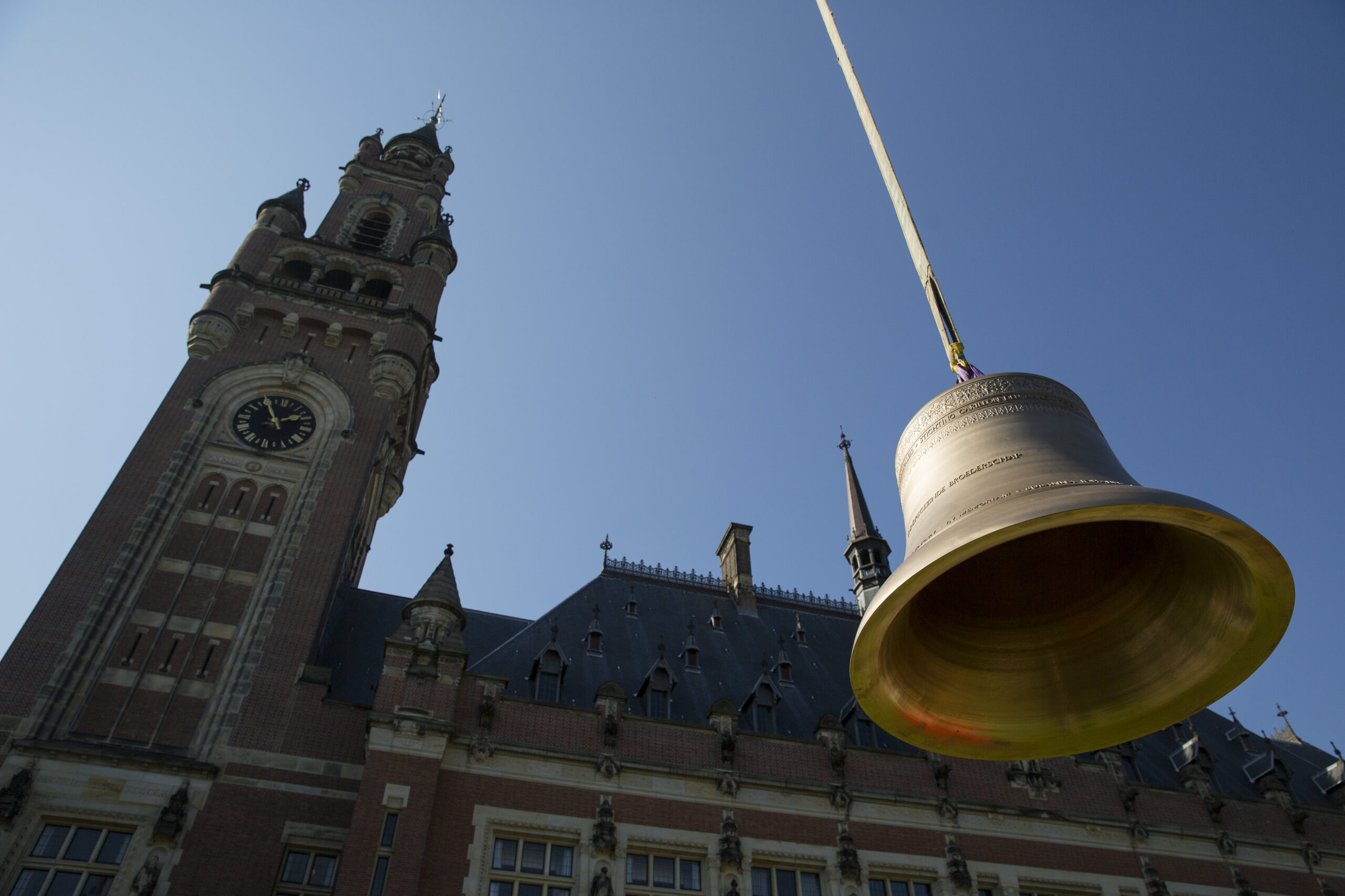
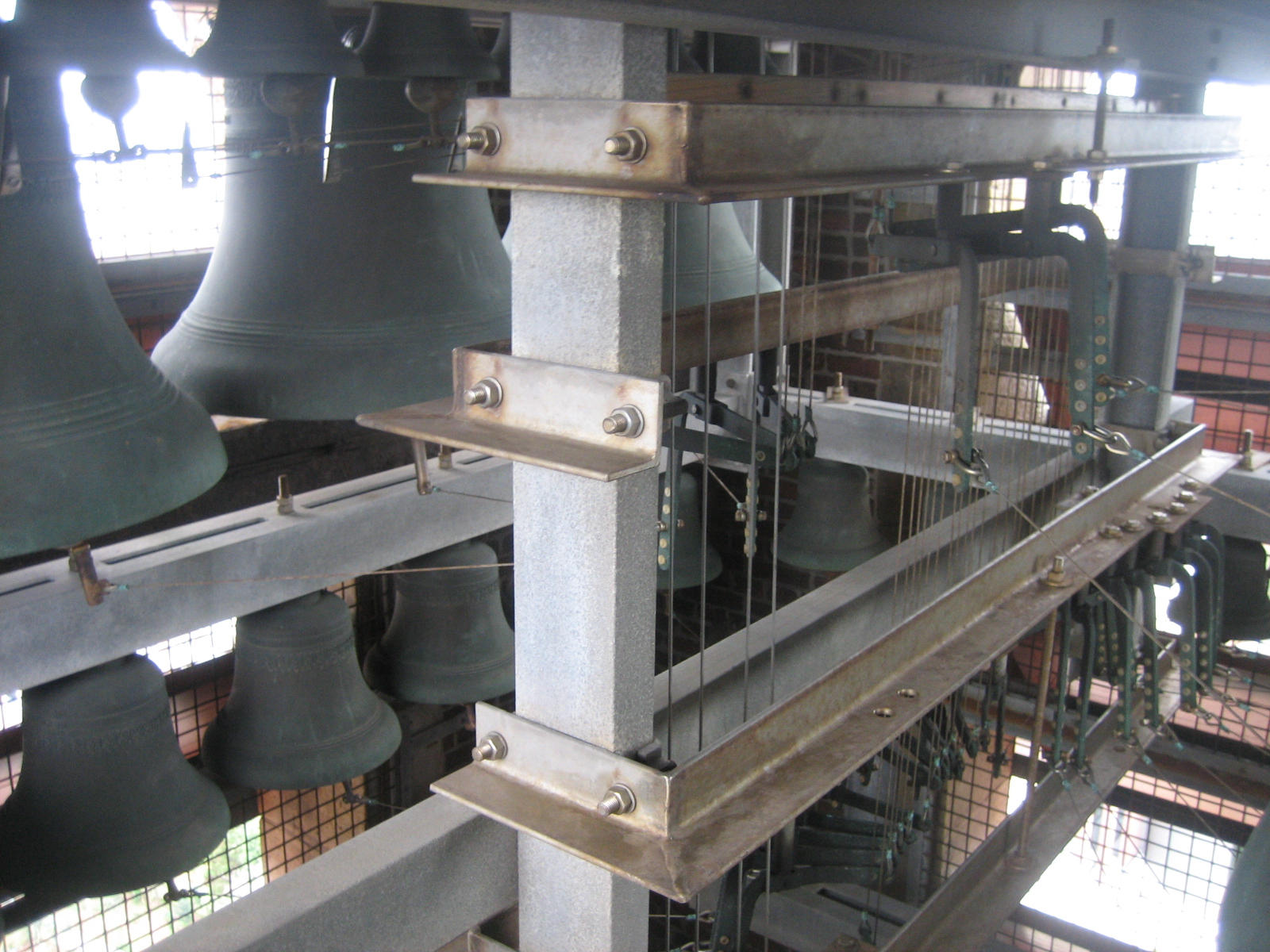
The Peace Palace in The Hague that was festively opened in 1913 is characterized by two towers. The highest tower houses the carillon of the Peace Palace. This carillon was inaugurated exactly 30 years ago, on November 3, 1994.
The Carillon
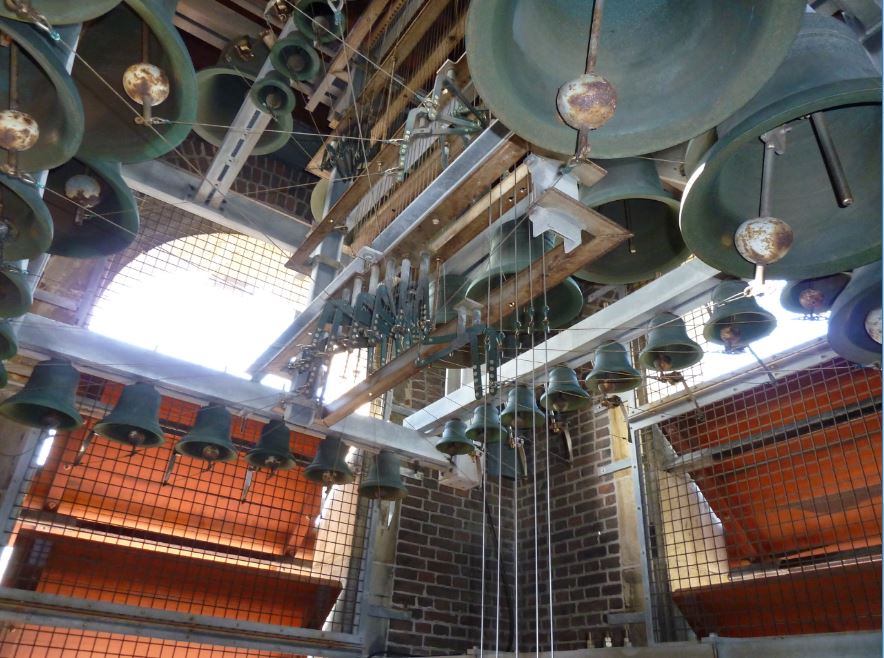
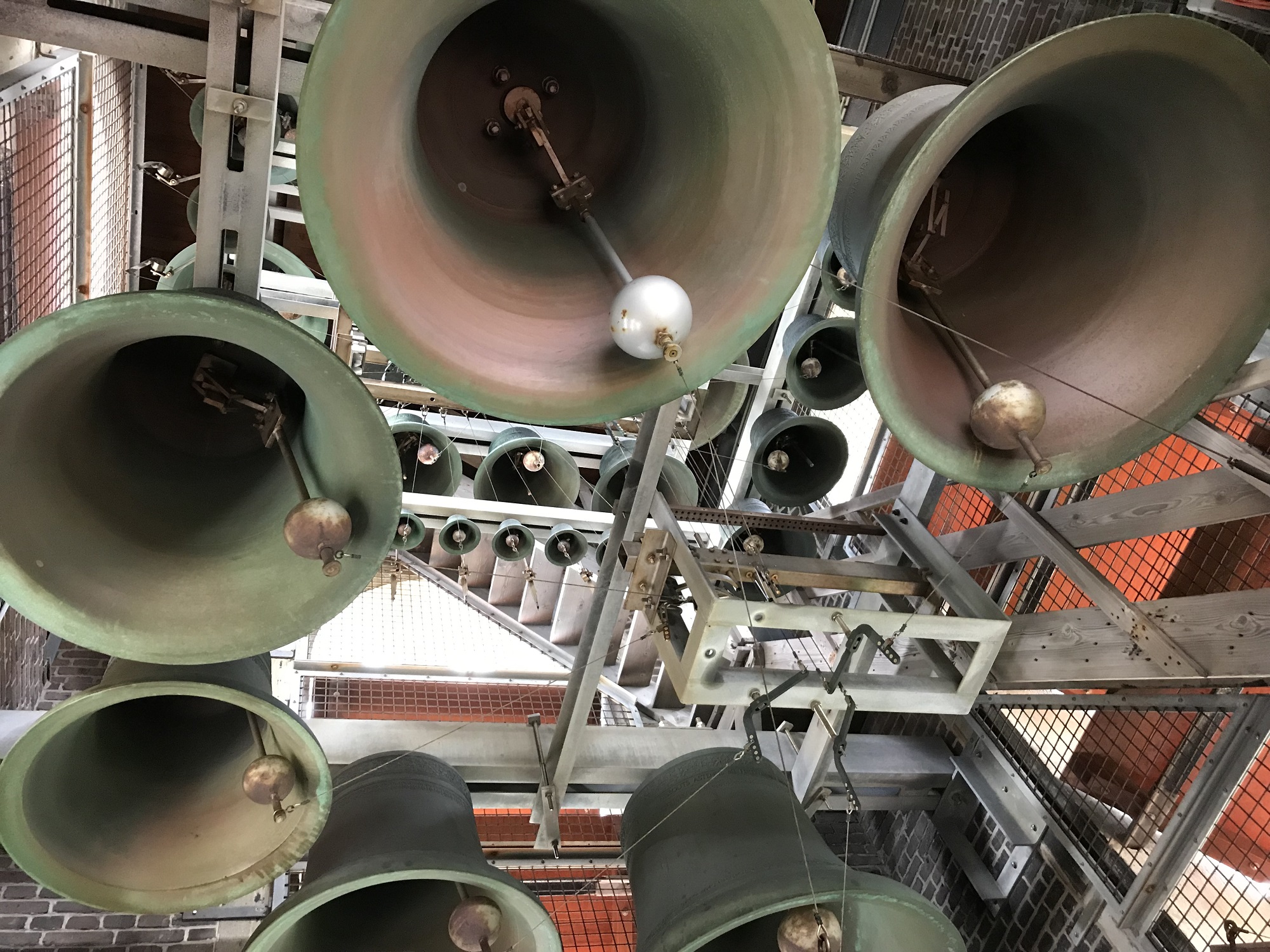
The carillon of the Peace Palace is an impressive musical instrument consisting of 48 bells and encompassing four octaves. The bells are made of bronze and vary in size and weight, with the largest bell weighing more than 1,200 kilograms. The bells are decorated with beautiful inscriptions and symbols that reflect the values of peace and justice. The carillon is owned by the Carnegie Foundation; Stichting Carillon Den Haag arranges its playing.
In addition to the carillon, the highest tower of the Peace Palace also houses a clockwork donated by Switzerland. The accompanying bronze clock indicates the whole and half hours. The clock bears the text “Möchte ich mit meinem Geläut den aufrichtigen Frieden verkünden.
The Creation of the Carillon
In 1986, on the occasion of a cultural exchange between the city of The Hague and the Canadian capital Ottawa, carillonneur Heleen van der Weel gave several carillon concerts in the Peace Tower of the Parliament building in Ottawa. After returning home, the initiative arose to install a carillon in The Hague’s `Peace Tower’ as well. This project became a success partly due to a committee of recommendation consisting of Dr. Javier Pérez de Cuéllar, then Secretary General of the United Nations, Hans van den Broek, then Dutch Minister of Foreign Affairs, Frits Korthals Altes, then Minister of Justice and Max van der Stoel, then President of the Carnegie Foundation.
The Hague Carillon Foundation, with Heleen van der Weel and Loek Boogert as leaders, was committed to realizing the project. Bells were donated by, among others, Dutch Queen Beatrix and Prince Claus, Dr. Nagendra Singh, President of the International Court of Justice, the governments of Belgium and Switzerland, the Municipality of The Hague and the Australian Carillon Society. Finally, the carillon of the Peace Palace was officially inaugurated on 3 November 1994. At the time, it was an instrument with 38 bells. With newly acquired funds, it reached a size of 47 bells in the year 2000. In honor of the 100th anniversary of the Peace Palace in 2013, the last large bell was cast. A bronze plaque at the entrance door of the Peace Palace shows an overview of all persons and organizations at home and abroad who contributed to this carillon consisting of 48 bells.
Earlier Attempt
As early as 1926, U.S. government official William Gorham Rice came up with the idea of installing a carillon in the tower of the Peace Palace. Rice was an authority on carillons in the United States and Europe. He even wrote a letter to Queen Wilhelmina to ensure that his plan received proper attention. As a result, the architectural advisor to the Peace Palace, Johan van der Steur, was commissioned to send construction drawings of the tower to Rice in the United States. Some time after that, the American himself came to The Hague and made an appointment with the board of the Carnegie Foundation, trustee of the Peace Palace, to convince them of the plan to donate a carillon with 35 bells. For unknown reasons, William Gorham Rice’s plan was not carried out at the time.
Playing
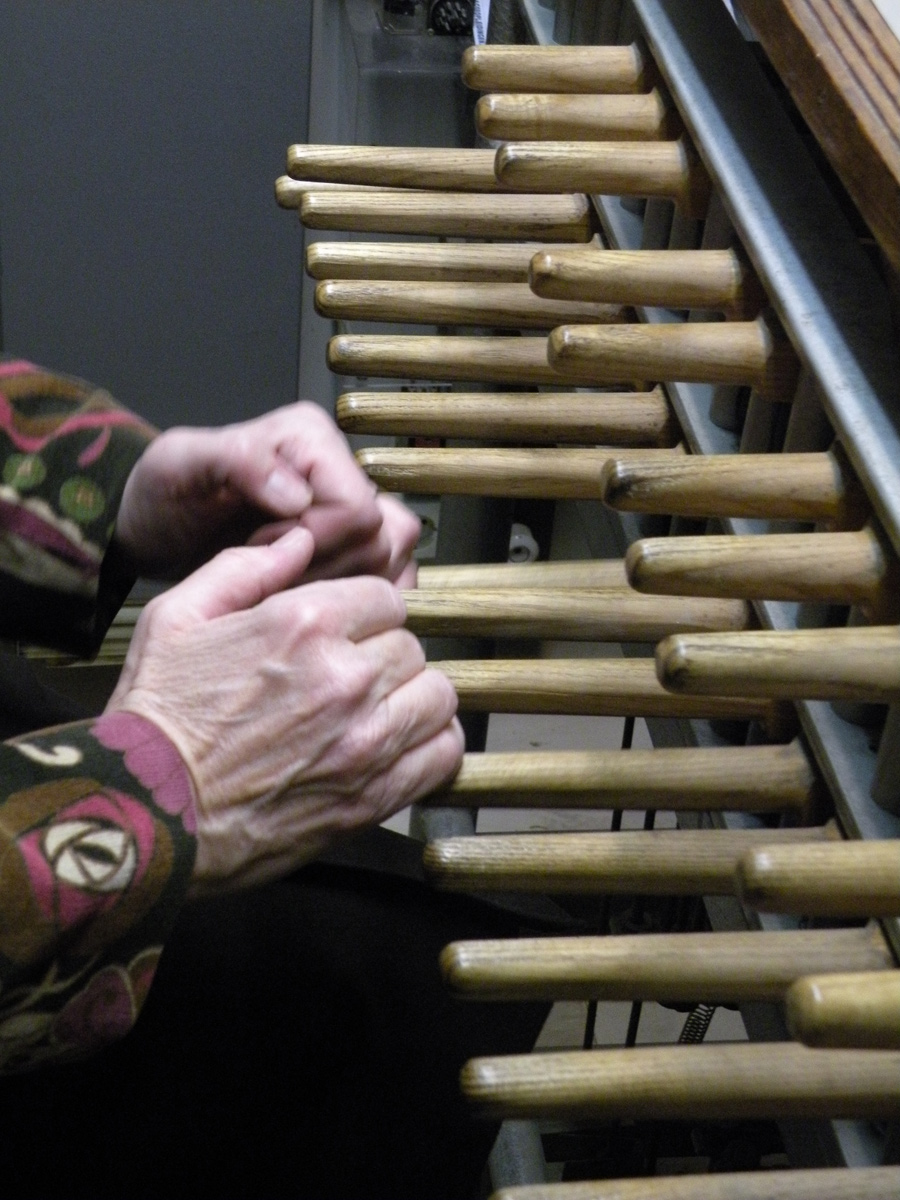
The carillon of the Peace Palace has no function of indicating time by playing melodies preceding the full and half hour chimes: it is purely a concert instrument. From the beginning, the concerts are always held every Tuesday and Thursday from 1 pm – 1:45 pm. The program is carefully composed by carillonneur Heleen van der Weel and is published in a window near the porter’s lodge. Good listening places are the benches on Carnegieplein and the garden of Museum Mesdag on Laan van Meerdervoort.
International Network and Hymn of Nations
Since 30 November 2017, the carillon Peace Palace has been part of the international network of War Memorial and Peace Carillons (www.peacecarillons.org). These approximately 40 “monuments in sound” remind us of the victims who sacrificed their lives for our freedom during wars worldwide. In honor of the 25th anniversary of the carillon and in honor of 75 years of liberation in the Netherlands, carillonneur Heleen van der Weel arranged the “Hymne des Nations” especially for the carillon. This hymn was written by Dutch pianist and composer with Jewish roots Karel (Charles) Grelinger (1873-1942). He studied at the conservatories in Amsterdam and Paris, wrote operas and worked on many musical compositions. In 1942 he was imprisoned and transported to camp Auschwitz. During this trip, he died. Compositions by him could be found in the Bibliothèque nationale de France in Paris and in the Netherlands Music Institute in The Hague.
Source: Heleen van der Weel, Stichting Carillon Den Haag