
Japanese Delegation Pays Working Visit to the Peace Palace
On Monday 16 March 2026, the Carnegie Foundation welcomed a Japanese delegation for a working visit. The visit took place in the context of a research project on historical Japanese craft and textile exports between 1830 and 1930, with particular attention to the Japanese tapestries housed in the Peace Palace.
Delegation
The Japanese delegation consisted of researchers and specialists affiliated with various universities and institutes in Japan and Europe. The President of the International Court of Justice, H.E. Yuji Iwasawa, joined the group and extended a welcome. Representatives of the Embassy of Japan in the Netherlands were also present. The group was led by Professor Miki Sugiura (Hosei University) and Professor Misato Ido (Kyoto Institute of Technology). Additional researchers participated, bringing expertise in art history, textile studies, anthropology, and the history of export industries.
Reception and Programme
The delegation was welcomed by Jacobine Wieringa, Curator of the Art Collection and Archives of the Peace Palace, and textile specialist Emmy de Groot, who has more than thirty years of experience. Following an introductory presentation by the Carnegie Foundation, Professor Miki Sugiura, Dr. Misato Ido, and Keiko Suzuki gave a presentation on the ongoing research project.
Afterwards, the delegation had the opportunity to visit and study the Japanese Room and its accompanying tapestries in detail. They were also able to examine original design drawings and archival materials. The working visit concluded with a brief tour of the Peace Palace.
Japanese Tapestries
In 1913, Japan gifted the Peace Palace a series of ôshû silk tapestries titled One Hundred Flowers and One Hundred Birds in Late Spring and Early Summer. The tapestries consist of nine panels of varying sizes. In 1909, the imperial firm Kawashima Jimbei of Kyoto was commissioned to produce them.
They were woven using the traditional Tsuzure Nishiki technique, one of the most refined, complex, and rare weaving techniques in the world. The method demands exceptional concentration, patience, and craftsmanship from the artisans. The ongoing research expands knowledge of the art‑historical value, meaning, material condition, and conservation of these exceptional tapestries. The visit of the Japanese delegation contributes significantly to this effort.
Carnegie Foundation – Peace Palace
The Peace Palace in The Hague, Netherlands, is a worldwide symbol of justice and peace. It opened its doors in 1913 and has served the ideal of “Peace through Law” ever since. Today, it houses the Permanent Court of Arbitration, the United Nations International Court of Justice, The Hague Academy of International Law, and the Peace Palace Library. The Peace Palace is owned and managed by the Carnegie Foundation.
The tapestries in the Japanese Room form part of the Peace Palace’s national gift collection, to which more than forty countries have contributed, both with artworks and building materials.
Professor of Civil Law Carla Sieburgh appointed as new Board Member of the Carnegie Foundation – Peace Palace
The Carnegie Foundation, owner and manager of the Peace Palace, welcomes Prof. Mr. Carla Sieburgh as a new member of its Board. She has been appointed by Royal Decree as of 1 February 2026. Sieburgh officially began her duties at the board meeting on 16 February and will be responsible for the legal portfolio for the coming years.
Academic expertise and international experience
Prof. Mr. Sieburgh is a leading legal scholar with extensive experience in the judiciary, academia and international legal cooperation. From 2017 to 2024, she served as Justice of the Supreme Court of the Netherlands and, in that capacity, also as an extraordinary State Councillor in Extraordinary Service at the Administrative Jurisdiction Division of the Council of State. She was also a member of the Commission on Legal Uniformity, in which the highest Dutch courts work together to ensure consistency between civil law and administrative law.
In addition to her judicial career, Carla Sieburgh has built a long academic record. Since 2003, she has been Professor of Civil Law and since 2010, Research Professor of Civil Law at Radboud University Nijmegen. She has been a member of the Royal Netherlands Academy of Arts and Sciences since 2010. Her academic work largely takes place in an international context and includes publications in the fields of European law and private law. At her initiative, Sieburgh, together with a diverse group of international researchers, developed the Ius Commune Casebook European Law and Private Law, which combines European law and private law.
In the field of international law, Sieburgh holds various administrative and advisory positions. She is, on behalf of the Netherlands, a member of the Governing Council of UNIDROIT (the International Institute for the Unification of Private Law) and chairs the Asser Advisory Council.
Commitment to the mission of the Peace Palace
Carla Sieburgh’s career has been characterized by collaboration and connecting diverse experts and disciplines. At the Supreme Court, she served not only as Justice but also as liaison officer between civil, criminal and tax law, a role in which she brought together different perspectives to reach joint solutions. Sieburgh looks forward to contributing her experience and expertise to the Peace Palace:
“I am deeply aware of the great importance, for international public and private law, of the institutions housed in the Peace Palace – the International Court of Justice, the Permanent Court of Arbitration, the Hague Academy of International Law and the Library. It is both a privilege and a responsibility to contribute to good governance, social responsibility, the future-proof preservation of cultural heritage, and the support of the goals and values of these institutions.”
Board of the Carnegie Foundation
The Carnegie Foundation board consists of six members who are jointly responsible for the management and maintenance of the Peace Palace and for supporting the institutions located there. Prof. Carla Sieburgh was appointed to the board by royal decree effective February 1, 2026, and was officially welcomed at the board meeting of February 16, 2026. She succeeds Els Wesseling-van Gent, whose term of office has ended. The Board expresses its gratitude for her valuable dedication and involvement during this past period.
Documentary: The Small Courtroom
The Peace Palace in The Hague houses two courts: the Permanent Court of Arbitration and the International Court of Justice of the United Nations. There are several impressive halls in the Peace Palace for the various cases, hearings, and activities, but the most distinctive are surely the Small Courtroom of the Permanent Court of Arbitration and the Great Hall of Justice of the International Court of Justice.
In cooperation with both courts, the Carnegie Foundation, owner and manager of the Peace Palace, has produced short documentaries about the two courtrooms. This documentary on the Small Courtroom offers a detailed insight into the room’s interior, as well as a brief overview of the activities and cases handled by the Permanent Court of Arbitration.
Centenary of the Hague Academy of International Law
Peace Palace celebrates Centenary of The Hague Academy of International Law
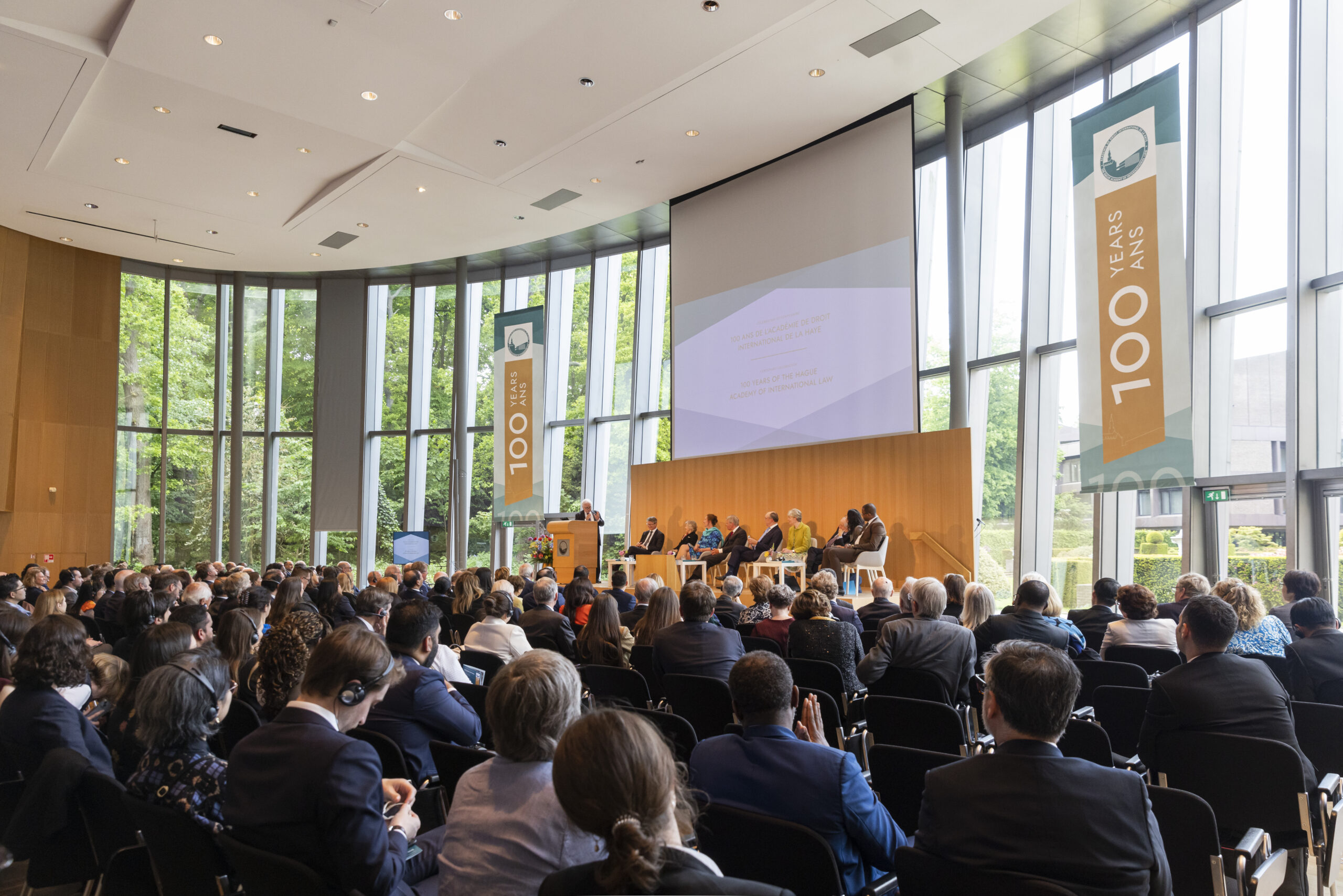
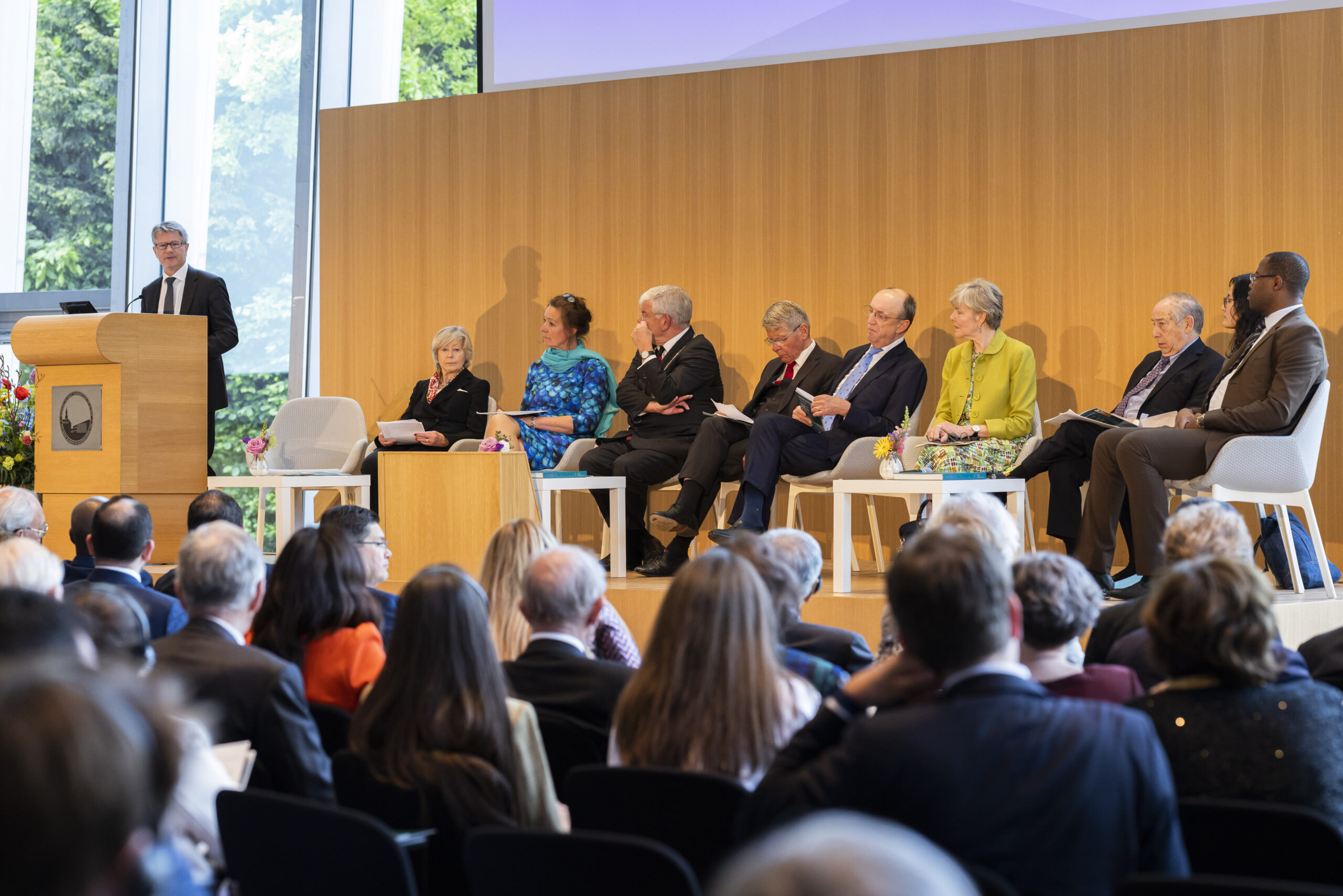
This week, The Hague Academy of International Law which is located at the Peace Palace celebrates its 100th anniversary. On May 24, 25 and 26, in the presence of various international guests including diplomats, politicians and prominent jurists, the achievements of the past century and plans and perspectives for the future will be reflected upon.
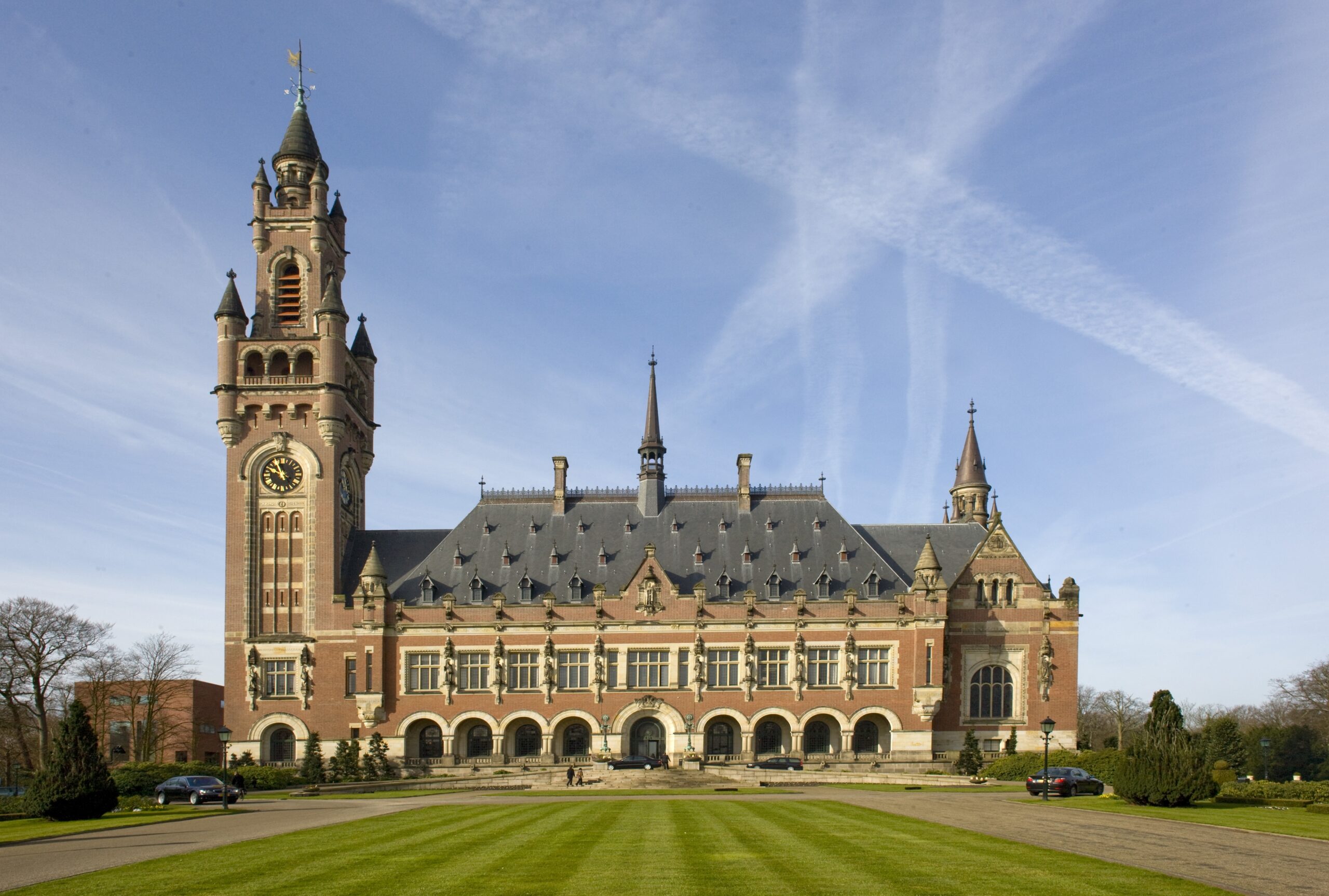
“The founders of our institution understood that international civil society, whose foundation is international law, needed an institution like the Academy to better study, understand, disseminate and critique international law so that it could be improved and updated. The Academy has fulfilled this role very well and has occupied a unique position as a result.”
With these words, Professor Jean-Marc Thouvenin, secretary- general of the Hague Academy, opened today’s solemn sitting at the Peace Palace. Alongside him, numerous dignitaries such as Peter Tomka, judge of the International Court of Justice, Piet-Hein Donner, Dutch minister of state and president of the Carnegie Foundation, and Jan van Zanen, mayor of The Hague, delivered speeches. More than 350 participants attended the ceremony at the Peace Palace including Joan Donoghue, president of the United Nations International Court of Justice and Adia Sakiqi, dean of the Corps Diplomatique.
The Hague Academy of International Law is the leading institute for education and research in public and private international law. The Academy’s popular summer and winter courses annually educate more than 1,000 students, future lawyers and diplomats, from around the world. Dutchman Tobias Asser, who received the Nobel Peace Prize in 1911, helped to establish the Academy by donating part of his prize money. The first courses of the Hague Academy of International Law took place in 1923.
Professor Yves Daudet, president of the curatorium of the Hague Academy, at the end of the conference looked hopeful towards the future: “The Academy’s courses will continue to offer students a range of issues and reflections that complement the knowledge acquired at university. By opening themselves to innovative, sometimes ignored and elementary aspects, students will be able to organize their thoughts on a subject whose importance they have realized and learned to love, which is essential to practicing the profession well.”
After the plenary session, the celebrations will continue over the next two days with a scientific colloquium. During this colloquium, a total of more than 55 experts will speak at the Peace Palace about the role and tasks of international law in today’s challenges such as epidemics, claim of outer space and climate change, among others. The legal experts and academics include the internationally renowned Hannah Buxbaum, Philippe Sands and Maurice Kamto.
The full program of the colloquium can be found here:
https://www.hagueacademy.nl/wp-content/uploads/Colloquium-A4-English.pdf
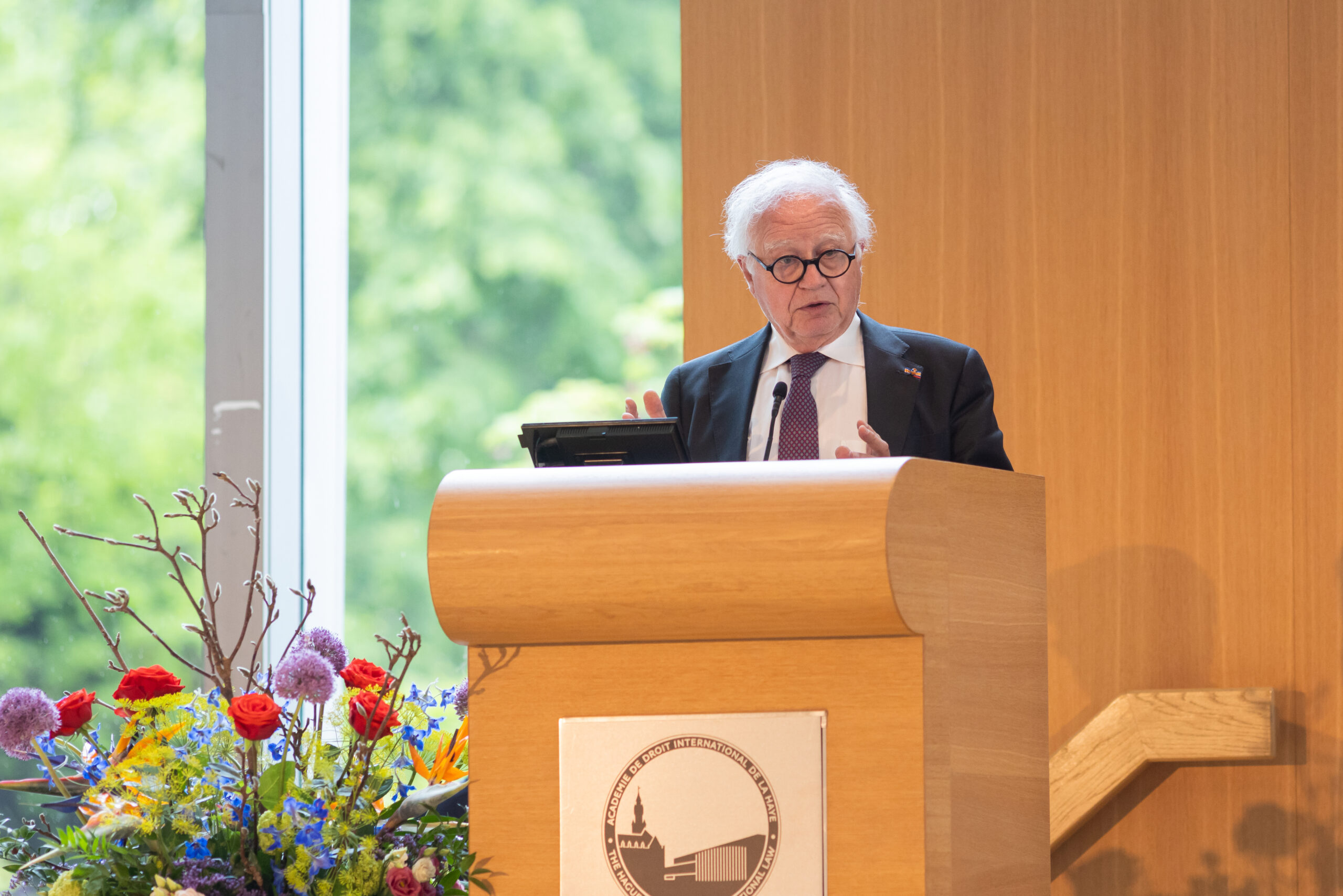
Yves Daudet, president curatorium the Hague Academy
Speech Standing Committee PACE
On 2 March 2023, the Standing Committee of the Parliamentary Assembly of the Council of Europe (PACE) gathered at the Peace Palace to commemorate 75 years since the Congress of Europe in The Hague. This congress led to the creation of the Council of Europe. Mr. Piet Hein Donner, chairman of the Carnegie Foundation, delivered the following speech to PACE’s Standing Committee.
Mr. President, Excellency’s, distinguished guests,
It is a great pleasure and honor for me, as chairman of the Carnegie Foundation, to welcome you here at the Peace Palace.
As was commemorated this afternoon it is seventy-five years ago this year that our forebears met in The Hague in the Hall of Knights to discuss the future of Europa, having survived two wars in a lifetime and faced with the immense task of reconstructing society devastated by total war. They came, not as representatives of nations or heads of state, but as representatives of all sections of European society. They came with an idea: to unite Europe, and they left with hope. The Council of Europe was born from that hope.
It is altogether fit that the standing committee of the parliamentary assembly of the Council of Europe, the heirs of that earlier meeting, gather here in the Peace Palace which was born from an even earlier meeting in The Hague and an even earlier surge of hope: the First Hague Peace Conference of 1899. That Conference was convened with the aim of finding means to end the seemingly endless series of wars and check their growing ferocity. The most important outcome of that conference was the Permanent Court of Arbitration with was set up to settle international conflicts by judicial process and arbitration, instead of by armed conflict. It started its work in 1902.
In following years, the idea emerged to build a permanent courthouse. This idea became reality in 1904 by the gift of Andrew Carnegie, the American steel tycoon. He donated one and a half million dollars “for the purpose of building, establishing and maintaining in perpetuity a Courthouse and Library, a Temple of Peace.”. The first stone was laid three years later during the Second Hague Peace Conference in 1907 and the Palace opened its doors in 1913 after six years of construction. In January 1914 the Hague Academy for International Law was set up which also was to have its seat in the Peace Palace. But all good intentions came to naught in august 1914 as the first world war erupted.
After the first world war the League of Nations established in 1920 the Permanent Court of International Justice which was housed here in the Peace Palace. After the Second World War this court was replaced by the International Court of Justice which is also housed here in the Peace Palace. This Court, the so called “World Court”, is one of the principal organs of the United Nations and the only one residing outside of New York. It adjudicates in accordance with international law general disputes between countries that may concern frontiers, maritime boundaries, sovereignty, violations of international humanitarian law, etc..
Thus, the Peace Palace houses nowadays the Permanent Court of Arbitration, the UN International Court of Justice and The Hague Academy of International Law which provides courses in international public and private law to some 900 young academics each year of all nationalities. It celebrates its centennial this year. The Peace Palace also houses one of the most prestigious and comprehensive libraries on international law, the Peace Palace Library.
In the course of time the Peace Palace has become a real ‘temple of peace’, a global icon of the hope for peace through justice. As such it is not only a monument for the world, but also of the world. During the second Hague Peace Conference a resolution was adopted inviting all participating countries to contribute to the construction and embellishment of the Palace. Many countries donated special building materials or works of art to the palace. Thus, the marble in the Hall comes from Italy, the tiles on the roof from Norway, the fountain in the courtyard from Denmark, the stained glasses from different countries. It is also a museum of a world that has since vanished. The Palace houses a monumental porphyry vase donated by the Czar of Russia, silk wall tapestries from the emperor of Japan, enormous porcelain vases from the empress of China, a huge tapestry from the Sultan of the Ottoman empire, an ironwork fence from the emperor of Germany and incense vases from the Maharaja’s of India.
The Peace Palace and the Council of Europe were born from similar ideals: peace, justice, and international cooperation. I hope this historical background will prove an inspiration for your work. I wish you wisdom, strength, and courage to face the problems of the present world and to transform ideals into practice. As Eleanor Roosevelt once said: “It isn’t enough to talk about peace. One must believe in it. And it isn’t enough to believe in it. One must work at it.”
I hope you will also be inspired by that earlier meeting seventy-five years ago. The problems our forebears faced when they met here, were even more daunting. Yet they went from here with a sense of common purpose and hope in their hearts; the hope for a future in which all Europeans could enjoy a life in liberty, security, and prosperity free from fear and want. If they could find the strength to take up their responsibility, could we do less?
So let us honour the pioneers of Europe by reaffirming their commitment to the hope of a peaceful and united Europe. Hope in the sense as Vaclav Havel expressed it; ‘Not the joy of things that are going well, or the willingness to invest in enterprises that are heading for success, but rather the ability to work for something because it is good. Hope is not the conviction that something will turn out well, but the certainty that something makes sense, regardless of how it turns out. That is the hope that built the Peace Palace and that is the hope we should carry from here.
Thank you,
Allow me to toast to the success of your meeting.
Peace Prize Awarded
Swiss-based peace mediator “The Centre for Humanitarian Dialogue (HD)” received the 2022 Carnegie Wateler Peace Prize today at the Peace Palace in The Hague. The Carnegie Foundation Peace Palace awards this prize to HD for its more than 20-year track record in ending armed conflict and for its patient, creative and discreet approach.
“The Prize is really an inspiration to me and my colleagues, and we will think of it, and of the values and motivation behind it, when we next find ourselves in a dark place, which is often. It will be a light for us.” – Dr. David Harland, HD’s Executive Director.
Founded in 1999, HD works beyond the confines of traditional diplomacy to establish discreet contact with all types of actors – armed groups, governments, communities and influential third parties – to prevent and resolve armed conflict through dialogue and mediation.
Among many other achievements, HD has supported the peace process in the southern Philippines and brokered an immediate ceasefire in Libya in 2020, ending a chapter of open warfare in the country. For 15 years, HD discreetly contributed to the settlement of decades of violence in Spain, announcing in 2018 that the armed Basque group ETA had disbanded. HD and the Norwegian Ministry of Foreign Affairs co-host the Oslo Forum, widely regarded as the leading international network for mediation in armed conflicts.
During talks between Russia and Ukraine earlier this year on resuming vital food supplies, teams from HD provided advice and assistance to the United Nations and Türkiye-led Black Sea Grain Initiative.
Mr. Piet Hein Donner, Chairman of the Board of the Carnegie Foundation, announced that yesterday a cessation of hostilities agreement was signed in Ethiopia, under the Obasanjo initiative, which was originally conceived and supported by HD in the quest for peace in the country.
“In each case, and many more, the Centre has for more than 20 years operated behind the scenes- patiently, creatively, discreetly – to bring about results that simply couldn’t have been produced by traditional diplomacy” said Dr. Elisabeth Wesseling-Van Gent, Chair of the Carnegie Wateler Peace Prize Committee.
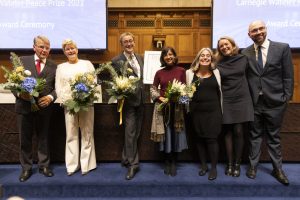
Today’s guests included representatives of the international legal organizations in The Hague, many ambassadors, Marielle Vavier, alderman of The Hague, who gave the opening speech, and former laureates: Deputy Prime Minister and Minister of Finance Sigrid Kaag, Dutch Major General (ret) Patrick Cammaert and Rhea Mahanta, founder of The Peacebuilding Project.
Last year Mahanta received the Youth Carnegie Peace Prize but was unable to accept in person due to COVID-19. Today, she addressed the audience after meeting with peace organizations in the Netherlands earlier this week. Next year, the Youth Carnegie Peace Prize will again be awarded to a young peacemaker.
_______________________________________________________________________________________________
Recording of the ceremony on Youtube.
Centre for Humanitarian Dialogue receives 2022 Carnegie Wateler Peace Prize for conflict mediation worldwide
The Centre for Humanitarian Dialogue – a private diplomacy organisation based in Geneva – will receive the 2022 Carnegie Wateler Peace Prize. Every two years, the Carnegie Foundation-Peace Palace awards the prize to an individual or an institution furthering the cause of international peace.
The laureate
For more than 20 years, the Centre for Humanitarian Dialogue (HD) has helped to prevent and resolve armed conflict through dialogue and mediation. What began with a single project in Aceh, Indonesia, has led to dozens of major peace accords around the world.
Since 2017 alone, HD’s achievements include discreet but critical support for the UN-led Black Sea Grain Initiative; a ceasefire and political roadmap in Libya; the disbanding of ETA in Spain; development of Common Operating Principles for maritime law enforcement in the South China Sea; humanitarian access in territory held by Islamic State and evacuation of more than 100,000 people in imminent danger in Syria.
HD now runs peacemaking initiatives in more than 75% of the world’s violent conflicts.
“Peace is the ultimate prize, and we’re honoured to have received this encouragement in the pursuit of that prize,” said David Harland, HD’s Executive Director. “As an impartial and independent organisation that often works behind the scenes, HD welcomes this recognition of our mission and multi-track efforts to resolve conflict, reduce the suffering caused by war and secure lasting peace.”
The Board of the Carnegie Foundation presents the award to HD for its track record of finding the means, including mediation, to bring parties together and end conflicts.
Over the past decades, HD has demonstrated that many conflicts can be resolved and peace agreements signed by working discreetly beyond the boundaries of traditional diplomacy, engaging parties that are difficult to reach and addressing sensitive issues.
Awards ceremony
The 2022 Carnegie Wateler Peace Prize will be awarded to HD on Thursday, November 3, 2022, in the Auditorium of the Peace Palace in The Hague.
The award – consisting of a prize of EUR 35,000 and an official certificate – will be bestowed by Piet Hein Donner, Chairman of the Board of the Carnegie Foundation and former Vice President of the Dutch Council of State.
For more information about the Award Ceremony on Thursday November 3, 2022, click here.
Carnegie Wateler Peace Prize
The Carnegie Wateler Peace Prize is awarded every two years to a person or an institution furthering the cause of international peace “in whatever way, by word or deed, in the form of international action, in literature or in the arts”.
Due to the impact of the COVID-19 pandemic, the Carnegie Foundation decided not to award the prize in 2020. In 2018, the prize was awarded to Belgian war correspondent Rudi Vranckx for his outstanding courage and commitment in reporting from conflict zones to give a face and a voice to people affected by violence. Sigrid Kaag, a Dutch diplomat and politician who now serves as First Deputy Prime Minister and Minister of Finance for The Netherlands, received the 2016 prize for her successful efforts in conducting sensitive and dangerous missions in the Middle East.
The Peacebuilding Project, winner of Carnegie Youth Peace Prize 2021 attends CSPPS Annual Conference 2022 in Berlin
The CSPPS Annual Conference
The Peacebuilding Project (PBP), a member of the Civil Society Platform for Statebuilding and Peacebuilding (CSPPS) network since 2019, was represented by Founder President Rhea Mahanta at the 2022 CSPPS Annual Conference in Berlin in May 2022. Under the theme ‘Safeguarding Peace, Shifting Priorities’, delegation members including the CSPPS Secretariat, Executive Committee and Core Group Members participated in a hybrid conference in Berlin and online, that allowed for in depth discussions and knowledge-sharing amongst CSPPS members and representatives from g7+, INCAF and GIZ.
Group discussions between the tripartite members of the IDPS – International Dialogue on Peacebuilding and Statebuilding (CSPPS, g7+, and INCAF) reflected on the implementation of the IDPS Peace Vision 2019-2021 including empowerment of youth actors for peace, response to the climate crisis, resource mobilization for civil society organizations, and enhancing civic space.
In a meeting with the head of department from BMZ (German Ministry for Economic Cooperation and Development) and GIZ representatives on 17 May, members of the CSPPS Delegation provided inputs on civil society’s view of security and the need for government representatives to bring back softer approaches in the context of Germany’s National Security Strategy. CSPPS members Valnora Edwin (African Women Leaders Network) and Jimmy Shilue (P4DP) also met with Member of Parliament Dr. Karamba Diaby at the Bundestag/German parliament to discuss pressing issues civil society is facing in West Africa, particularly in Sierra Leone and Liberia. The delegation also provided inputs into the Berlin Statement, prepared on the basis of a consultation with the entire CSPPS membership reflecting on current geopolitical developments and their impacts on peacebuilding.
“Entitled to a Peaceful Future: Youth in Violent Conflict”
On 18 May, Friedrich-Ebert-Stiftung (FES) Berlin held a panel discussion on ‘Youth in violent conflict’, with German Member of Parliament Nadja Sthamer, Peacebuilding Project Founder Rhea Mahanta, UNOY Co-Director Eliška Jelínková, and Professor at German Institute of Global and Area Studies Dr. Sabine Kurtenbach.
Opening the discussions, Dr. Kurtenbach outlined the perceptions of peace from young people based on her research in Colombia and Venezuela which is part of the PEACEptions-project with FES. Panelists highlighted how young people experience armed conflicts, the elements of peace, and possible ways to support and empower young peace promoters. There was acknowledgement of an increasing traction for a rights-based approach among youth, in that elements of peace also constitute ideas of justice, physical integrity, respect for human rights, freedom of speech and conflict transformation.
Youth Peace Ambassador of the Peace Palace Rhea Mahanta underscored that the Youth, Peace and Security (YPS) Agenda at its core is about young people’s political agency and their role as political actors. Mahanta highlighted the barriers that refugee youth face preventing them from participating in conflict resolution process in their countries of origin, as well as in political participation in host countries. Unless national strategies address the fundamental drivers of conflict including poverty, unemployment, resources, and access to educational and economic opportunities, the conditions for youth to be able to participate and sustain their engagement will remain a challenge. The need to engage youth constituencies in defining country strategies/inclusive national policies, and peacebuilding processes that are reflective of their needs and aspirations was emphasized.
“The future needs peacebuilding: Alliances and prospects for peace in challenging times”
On May 19, 2022, the FriEnt Working Group on Peace and Development celebrated its 20th anniversary in Berlin’s “Wasserwerk” with a panel discussion on the possibilities and challenges for an active peace policy. Parliamentary State Secretary to BMZ Niels Annen, CSPPS Coordinator Peter van Sluijs and The Peacebuilding Project Founder Rhea Mahanta took part in the panel titled “Alliances and prospects for peace in challenging times”, set against the future of 2032. Executive Director of European Peacebuilding Liaison Office, Sonya Reines-Djivanides, framed the opening with a message from the future stating how German development policy has set important priorities and created interfaces for joint European initiatives for prevention and conflict awareness. Niels Annen gave an insight into current processes and priorities for supporting civil conflict management for peace and security in crisis and conflict contexts as part of the overall commitment of the Federal Government, stressing that civilian peace actors should represent their concerns actively and visibly in order to make themselves heard in the political process. Learning from the challenges of a ‘third pandemic’, Peter van Sluijs affirmed the need for holistic and integrated responses to global challenges, ample attention for peacebuilding and conflict prevention, and the critical need of safeguarding civic space.
Mahanta conveyed the need to view parties to a conflict as partners and allies in the form of people-to-people diplomacy, forging alliances with a wide range of fields including the corporate sector, financial institutions, and artists. Addressing the climate crisis, she opined that the way to avert the crisis was by bringing about a collective and structural change in institutional policies, instead of pinning the problem on individual responsibility; stating “Yes, we need to ‘stop using plastic straws’, but who is going to stop producing plastic straws?”, highlighting the need to hold both consumers and producers/ suppliers accountable for climate action.
In closing, Peter van Sluijs shared the main recommendation as included in the Berlin Statement with the audience that emphasized the importance of all relevant stakeholders to commit to these recommendations in aiming to prevent conflict and sustain peace, through dialogue with partners.
All in all, the Berlin conference was an opportunity for The Peacebuilding Project to share and learn from the experiences of peacebuilding with local and global actors. In addition to the Berlin Statement as a key outcome, the Conference was a platform for PBP to forge relations with diverse peacebuilder networks, device a coordinated way forward and contribute from a peacebuilding perspective to the development of the first German National Security Strategy. PBP is grateful to CSPPS, GIZ, FriEnt and FES for affording an opportunity to participate in international dialogues for strategizing and sustaining peace.
Mrs. Karin Lodder new manager of the Peace Palace Library
As of the 1st of June 2022, Mrs. Karin Lodder will start as the new manager of the Peace Palace Library. The library specializes in professional literature on public and private international law, comparative law and jurisprudence from all parts of the world. Since its opening in 1913, the Peace Palace Library has grown over the past century into one of the most prestigious libraries in its field and is consulted by lawyers, scholars and students from around the world.
Karin Lodder has rich experience in managing library employees: over the past 16 years she has held various management positions at the KB, the national library of the Netherlands. Before, she led the information centre of law firm NautaDutilh. The move to the Peace Palace gives her the opportunity to bear final responsibility for this prominent library in the field of international law.
The Peace Palace Library is on the eve of major changes. As a result of an impulse in the subsidizing policy of the Dutch Ministry of Foreign Affairs, in addition to providing services to the Courts at the Peace Palace, the digitization of the library will be accelerated. Karin Lodder brings with her the expertise needed to facilitate this change, not only in terms of technology but also in terms of the necessary changes for the employees and the way that the services are provided. The Carnegie Foundation, owner and manager of the Peace Palace, is therefore pleased with her appointment.
Another aspect of the plans in the context of financing is that the Library of the Peace Palace focuses more explicitly on supporting the Courts in the Palace and must generate income for the services it offers to other parties. The library is not only used by the institutions in the palace (the United Nations International Court of Justice, the Permanent Court of Arbitration and the Hague Academy of International Law), but also by other international tribunals and organizations. An important group of customer are also academics and students of international law from various Dutch universities. Every year, the library’s unique collection is also frequently consulted by this group.
Jeroen Vervliet, librarian of the Peace Palace Library, has been freed to further develop the relationships with the two courts and the institutional users. He has extensive knowledge of the collections and services of the library thanks to his many years of experience at the Peace Palace.
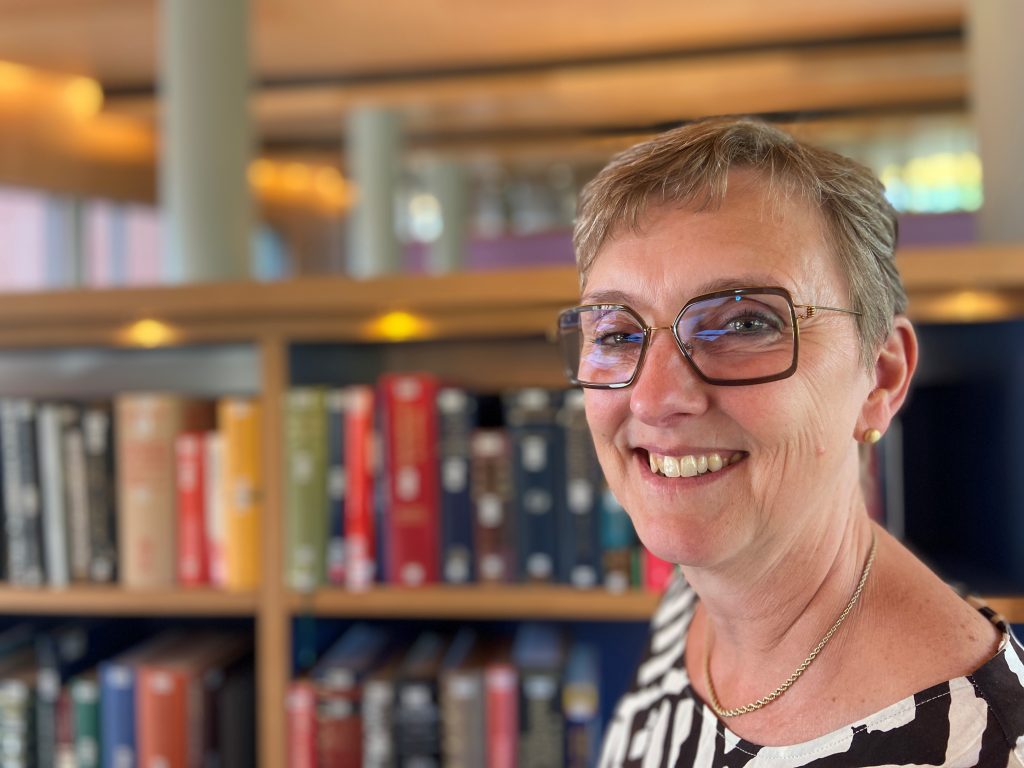
Karin Lodder
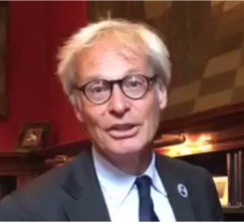
Jeroen Vervliet
New documentary about unique 17th century paintings in the Peace Palace
Ferdinand Bol (1616-1680) and Gerard de Lairesse (1640-1711) are among the most important artists of the 17th century. There are unique painting ensembles by both artists in the Bol Room of the Peace Palace in The Hague. Art historian Margriet van Eikema Hommes has undertaken extensive research into these ensembles. This beautiful room and the surprising results of the research are now available to everyone via a short documentary.
The Peace Palace houses the United Nations International Court of Justice, the Permanent Court of Arbitration and The Hague Academy of International Law. The palace was built following the first Hague Peace Conference (1899) and opened its doors in 1913.
As a mark of support, many countries presented gifts in the form of artworks or building materials during the building process. Today, more than 40 of these specially crafted gifts are in the Peace Palace: the international icon for “Peace through Law”. An exception to this, however, are the Ferdinand Bol and Gerard de Lairesse paintings in the Peace Palace’s art collection, as these were created centuries before the Peace Palace was built.
The Bol paintings, as well as those of De Lairesse, are on such a scale that they cover many square metres which distinguishes them from most 17th century paintings. These canvasses were not intended to hang ‘loosely’ on a wall: Bol’s were originally incorporated into wainscoting while De Lairesse’s adorned a ceiling. Originally, such enormous paintings were created for palaces and town halls but in the latter half of the 17th century increasingly more civilians commissioned such decorations for their own homes. The Bol and De Lairesse ensembles are early examples of this.
Although the artworks in the Bol Room were painted centuries ago, their subject matter is relevant today: “Initially you see biblical, mythological and allegorical scenes but these depictions relate to war and the fate of refugees searching for a new life”, Margriet van Eikema Hommes explains.
Technical research, which included the use of X-rays and infrared light, and an iconographic analysis revealed that the canvasses are testimony to their time. For example, on the triptych “Concord, Freedom of Trade and Protection against Danger” by Gerard de Lairesse (1672), Concord holds a bundle of four arrows. The research brought to light that originally there had been seven arrows symbolising the seven united provinces of the Dutch Republic. But following the ‘Disaster Year’ of 1672 when three provinces had to be ceded, De Lairesse reduced the number of arrows.
De Lairesse’s painting once adorned the ceiling of the reception room of a canal house belonging to the famous and infamous Mayor of Amsterdam, Andries de Graeff. In 1903 the paintings came up for auction and they were purchased for the new, to be constructed, Peace Palace.
Ferdinand Bol’s wall-sized canvasses were commissioned by the extremely wealthy Utrecht widow Jacoba Lampsins. She commissioned them in the early 1660’s for her reception room and chose subjects that had a bearing on her background and her ideas. The paintings “The discovery of Moses” and “Aeneas receiving a new set of armor from his mother, the goddess Venus” refer to her predecessors who had to flee from the southern Netherlands due to the violence of war. The canvasses “The Captain of God’s Army appearing to Joshua” and “King Cyrus” relate to a political conflict in Utrecht at the time. Well over two centuries after they were painted they were donated to the Rijksmuseum. At the beginning of the 20th century, the museum gave them on permanent loan to the Peace Palace.
The Carnegie Foundation, the owner and manager of the Peace Palace, has produced a documentary in which art historian Margriet van Eikema Hommes and conservator Jacobine Wieringa highlight interesting details about the artworks in the Bol Room. Interested viewers can now have a look at this beautiful room which, generally speaking, is not open to the public. The documentary also makes the impressive results of the research into the 17th century paintings available to everyone.